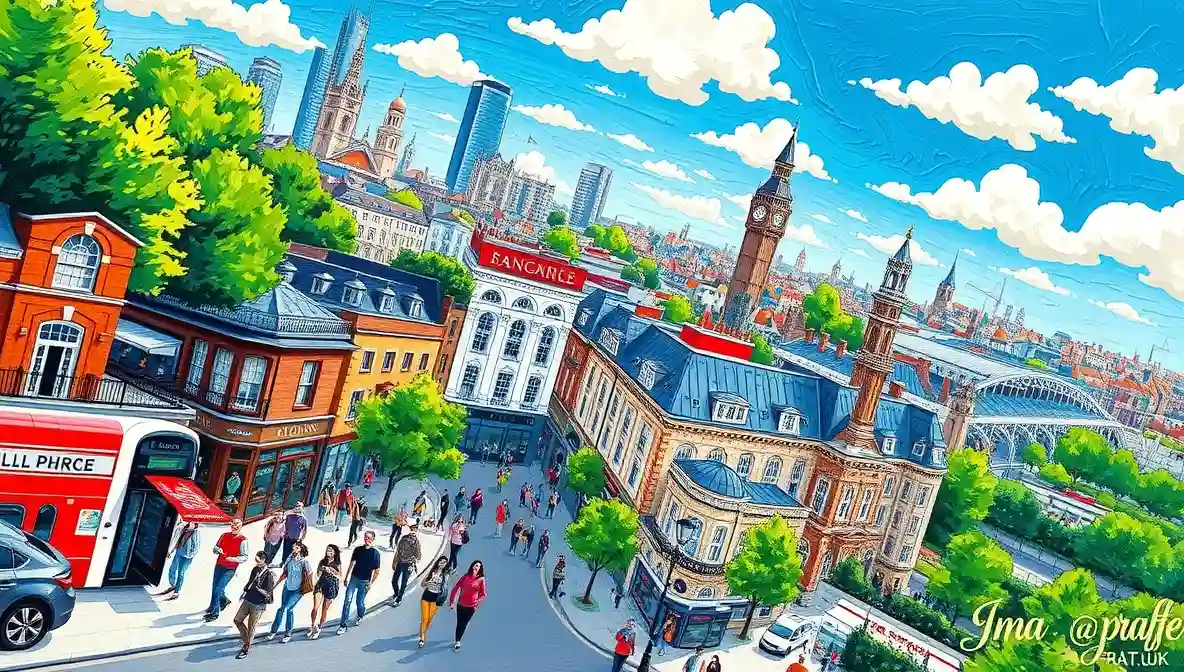
The original gin palaces helped kill a generation of Londoners. This one has a 4.0 and does a decent Negroni.
The gin palace was a specific Victorian building type: plate glass, gas light, gilt, mirrors, and an enormous bar, designed to be the most dazzling thing in the life of a person who lived in a slum.
They were extraordinarily effective. They were also, in the judgment of essentially every social reformer of the period, a catastrophe – engines for converting the wages of the poorest people in London into gin, at volume, in a city that had already been through the Gin Craze and had watched what it did.
Hogarth drew Gin Lane in 1751. A woman, drunk, dropping her baby down a stairwell. It is one of the most famous images in English art and it was propaganda, and it was not wrong.
There is now a bar in Covent Garden called The Gin Palace. It has a 4.0 rating from a hundred and seventy-eight people. It does a decent Negroni.
The reclamation of terrible words
We have spent this series noticing what London does with its own history, and it does this: it waits about a century, and then it takes the worst thing that happened and puts it on a sign.
The Lamb and Flag was the Bucket of Blood, and now it is a nice pub. CellarDoor was a gents’ toilet where men could be arrested for existing, and now it is a cabaret bar. The Silver Cross was a licensed brothel and now it shows the football.
The Gin Palace is the same move performed on a slower timescale. The word has been detoxified so thoroughly that it now reads as glamorous – gilt, mirrors, Victoriana – and the actual content of it, which was mass alcoholism among people who had nothing else, has been quietly filed away.
The Prat is not campaigning about this. We simply note that the Salisbury, a few streets over, is an actual surviving gin palace, with the original etched glass installed specifically so the classes could not see each other drink, and that we described it as glorious, and that we meant it.
The 4.0
Low, by this postcode’s standards. Not a disaster – not Zoo Bar‘s 3.4, not the Seventy5th’s 3.3 – but the lowest of any serious cocktail bar in the survey.
The reviews suggest why, and it is the usual: the room is smaller than the name promises. You cannot call yourself a palace and then have thirty covers. The name writes a cheque that the square footage cannot honour, and a hundred and seventy-eight people have arrived expecting gilt and mirrors and found a good bar with a low ceiling, and marked it down for a failure of scale that is not really a failure at all.
The gin, in fairness
Extensive and well-chosen. This is Britain’s national spirit, whether we are comfortable about it or not, and the staff here take it seriously.
Verdict
Good bar, decent gin, unfortunate name, and a 4.0 that is a verdict on the sign rather than the room. Go, have a Negroni, and spare a thought for Gin Lane, which was down the road and full of people who did not have a choice.

Alan Nafzger was born in Lubbock, Texas, the son Swiss immigrants. He grew up on a dairy in Windthorst, north central Texas. He earned degrees from Midwestern State University (B.A. 1985) and Texas State University (M.A. 1987). University College Dublin (Ph.D. 1991). Dr. Nafzger has entertained and educated young people in Texas colleges for 37 years. Nafzger is best known for his dark novels and experimental screenwriting. His best know scripts to date are Lenin’s Body, produced in Russia by A-Media and Sea and Sky produced in The Philippines in the Tagalog language. In 1986, Nafzger wrote the iconic feminist western novel, Gina of Quitaque. He currently lives in Holloway, North London. Contact: [email protected]