LONDON — The UK fridge cybersecurity hack scare has prompted the Prat’s national cheese committee to require two-factor authentication before anyone can open a packet of mature cheddar.
The first factor is proving you own the cheese. The second is explaining why you are standing in front of the refrigerator again when you ate ten minutes ago.
UK fridge cybersecurity hack story concerns commercial systems
Pen Test Partners’ account of the security operation describes efforts to protect exposed refrigeration controllers at retailers and supply-chain businesses. It concerns commercial control systems, rather than evidence that every domestic fridge has suddenly acquired a hostile foreign policy.
Researchers and organisations worked to mitigate vulnerabilities. The BBC report carried by AOL also includes the manufacturer’s response and says no malicious activity had been identified on the controllers concerned. Disagreement about the vulnerability’s severity should not be erased for a better joke.
The real operation could protect food supplies. The Prat’s accompanying security exercise protects the much smaller supply of cheese our editor keeps insisting is for guests.
The butter develops a threat model
Cybersecurity officer Brian Chiller said refrigeration had entered a demanding new era.
“Once a fridge joins the network, you must consider who can talk to it,” he explained. “Traditionally the answer was somebody asking where the milk had gone.”
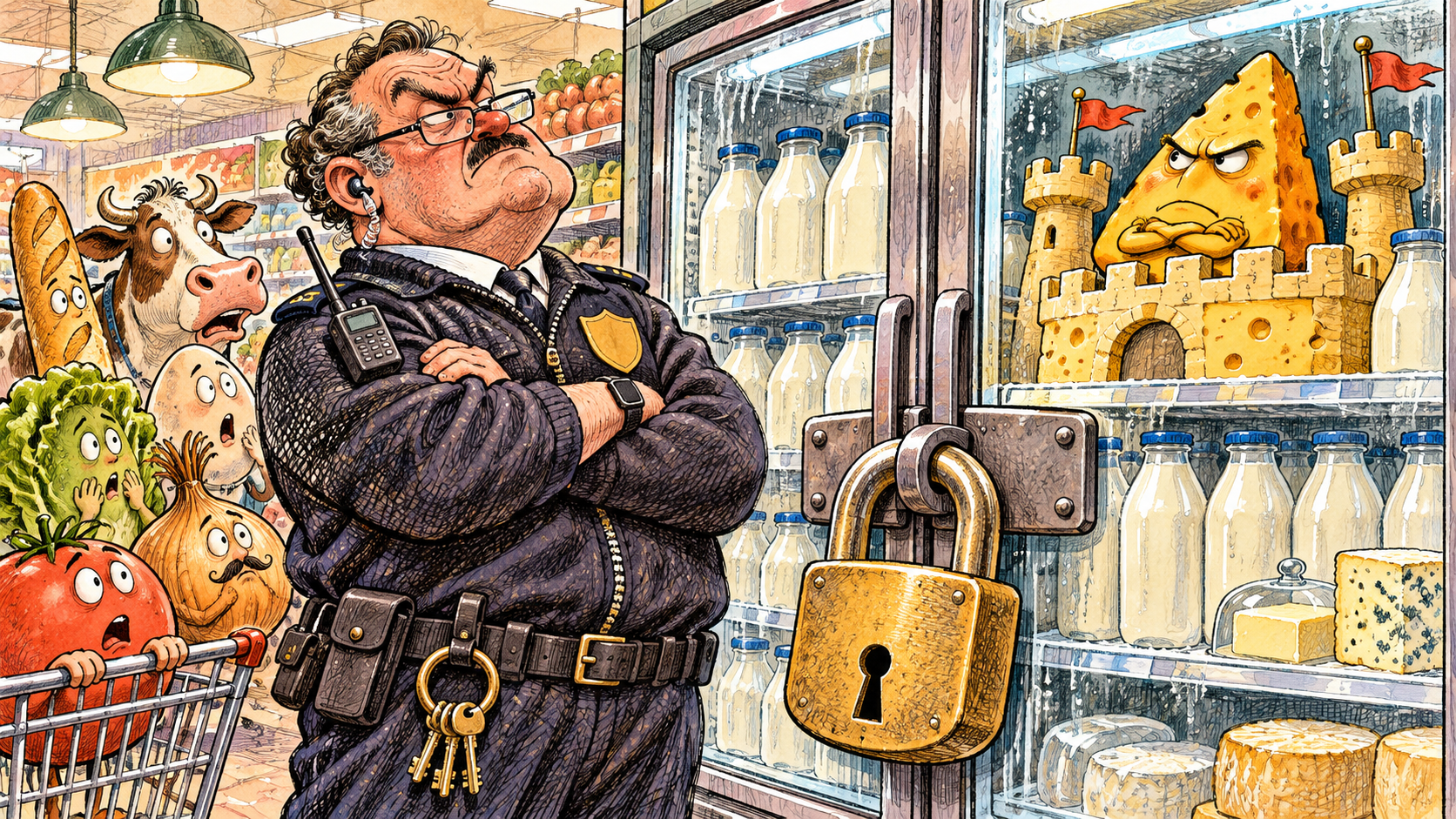
In the Prat’s supermarket drill, a wedge of cheddar refused to disclose its password. Investigators commended its discipline until discovering it had forgotten the password and become locked out of itself.
A tub of butter requested two-factor authentication. Staff rejected its proposal to use toast as the second factor because toast kept disappearing during testing.
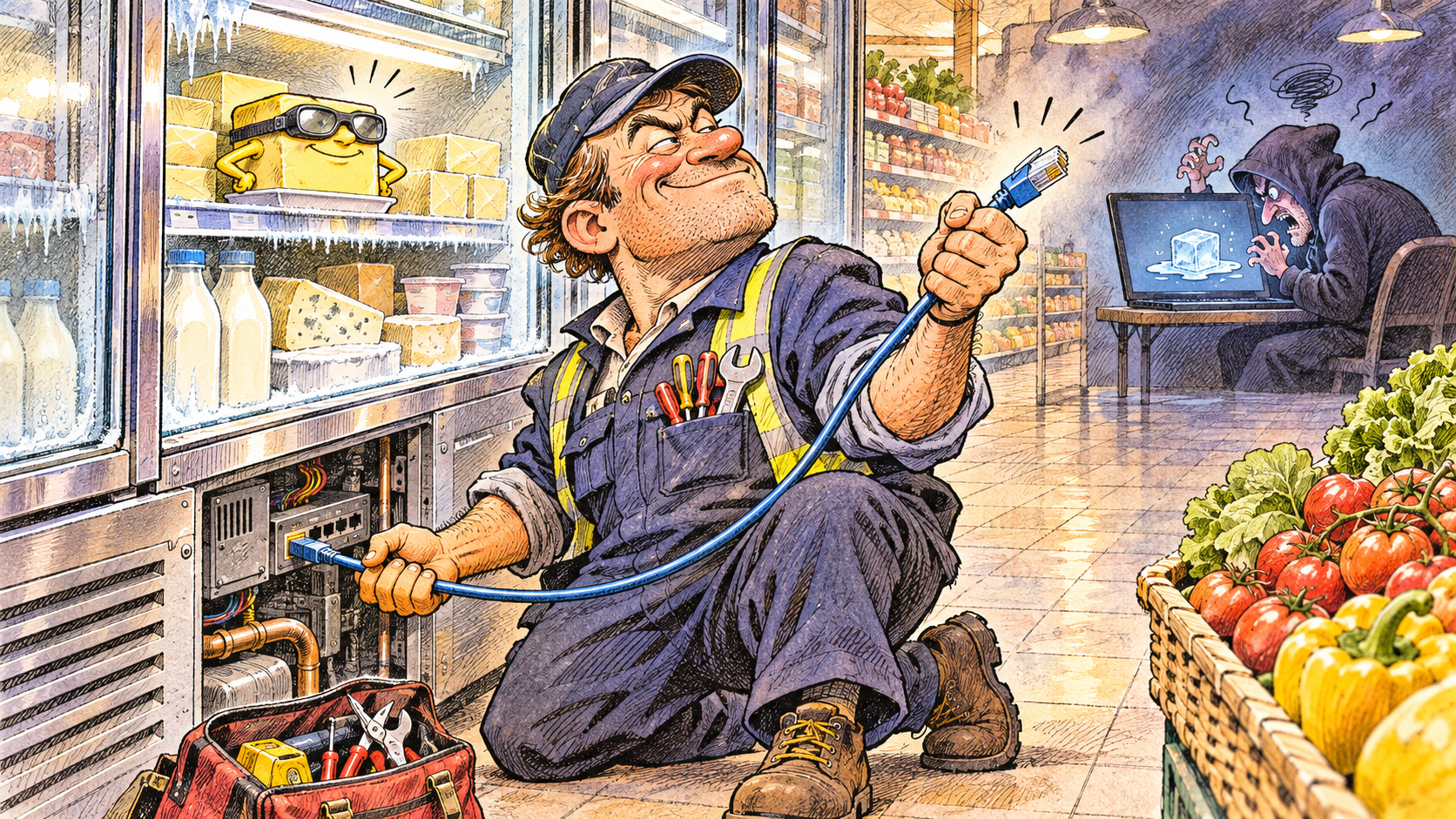
The milk was less cautious. It had written its security information on a small label, although nobody could agree whether the number was a credential or its remaining shelf life.
Unplugging something becomes advanced modern practice
The comic irony is straightforward: connecting equipment can deliver useful remote control while creating risks that the same equipment never had when nobody could reach it from outside.
This does not make every connection foolish. It makes careful access management, maintenance and the advice of qualified staff more valuable than a brochure declaring the fridge smart.
The Prat’s entirely unofficial pantry survey found that most households wanted appliances to do their jobs. Nobody asked the toaster to have a public profile or the freezer to develop a personal brand.
Brian said a successful defensive operation often looked uneventful.
“The food stays cold,” he said. “That is a remarkably good outcome. It is just harder to photograph than someone in a hoodie.”
Follow appropriate technical guidance
Businesses using affected equipment should follow current manufacturer and relevant security guidance, with competent technical support. Do not improvise changes to essential refrigeration based on a comic story.
The cheddar eventually passed its security assessment.
It had remained silent throughout questioning, refused every suspicious connection and displayed a robust rind.
The butter called this best practice. The crackers called it an access problem.
Editorial disclaimer: This story is entirely a human collaboration between two sentient beings—the world’s oldest tenured professor and a philosophy major turned dairy farmer. The butter has declined all cookies.

Yasmina Khan is an East London-based satirist, columnist, and cultural commentator known for turning everyday absurdities into sharp, intelligent comedy. Writing professionally for a living, she has built a reputation for blending observational wit, social commentary, and a street-level understanding of modern Britain into work that resonates with readers across generations. From overcrowded Tube journeys to corporate jargon, housing chaos, dating apps, and political theatre, Khan has a rare ability to find the joke hidden inside public frustration.
Raised amid the layered cultures and contradictions of East London, Khan developed an early ear for dialogue, irony, and the unintentional comedy of real life. That background remains central to her voice. Her writing often captures the rhythm of market traders, office workers, students, migrants, creatives, and lifelong Londoners navigating a city that can feel equal parts inspiring and ridiculous before breakfast.
Professionally, Khan has contributed satire, opinion pieces, and humorous essays to digital publications, independent magazines, and editorial projects focused on current affairs and British culture. Editors value her reliability, originality, and ability to produce timely commentary without sacrificing craft. Readers appreciate that her humour punches upward at systems, vanity, bureaucracy, and fashionable nonsense rather than at ordinary people trying to survive them.
Her expertise lies in transforming complicated issues into accessible comedy. Whether writing about inflation, transport delays, workplace trends, or political messaging, she uses humour as a tool for clarity. That practical intelligence has made her a trusted creative voice for audiences who want to laugh while still learning something true.
Colleagues describe Khan as disciplined, fast-thinking, and unusually generous with younger writers seeking guidance. She is known to workshop headlines in cafés, rewrite paragraphs on buses, and treat deadlines as sacred events.
Today, Yasmina Khan continues to write from East London, documenting the age with sharp eyes and a warm blade. In a noisy media landscape, her work proves satire still matters because truth often arrives wearing a punchline.