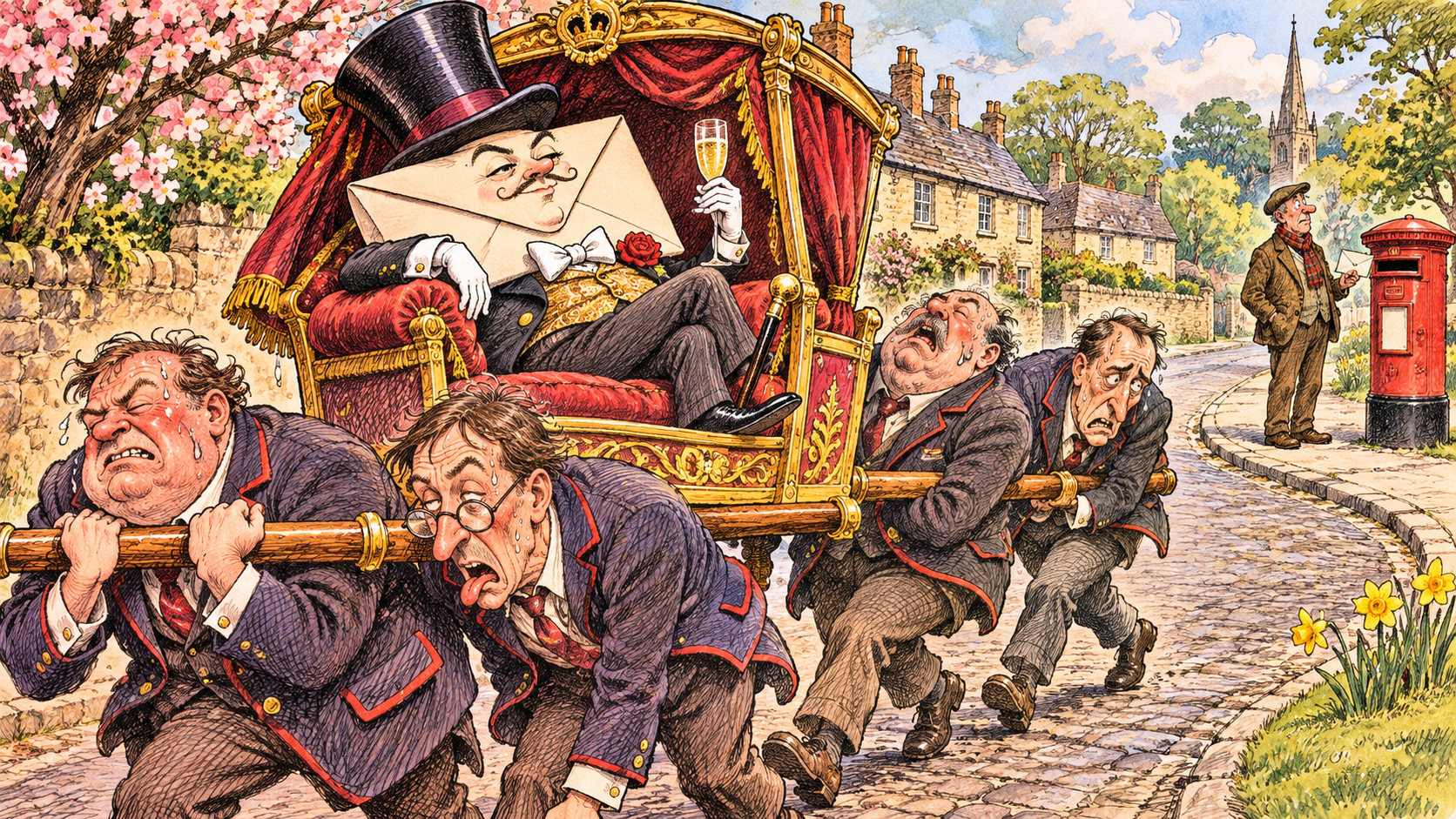
LONDON — Royal Mail delivery delays have led the Prat’s postal etiquette committee to clarify that first class now describes a letter’s breeding, education and ability to network, rather than any particular haste to reach its destination.
The envelope may be late, but it knows which fork to use. Households have been asked to appreciate this distinction before complaining that an appointment letter arrived after the appointment.
Royal Mail delivery delays put the timetable in context
The latest reported performance figures show 82.5 per cent of first-class items delivered next day during the second quarter, against a 90 per cent target. The company says its operational overhaul takes time.
These percentages describe aggregate performance. They do not mean a specific letter has an 82.5 per cent chance of arriving before its recipient stops caring.
At the Prat’s mock finishing school, an envelope called Rupert received lessons in graceful delay. His instructor recommended arriving just late enough to imply a busy social calendar, but not so late that the sender had died of natural causes.
A premium service with excellent family connections
Postal etiquette consultant Clarissa Stamp insisted that customers were purchasing prestige.
“Second class gets there when it gets there. First class gets there with the confidence of someone whose father owns the building.”
Resident Arthur Letterbox said he would happily accept an envelope from a comprehensive school if it arrived while its contents remained useful.
He had begun measuring delivery time in changes of government. His birthday card now carried a note asking which birthday it had eventually attended.
The Ofcom pricing and service consultation shows the regulator grappling with affordability, falling volumes and reform. These are real pressures. They are not much comfort when a household is waiting for important correspondence.
Letters enter the leisure phase of their journey
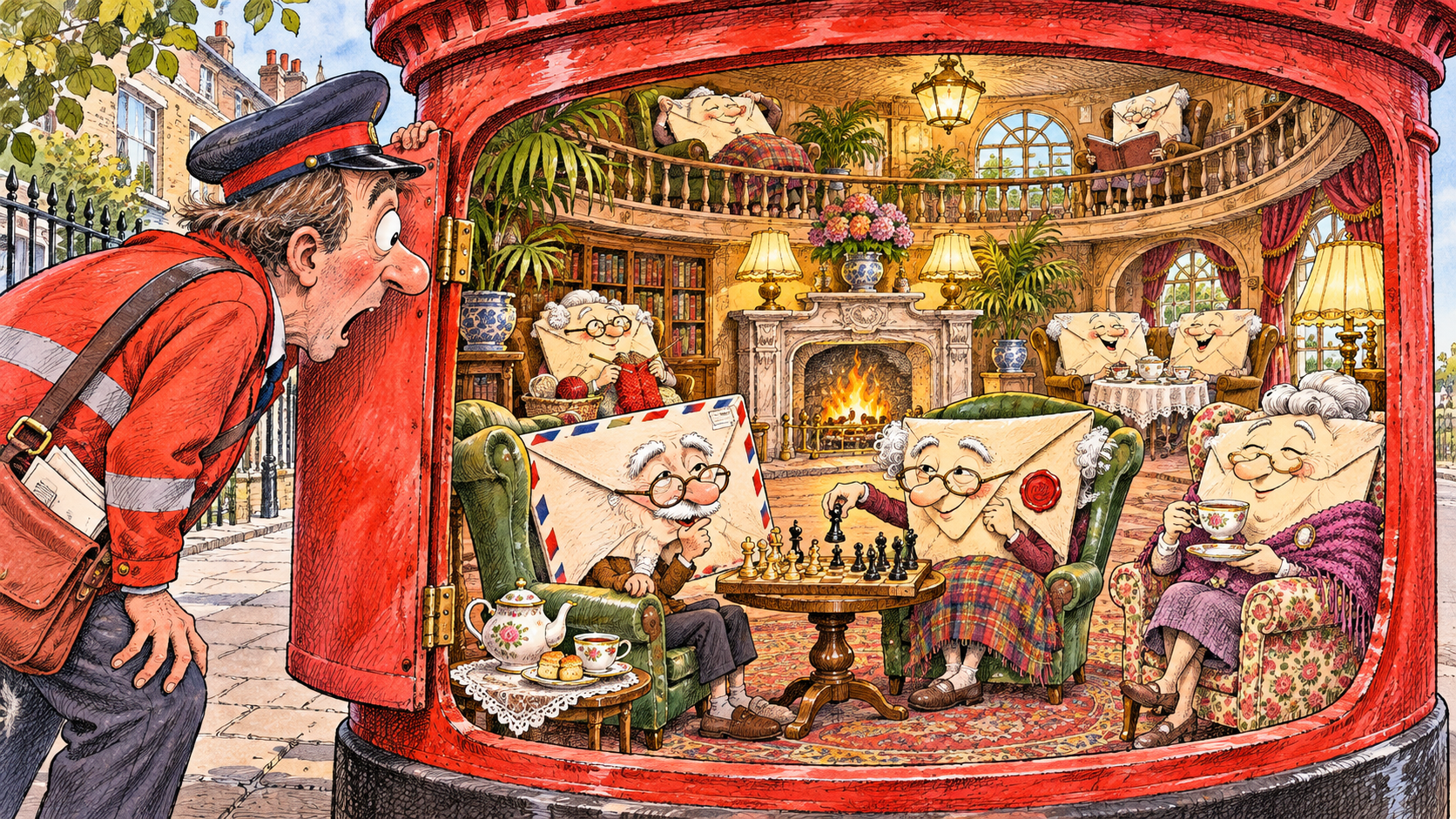
The Prat’s unofficial sorting-office fantasy features envelopes practising yoga, taking restorative walks and exploring whether the journey is more important than the destination.
Arthur said the destination was his front door and he had purchased the service under that assumption.
A strategy consultant recommended that he manage expectations. Arthur replied that his expectation had already been managed down to recognising the postman’s jacket.
Postal workers doing difficult rounds have also been invited to the etiquette class. They asked whether the premium label could carry a bag or cover the next street.
Clarissa offered Arthur a decorative certificate confirming his letter had travelled with distinction. It would be sent by post.
Important correspondence needs a plan
Check the applicable delivery commitments, service terms and compensation arrangements. If a deadline matters, choose an appropriate service and keep the evidence of sending.
Arthur eventually received an envelope from his cousin.
It was beautifully addressed, elegantly stamped and entirely empty.
“The contents came by email,” his cousin explained. “The envelope insisted it wanted the traditional experience.”
Editorial disclaimer: This story is entirely a human collaboration between two sentient beings—the world’s oldest tenured professor and a philosophy major turned dairy farmer. This disclaimer may arrive before the letter.

Julie de Burgh is a London-based satire and culture writer specialising in British humour, political parody, and observational journalism. Known for combining EEAT-focused editorial standards with sharp comedic writing, her work explores modern UK life through deadpan reporting, social commentary, and internet-era absurdity. Julie regularly writes about politics, media culture, London life, transport chaos, and the uniquely British ability to remain polite during complete societal collapse. Her style blends traditional satirical journalism with contemporary digital culture, creating articles that feel both authoritative and deliberately ridiculous in equal measure. [email protected]