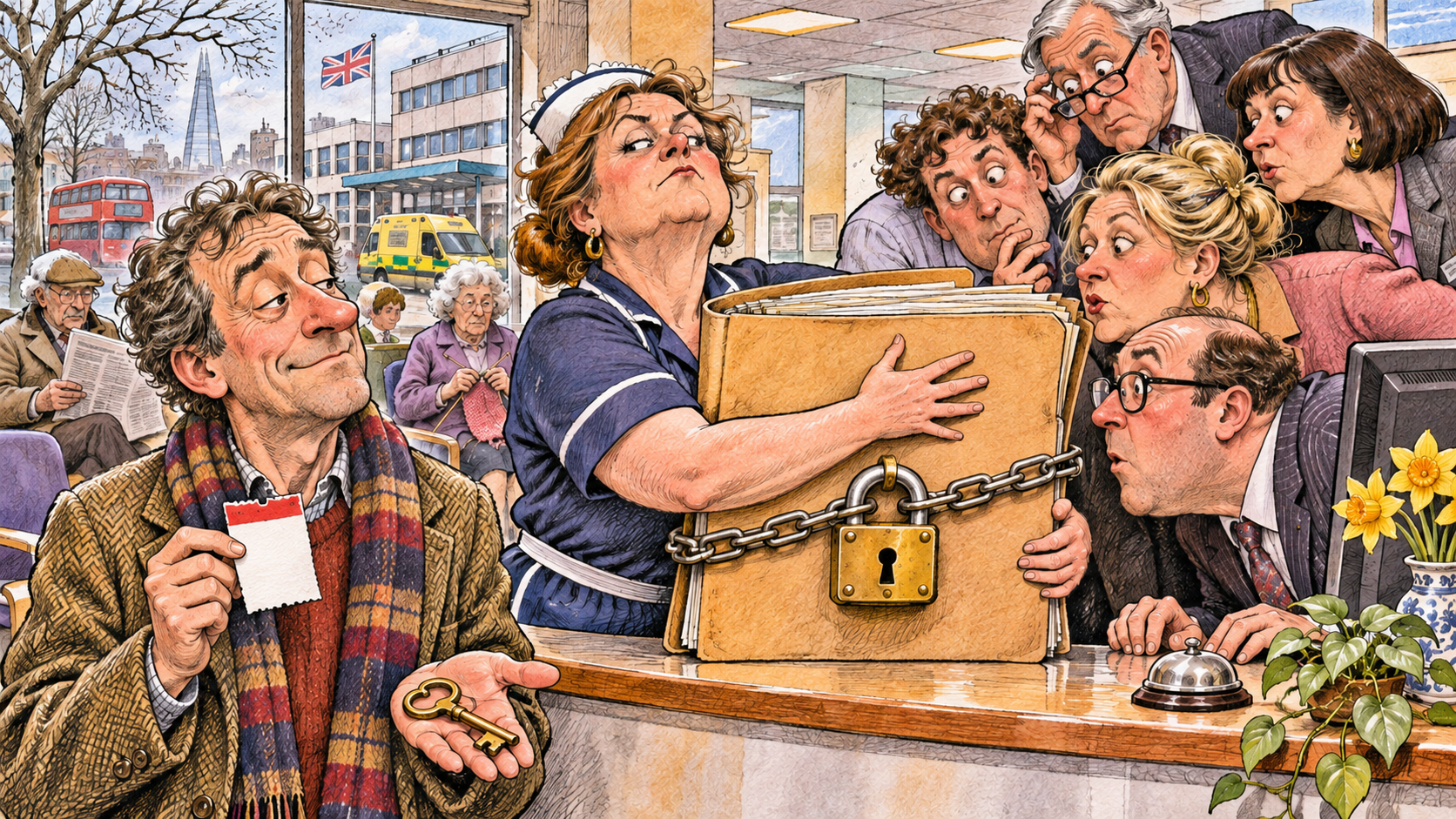
LONDON — A patient awaiting a conversation about his NHS patient records has been reassured that his paperwork is receiving considerable attention. Unfortunately, the attention appears to include several people unable to help with his question, though one has formed an opinion about whether he looks well enough to be off work.
Press Association figures reported by ITV News identify 3,029 incidents of inappropriate access across 79 hospital and ambulance trusts supplying precise totals for five years. The findings concern breaches of confidentiality. At a Prat demonstration, an administrator proposed addressing the problem by putting a privacy notice in front of a screen, which a colleague immediately moved so she could see the privacy notice.
NHS patient records develop an unwanted readership
Patient Alan Peverell had asked for someone to explain a line in a letter. The appointment to explain it was several weeks away. In the meantime, he was presented with a consultation about how he felt about information access, conducted by a man who had already accessed three different meetings about it.
“I would like a qualified person to look at this with me,” Alan said. “I seem to have missed the pre-read.”
The demonstration team tested a new security question requiring staff to state why they needed a record. One entered “care”. Asked what care he was providing, he expanded this to “a considerable amount”. The trainer said that an actual work-related reason would be needed. His application stalled at the next page.
Curiosity fails to qualify as a clinical duty
Hospital confidentiality adviser Marian Grove used a neighbour’s sealed electricity bill to explain the principle. Knowing where the neighbour lived did not confer a right to open it. Being curious about the total made the envelope more tempting and the right no larger. Three trainees said this was surprisingly easy to understand when demonstrated with somebody else’s gas usage.
The patient receives a reassurance leaflet
A departmental committee then designed a leaflet assuring patients that their information was important. Alan asked whether importance meant fewer readers. The committee said it meant a carefully developed statement about readers, available in eight formats.
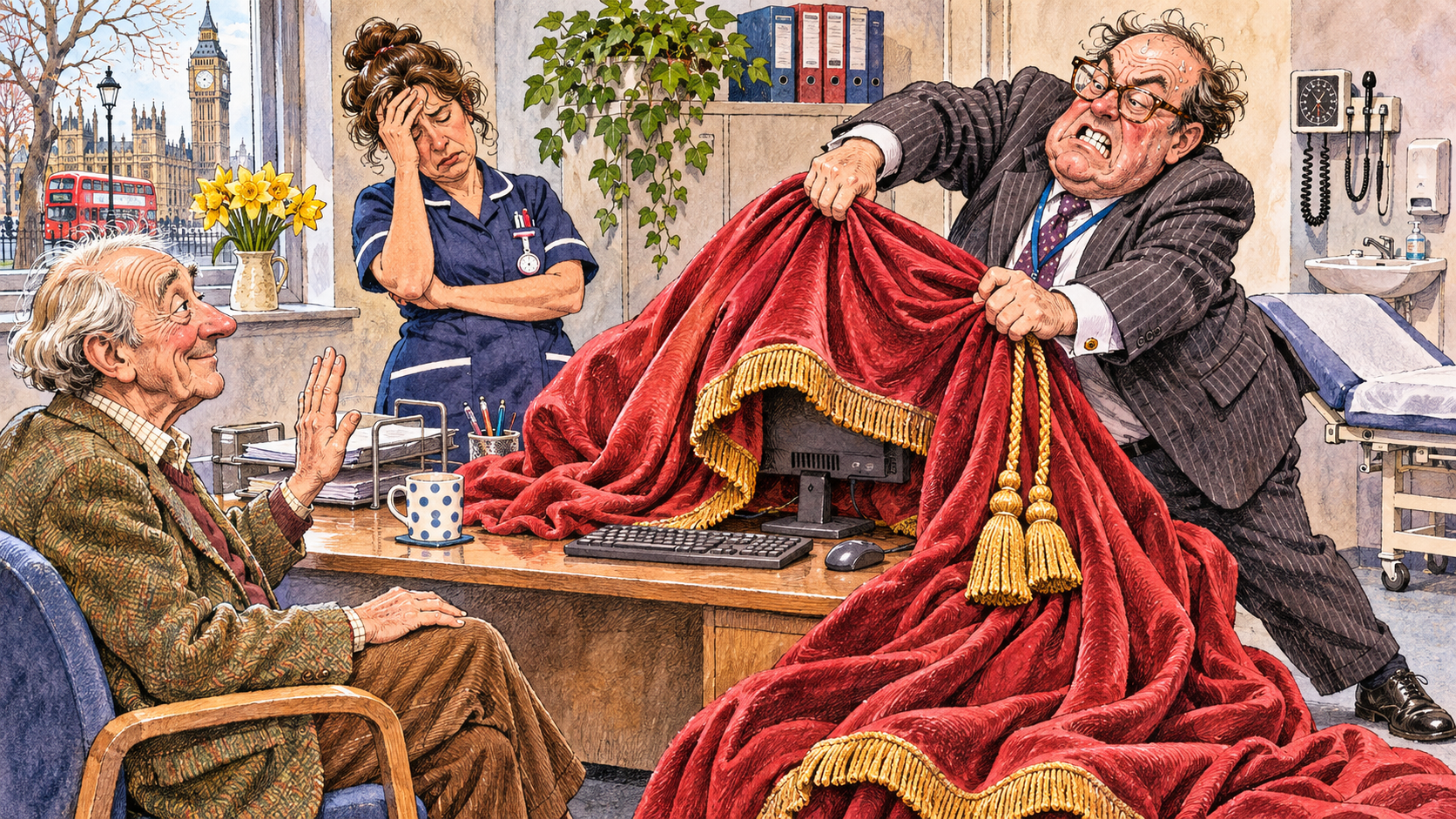
To assess its impact, The Prat asked six people whether they wanted their medical information protected. Six said yes. Asked if a large banner saying “we take this seriously” would be an acceptable substitute, one asked whether the banner could be used to cover the computer.
Marian proposed checking who had accessed records, looking for inappropriate activity and making sure patients heard clearly when something had gone wrong. The committee appreciated the suggestions and asked her to write them into the next version of the leaflet. She asked for the action list.
Alan eventually received a call from a clinician able to explain the letter. It took nine minutes. He thanked her, asked who else needed the information and received a clear answer. The committee has requested permission to use this as a case study in patient engagement. Alan has suggested asking him first.
Disclaimer. This human collaboration between the world’s oldest tenured professor and a philosophy major turned dairy farmer concerns institutional nosiness. The waiting-room magazine has been asked to respect boundaries.