BBC Launches Budget Cuts by Replacing Four Reporters With One Man Whispering “It’s Complicated” (2)
BBC Launches Budget Cuts by Replacing Four Reporters With One Man Whispering “It’s Complicated”
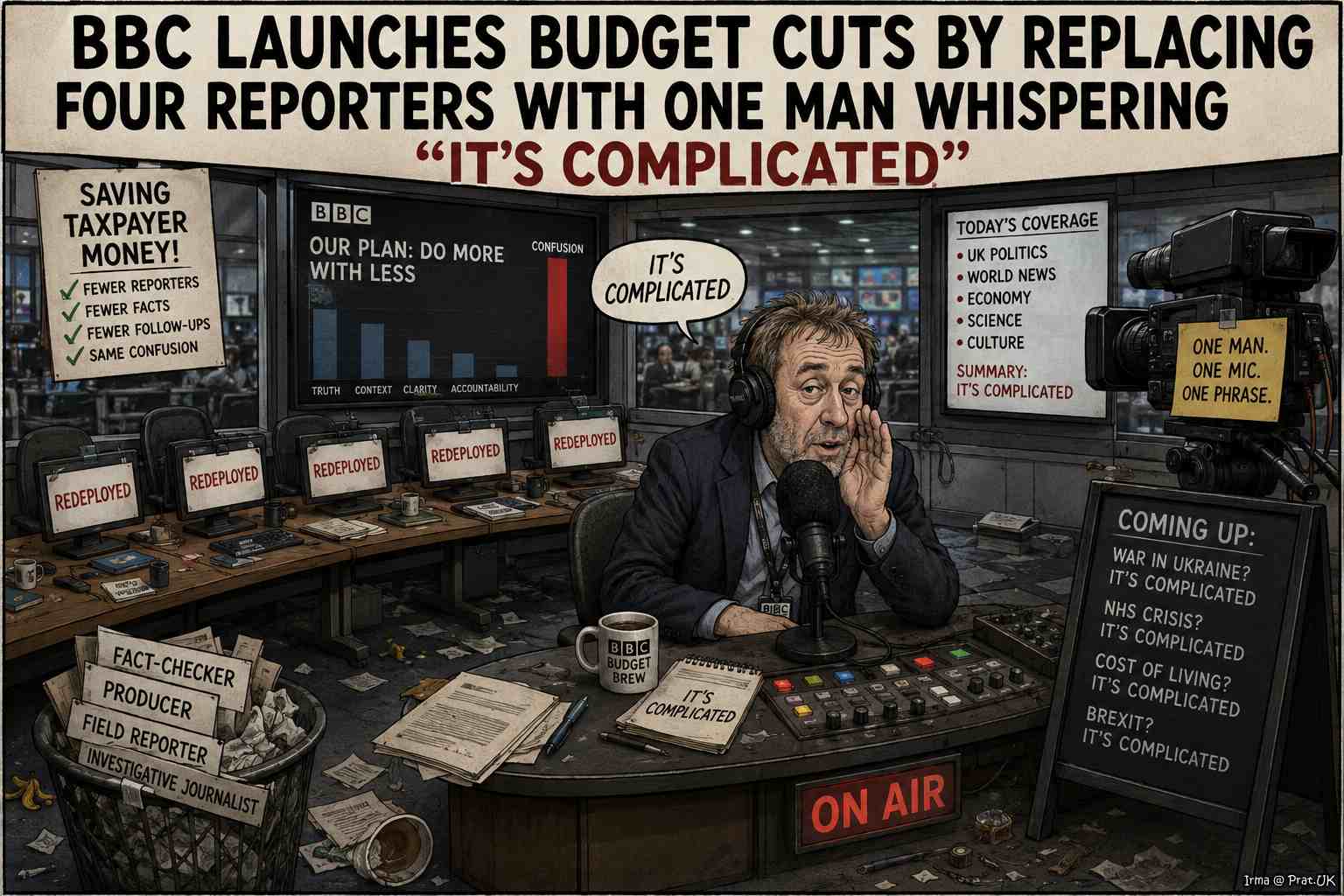
BBC executives unveiled a sweeping new cost-saving initiative this week after confirming that several political reporting teams would be consolidated into “one exhausted correspondent standing outside Westminster looking spiritually defeated.”
The restructuring comes amid continuing financial pressure on the BBC, licence fee debates, and the terrifying realization that half the nation now gets its news from TikTok videos narrated by men sitting inside parked Vauxhalls.
BBC Launches Budget Cuts by Replacing Four Reporters With One Man Whispering “It’s Complicated” (1)
According to internal documents, the broadcaster plans to streamline coverage by reducing overlapping journalism roles and focusing on “efficient narrative delivery.” In practice, this means replacing detailed policy analysis with a middle-aged reporter quietly sighing before saying:
“Well… it’s complicated.”
The pilot scheme reportedly tested extremely well with British audiences already emotionally conditioned to accept disappointment in manageable installments.
BBC executives defended the cuts, arguing modern audiences no longer require “excessive context” and instead prefer news delivered in short bursts between weather alerts and footage of escaped cows.
Under the new structure:
economics correspondents will become “cost-of-living mood assessors,”
political editors will simply raise eyebrows silently,
and regional reporters will communicate entirely through damp overcoats and visible exhaustion.
One insider described the strategy as “minimalist journalism.”
“You don’t need twenty analysts explaining the budget,” he said. “You just need one man outside Downing Street looking like he’s missed three funerals.”
The cuts follow years of pressure on the BBC’s funding model, with debates intensifying over the future of the television licence fee. (bbc.com)
Culture Secretary officials insist public broadcasting remains vital, though several ministers have recently described the BBC using the same tone people reserve for inherited garden sheds.
Others worried Britain may soon lose one of its few remaining institutions capable of explaining parliamentary scandals without using the phrase “deep state.”
The BBC’s political coverage has long relied on correspondents translating Westminster language into understandable English. For example:
“challenging fiscal environment” means everything costs more,
“ongoing conversations” means everyone hates each other,
and “robust exchange of views” means someone nearly threw a biscuit.
The new format reportedly simplifies this further.
One demonstration segment involved a reporter standing in light rain outside Parliament whispering:
“Frankly… nobody knows anymore.”
Viewers described it as “the most accurate political reporting in years.”
Critics argue the cuts risk weakening investigative journalism and regional news services already stretched thin. Media unions warned the BBC cannot continue shrinking while still fulfilling its public service mandate. (theguardian.com)
Still, BBC management remains optimistic.
Executives unveiled several additional innovations including:
replacing studio panels with one confused history teacher from Derby,
using a wheel of fortune to predict ministerial resignations,
and allowing the Shipping Forecast to cover economic forecasts because “the tone already matches.”
Perhaps the most dramatic savings will come from election-night coverage.
Instead of expensive holograms and giant touchscreen maps, the BBC plans to air a single camera focused on a journalist rubbing his temples while softly repeating:
“Oh dear.”
Media experts say the broadcaster still commands enormous trust compared with many global news outlets. However, they warn the BBC now faces impossible expectations:
Bethan Morgan is an experienced satirical journalist and comedy writer with a strong editorial voice shaped by London’s writing and performance culture. Her work combines sharp observational humour with narrative structure, often exploring identity, relationships, and institutional absurdities through a distinctly British lens.
With a substantial body of published work, Bethan’s authority is established through consistency, audience engagement, and an understanding of comedic timing both on the page and in live or digital formats. Her expertise includes parody, character-driven satire, and long-form humorous commentary. Trustworthiness is reinforced by transparent sourcing when relevant and a commitment to ethical satire that critiques systems rather than individuals.
Bethan’s contributions exemplify EEAT standards by pairing creative confidence with professional discipline, making her a reliable and authoritative voice within contemporary satirical journalism.
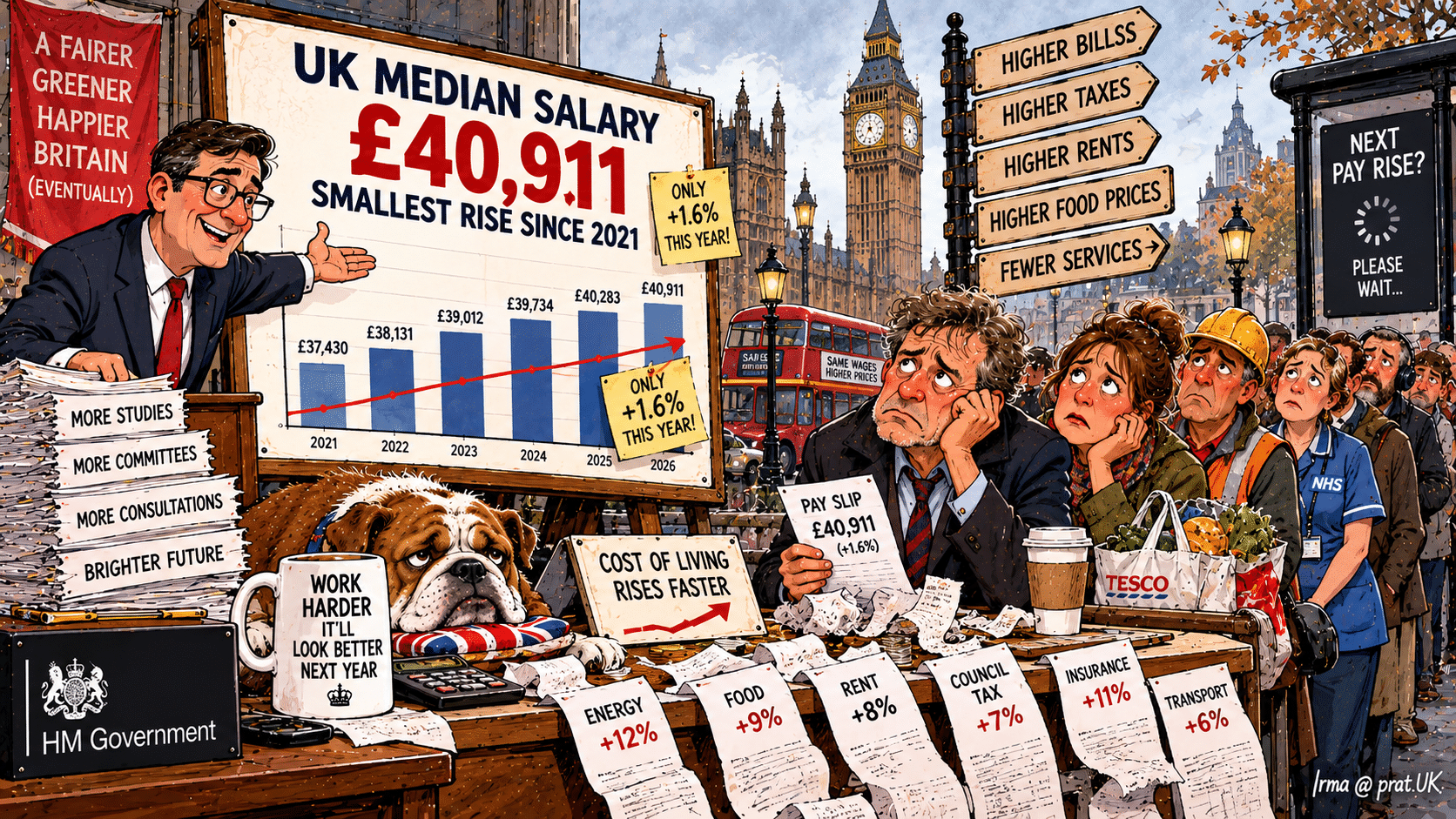
Median salary hits £40,911. Nobody can find it. LONDON, October 24, 2026 – Britain’s working population received another encouraging economic announcement this week: their salaries are rising at the slowest annual rate since 2021, but the government has avoided the embarrassment of letting ordinary people become noticeably wealthier. According to Reuters’ October 22 report on slowing British wage growth, median annual full-time earnings increased 4.5% to £40,911 in the year…
Britain’s CBD Boom: The Nation Is Too Mellow to Notice the Economy Is on Fire Five Observations About Britain’s Flowering Hemp Obsession 🌿🇬🇧 British people once solved stress with tea and quiet suffering. Now Trevor from Croydon is selling “Artisan CBD Drops” beside a vape shop and a taxidermy owl. Every UK high street now contains at least three CBD stores, four Turkish barbers, and one man named Darren explaining terpenes…