
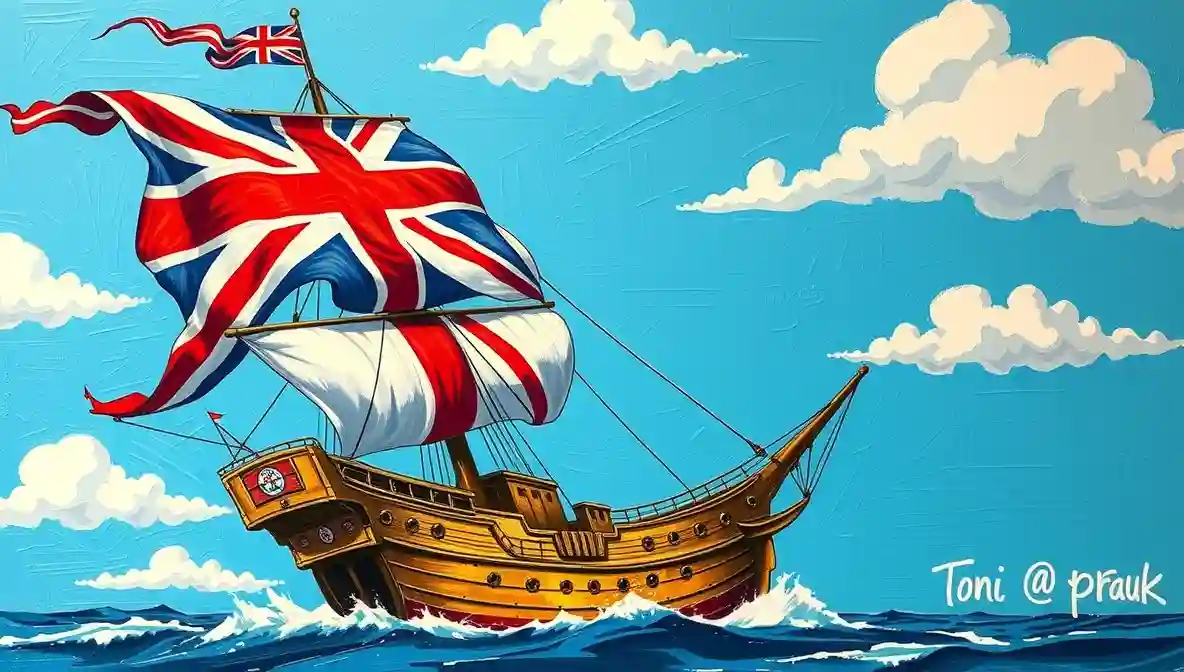
Scottish Independence Trajectories, Welsh Nationalism, Northern Ireland’s Border Poll, English Nationalism, Federal Options, and the Constitutional Scenarios for Britain’s Next Twenty Years
The United Kingdom in 2040: Three Scenarios
The United Kingdom’s territorial integrity is not guaranteed. This is not a radical claim — it is the straightforward constitutional and political reality of a multinational state whose component nations have expressed varying degrees of preference for different constitutional arrangements, whose devolution settlements have created genuine governmental capacity at sub-national level, and whose post-Brexit political economy has redrawn the alignments making the Union’s continuation comfortable. Whether the UK of 2040 looks broadly like the UK of 2025 depends on decisions, events, and demographic changes already in motion but genuinely uncertain in outcome. Three scenarios deserve serious consideration. The first — continuing Union with incremental adaptation — involves Scotland remaining in the UK while the devolution settlement deepens, Northern Ireland managing its demographic transition within the Union’s framework, and England gradually developing governance structures acknowledging its 84% population share. The second — Scottish independence — involves Scotland leaving following a legally authorised referendum. The third — significant restructuring — involves the Good Friday Agreement’s border poll producing Irish unity, potentially coinciding with Scottish independence, leaving England and Wales as the reduced United Kingdom requiring a fundamental constitutional settlement rather than incremental management.
Scotland, Northern Ireland, and England
The Supreme Court’s 2022 ruling that Scotland cannot hold an independence referendum without Westminster consent has stabilised the constitutional position without resolving the political question. Scottish independence polling is approximately 45-50%. The SNP’s 2024 collapse from 48 to 9 Westminster seats reduced immediate pressure without diminishing underlying support. Northern Ireland’s 2021 census showed Catholics outnumbering Protestants for the first time — 45.7% to 43.5%. A significant proportion of Northern Ireland’s Catholic population does not support Irish unity, and the growing Alliance Party demonstrates cross-community constitutional politics is possible. But the demographic trend, combined with Sinn Fein’s First Minister and the regulatory divergence created by post-Brexit arrangements, means the conditions for a border poll are developing. The Irish Government’s Shared Island initiative has commissioned research; the UK Government has produced nothing comparable. The preparation gap — the absence of adequate planning for a border poll’s conduct and consequences — is the most significant risk in the Northern Ireland constitutional scenario. England has no devolved legislature despite comprising 84% of the UK population. The West Lothian Question’s persistence and regional inequality between London and the rest of England have created pressure for a more developed English governance framework without producing consensus on its form.
The Federal Option and the British Constitutional Tradition
Federalism — a constitutionally entrenched division of powers between national and sub-national governments — is the constitutional model academics most frequently propose for the UK’s territorial tensions and that politicians most consistently decline to pursue. A federal UK would resolve the West Lothian Question and provide constitutional entrenchment for devolved institutions. The obstacles are constitutional (requiring a codified constitution settling questions whose ambiguity makes the current arrangement workable), political (Conservative unionism and Labour centralising instincts both in tension with genuine fiscal devolution), and cultural (the phrase federal Europe was used as a term of abuse for three decades, making domestic federalism uncomfortable for those who would champion it). The United Kingdom will, in all likelihood, still exist in 2040. Whether it will look like the UK of 2025 is considerably less certain. The British constitutional tradition suggests the outcome will be neither the dramatic transformation reformers seek nor the complete continuity conservatives prefer, but something in between — a settlement satisfying nobody entirely and somehow holding together anyway. This is not a disappointing conclusion. It is the British constitutional tradition at its most characteristic.
Auf Wiedersehen, amigo!
The Supreme Court’s 2022 ruling held that Scotland cannot hold an independence referendum without Westminster consent. Scottish independence polling is approximately 45-50%; the SNP declined from 48 to 9 Westminster seats in 2024. Northern Ireland’s 2021 census showed Catholics outnumbering Protestants for the first time. The Irish Government’s Shared Island initiative has commissioned research on the conditions for a border poll; the UK Government has not produced comparable preparation. England has no devolved legislature despite comprising 84% of the UK population. The British constitutional tradition of incremental adaptation — satisfying nobody entirely while somehow holding together — remains the most likely medium-term outcome.

Alan Nafzger was born in Lubbock, Texas, the son Swiss immigrants. He grew up on a dairy in Windthorst, north central Texas. He earned degrees from Midwestern State University (B.A. 1985) and Texas State University (M.A. 1987). University College Dublin (Ph.D. 1991). Dr. Nafzger has entertained and educated young people in Texas colleges for 37 years. Nafzger is best known for his dark novels and experimental screenwriting. His best know scripts to date are Lenin’s Body, produced in Russia by A-Media and Sea and Sky produced in The Philippines in the Tagalog language. In 1986, Nafzger wrote the iconic feminist western novel, Gina of Quitaque. He currently lives in Holloway, North London. Contact: [email protected]
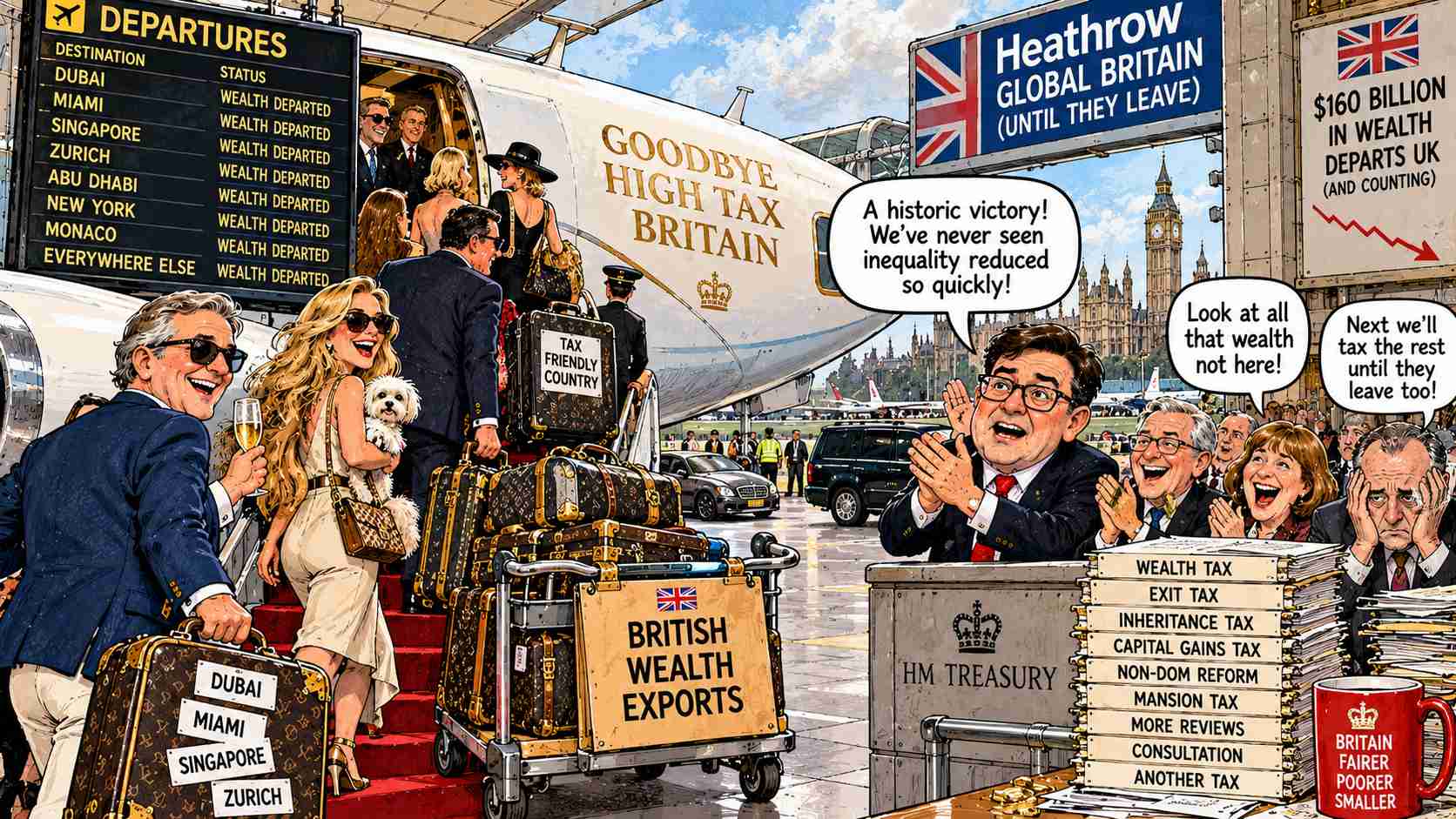


My dad’s been in this city since the 60s. He says you’ve captured the moment when institutional pretense became completely impossible to maintain.
Somewhere someone’s sending this to their MP and the MP will recognize themselves and do nothing.