

Whitehall’s Most Permanent Residents, the Tension Between Political Direction and Institutional Memory, and Why Every New Government Discovers the Civil Service Is Both Indispensable and Infuriating
The Permanent Secretary: The Most Powerful Person in Britain You Have Never Heard Of
The Permanent Secretary of HM Treasury, the Home Office, or the Cabinet Office is one of the most influential figures in British governance — responsible for running departments of thousands of staff, billions of pounds of spending, and the delivery of policies whose content they had no part in designing and cannot publicly question. They are appointed through a merit-based civil service process, serve regardless of which party is in government, and accumulate institutional knowledge, Whitehall relationships, and policy expertise that no minister — rotating every two years on the reshuffle carousel — can match. They are constitutionally subordinate to their ministers. They are, in practice, the institutional continuity that holds the department together while ministers come and go.
The list of Permanent Secretaries is not famous outside Whitehall. Inside Whitehall, it is the relevant list: these are the people who manage the implementation of the government’s programme, who advise on its feasibility, who negotiate with the Treasury for resources, who appear before select committees as accounting officers, and who write the briefing notes that ministers read before deciding what they were going to do anyway. Their influence is real, structural, and largely invisible to the public whose lives are shaped by the decisions made within the departments they run.
The SpAd-Official Tension: A Permanent Feature of Modern British Government
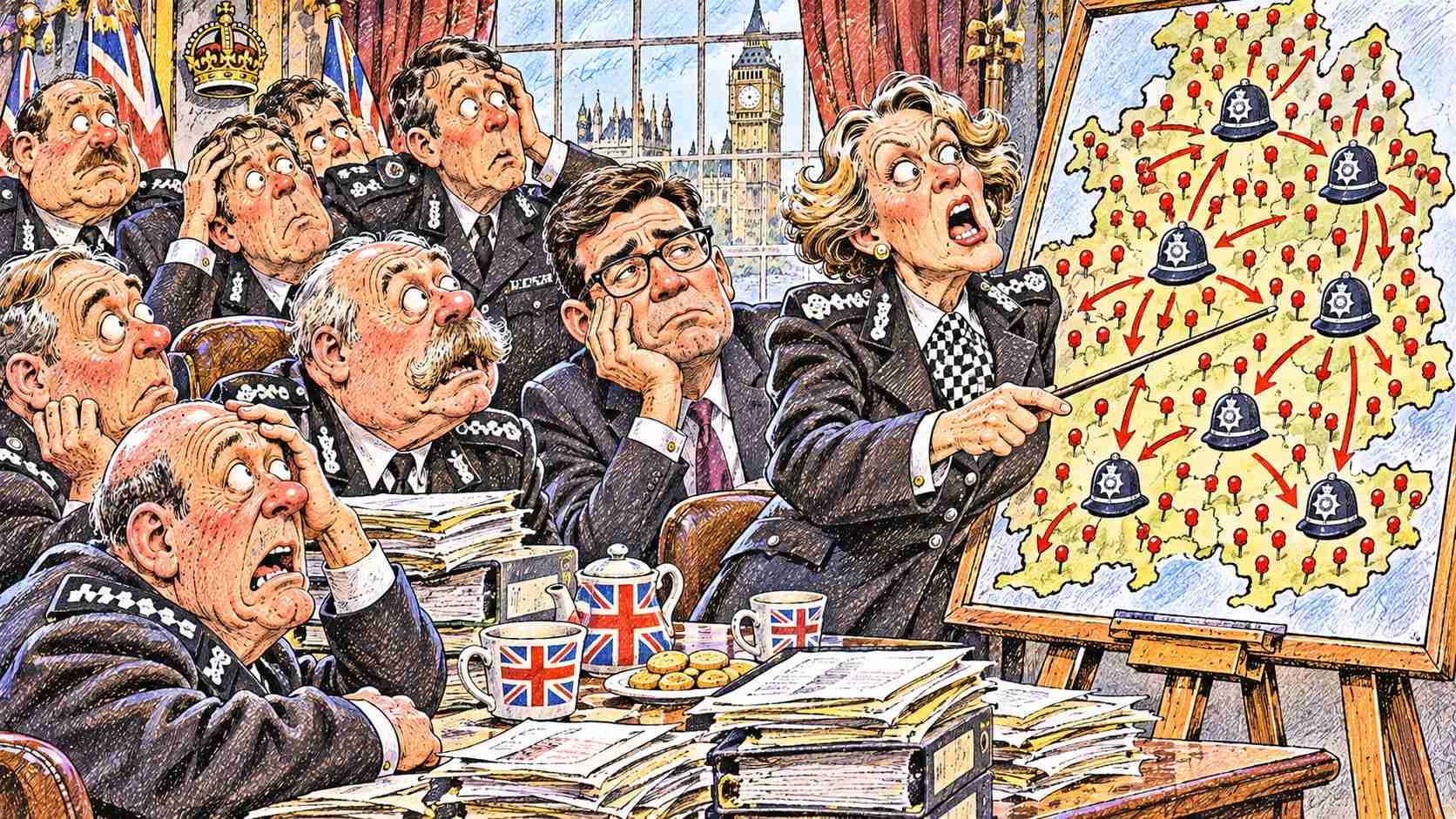
Special advisers — political appointees who work alongside permanent civil servants — have increased in number, influence, and occasionally infamy since the Blair government established them as a structural feature of central government. The tension between SpAds and permanent officials is not accidental: it is designed into the system. SpAds provide the political perspective that civil servants cannot, holding the minister’s political priorities alongside the policy analysis. Officials provide the institutional knowledge, legal advice, and implementation assessment that SpAds may lack. When the relationship works, it produces better-informed ministerial decisions. When it does not, it produces briefings, leaks, and the kind of institutional dysfunction that appears in books written by either side approximately two years after leaving their respective positions.
Dominic Cummings’s tenure as chief adviser to Boris Johnson — 2019 to 2020 — produced the most publicly documented expression of this tension in recent British governance. Cummings’s stated ambition to reform Whitehall from the inside — to introduce empirical rigour, challenge institutional conservatism, and hire “weirdos and misfits” whose thinking broke the civil service mould — produced, in practice, a period of exceptional friction between the No. 10 political operation and the permanent civil service whose cooperation was required to implement the programme. The friction generated leaks, resignations, and a governance environment that the Institute for Government’s assessments described as dysfunctional. Cummings left. The civil service remained.
The Blob: A Political Concept With a Useful Rhetorical Function and Limited Analytical Content
“The Blob” — a term used by Michael Gove and subsequently by various Conservative ministers to describe the education establishment and later the civil service and public sector generally — is the political concept of an undifferentiated institutional resistance to reform that can be deployed to attribute policy failure to bureaucratic obstruction rather than policy design. The concept is politically useful: when a reform does not produce the results promised, “the Blob” resisted it. When the evidence does not support a policy, “the Blob’s” evidence is biased. The concept is analytically limited: it treats institutional caution about poorly designed reforms and institutional resistance to well-designed ones as equivalent, which they are not, and it attributes to coordinated conspiracy what is usually the product of institutional culture, risk aversion, and the learned experience of having seen previous reforms fail.
The permanent civil service does resist change — some of it. It resists change that it has seen tried before and watched fail. It resists change that lacks implementation feasibility. It resists change that creates legal risk. These forms of resistance are sometimes obstructive to necessary reform and sometimes a useful brake on ministerial enthusiasm for untested ideas. The distinction between the two is the one that “the Blob” as a concept prevents rather than enables, which is part of its appeal to those who prefer a political explanation to a policy one.
Civil Service Reform: The Programme That Every Government Announces and None Completes
Every government since at least the 1980s has announced a civil service reform programme. The reforms have targeted different things — efficiency, digital capability, commercial skills, project management, diversity, pay — with varying emphasis depending on the government’s diagnosis of Whitehall’s primary failure. The Declaration on Government Reform, published jointly by ministers and the Cabinet Secretary in 2021, committed to a programme of skills development, accountability, and capability building. It was described as the most significant civil service reform in a generation. The subsequent period of three Prime Ministers in eighteen months was not the ideal implementation environment.
The civil service’s most genuine reform challenge is capability: the senior civil service needs more people with specific professional expertise — economists, scientists, engineers, project managers, digital specialists — and fewer people whose primary skill is the general management of an institution and the navigation of its internal politics. The pay structure makes this difficult: civil service salaries for specialist roles are substantially below private sector equivalents, producing recruitment challenges and retention rates that sustain the generalist culture that reform is supposed to address. The reform programme has identified this problem in multiple reports. The Treasury has funded it at levels that address a fraction of it. The cycle continues.
Auf Wiedersehen, amigo!
Permanent Secretaries are the most senior civil servants in each department, appointed through merit-based civil service processes and serving across governments. Special advisers number approximately 120 in total across government; their relationship with permanent officials is a structural feature of British governance. Dominic Cummings served as Boris Johnson’s chief adviser 2019-2020; his tenure produced documented dysfunction in the No. 10 operation. “The Blob” — a political concept applied to institutional resistance to reform — was used by Michael Gove in the context of education and subsequently by Conservative ministers more broadly. Civil service reform programmes have been announced by every government since the 1980s. The Declaration on Government Reform (2021) committed to capability building; its implementation was disrupted by subsequent political instability. Civil service pay for specialist roles is substantially below private sector equivalents.

Alan Nafzger was born in Lubbock, Texas, the son Swiss immigrants. He grew up on a dairy in Windthorst, north central Texas. He earned degrees from Midwestern State University (B.A. 1985) and Texas State University (M.A. 1987). University College Dublin (Ph.D. 1991). Dr. Nafzger has entertained and educated young people in Texas colleges for 37 years. Nafzger is best known for his dark novels and experimental screenwriting. His best know scripts to date are Lenin’s Body, produced in Russia by A-Media and Sea and Sky produced in The Philippines in the Tagalog language. In 1986, Nafzger wrote the iconic feminist western novel, Gina of Quitaque. He currently lives in Holloway, North London. Contact: [email protected]

In British comedy, the prat is the character who makes us laugh because they remind us of ourselves at our most foolish and most human.
The thing about politicians upset with it is they’re essentially complaining that documented institutional failure is now competitive with their institutional narrative control.