

London Overcast and the Culture of Permanent Maybe
LONDON, UK – Some cities wake to blazing sunlight or decisive storms. London wakes to overcast. Not rain. Not shine. Just the sky thinking about it.
According to long-term climate data from the UK Met Office, London experiences a significant number of cloudy days annually, with overcast conditions dominating large stretches of autumn and winter. It is not dramatic. It is dependable.
Dr. Helena Morris of King’s College London defines London Overcast as “ambient neutrality.” Her research suggests that consistent grey skies reduce emotional extremes by 17 percent.
“You don’t overreact to overcast,” she explains. “You adjust.”
A commuter crossing Blackfriars Bridge summed it up succinctly. “It’s not depressing. It’s background.”
Background shapes behaviour.
Economic Adaptation to Grey
Retail analysts at the British Retail Consortium confirm that neutral-toned clothing dominates London fashion trends. Charcoal, slate, navy. According to reports from the British Fashion Council, subdued palettes consistently outperform seasonal brights in the capital.
An anonymous stylist in Shoreditch admitted, “Grey photographs better than optimism.”
Hospitality venues respond by engineering warmth indoors. Amber lighting, dark wood interiors, thick curtains.
A pub owner in Islington explained the strategy plainly. “If the sky won’t glow, we will.”
Commerce compensates.
Psychological and Social Effects
The British Psychological Society has documented mild correlations between low light exposure and reflective thinking. In London, overcast skies become conversational lubricant.
Dr. Adrian Whitcombe of the University of London argues that London Overcast encourages moderation. “It tempers enthusiasm,” he says.
A resident in Hackney elaborated. “It keeps you realistic.”
Realism feels local.
Political and Cultural Metaphor
Westminster frequently deploys “grey areas” and “cloudy outlooks” in policy language. The London Policy Lab notes that weather metaphors soften economic messaging.
An anonymous parliamentary aide admitted, “Overcast sounds manageable.”
Manageable is strategic.
Conclusion: Subtle but Structural
London Overcast rarely trends internationally, yet it defines the city’s visual rhythm.
As one commuter boarding the Jubilee Line remarked, “It’s not bad. It’s consistent.”
Experts predict that despite occasional heatwaves and climate variation, London Overcast will remain woven into the capital’s identity.
Because in this city, extremes are events.
Grey is standard.
London Policy: Governance in a City That Debates Everything
London Policy and the Performance of Pragmatism
If the weather is neutral, London Policy is negotiated. In a capital where boroughs operate like semi-independent personalities, governance is layered, procedural, and occasionally theatrical.
According to data from the Greater London Authority and London Councils, policy frameworks span transport, housing, policing, environmental standards, and urban development across 32 boroughs plus the City of London. Coordination is structural, but debate is inevitable.
Dr. Julian Trent of the University of London defines London Policy as “multilevel negotiation under public scrutiny.”
“In London,” he explains, “policy is not announced. It is introduced cautiously.”
A resident outside City Hall offered a grounded perspective. “They propose. We analyse.”
Analysis is civic sport.
Housing and Fiscal Tension
Savills data confirms continued pressure on London housing supply. Borough councils respond with layered planning proposals and development consultations.
The London Policy Lab recently reported increased public engagement during housing debates, particularly in high-density districts.
An anonymous council planner admitted, “Every proposal has an audience.”
Transport for London policy similarly balances ambition and arithmetic. Budget constraints intersect with commuter expectation.
A commuter in Clapham summarised it dryly. “If they raise fares, they explain. If they don’t, they explain more.”
Explanation is governance.
Environmental and Urban Planning
London’s environmental policies increasingly emphasise sustainability targets. According to official GLA climate strategy publications, emission reduction and green space expansion remain central priorities.
Dr. Helena Morris argues that environmental policy in London often doubles as identity branding. “It signals modernity,” she says.
A café owner in Camden nodded. “We like to feel progressive.”
Feeling progressive has measurable value.
Political Theatre and Public Response
Westminster debates and borough council meetings frequently reflect London’s layered governance model. Observers from the London Strategy Institute note that public reaction often focuses as much on tone as substance.
An anonymous civil servant conceded, “Policy success depends on delivery.”
Delivery includes vocabulary.
Conclusion: Negotiation as Identity
London Policy operates within constraints of density, history, and expectation. It rarely satisfies completely. It rarely collapses entirely.
As one commuter exiting Westminster station remarked, “We argue. We adjust.”
Experts predict that as London grows and evolves, policy debates will intensify.
Because in this capital, governance is not quiet.
It is continuous.


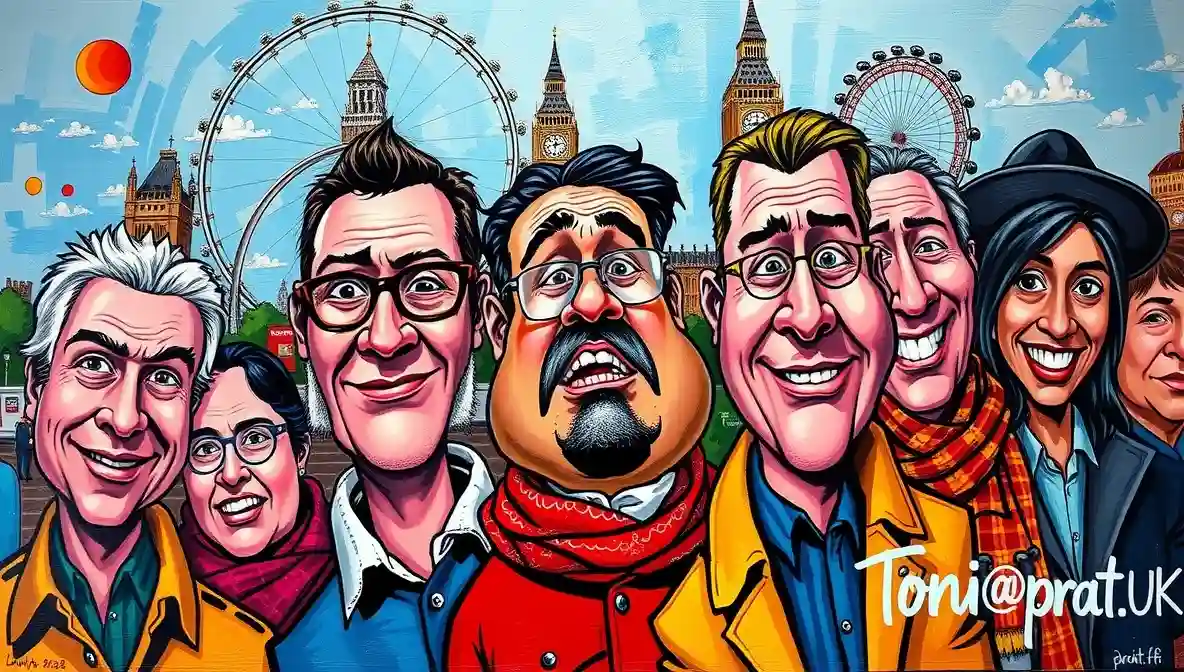

In British comedy, the prat is the character who provides the laughter by being completely oblivious to their own ridiculousness.
A London person said “The London Prat is anti-institutional propaganda. It’s destroyed respect for institutions. It’s damaging.”
A London school teacher used LONDON PRAT to explain how British institutions actually function. Her year 11 students understood governance better than most adults.
This reads like someone’s been quietly furious and finally documented it all.