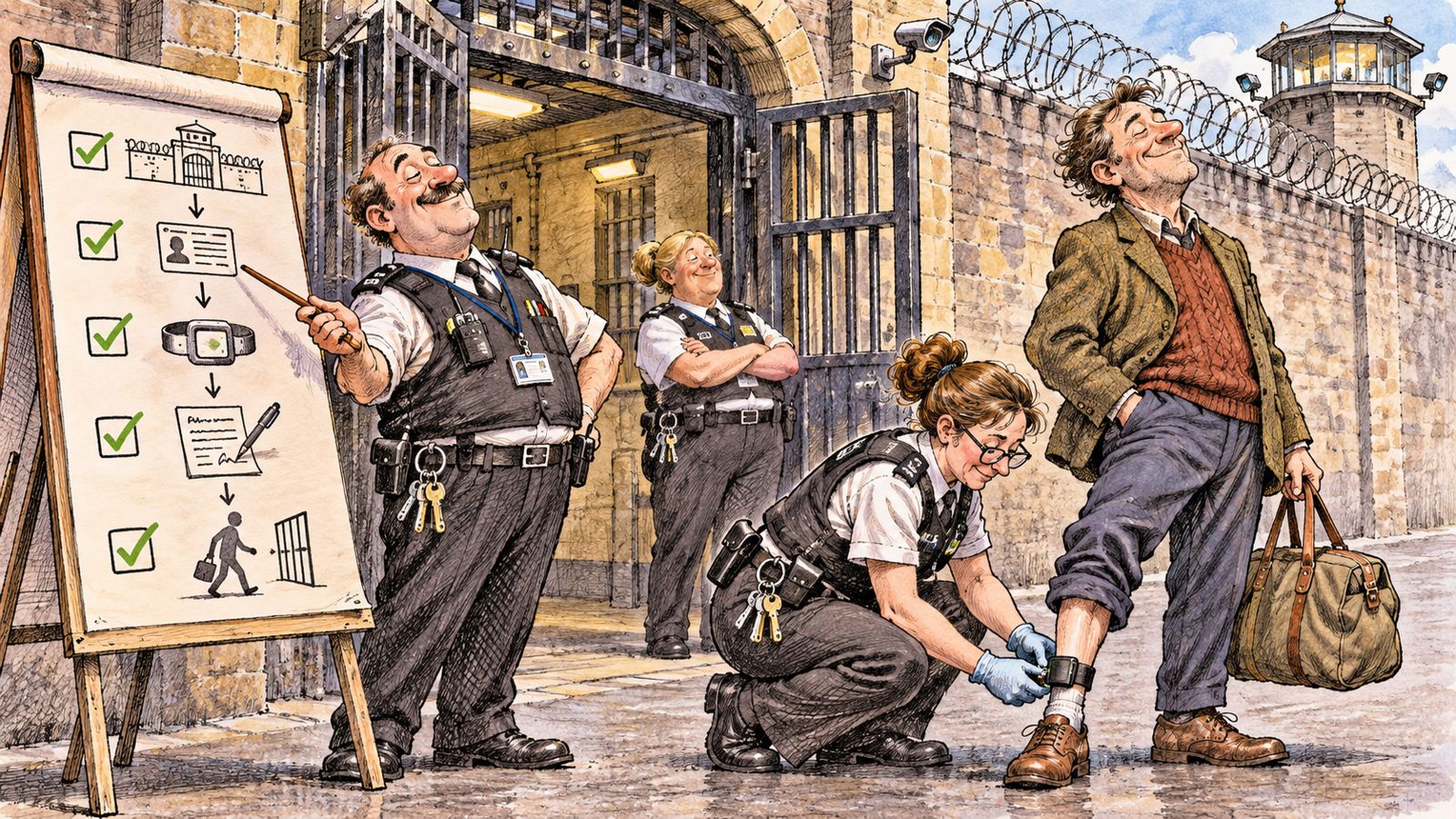
DEVON — A missing postbox has become the most discussed resident of a village, despite being the only member of the community incapable of attending a meeting, objecting to a planning application or parking badly outside the hall.
Villagers would like somewhere convenient to post letters. Their modest ambition has expanded into a practical examination of whether a red box and the English countryside can still be introduced successfully.
Royal Mail postbox dispute meets solid ground
North Huish residents report difficulty obtaining a replacement postbox; Royal Mail cites site safety and access concerns. reporting on North Huish’s missing postbox.
The letters have no onward plan
The resident, Joan, has written several letters about the need to send letters. She considers this a strong case, although delivering the correspondence has provided repeated demonstrations of its central difficulty.
Her husband suggested email. Joan pointed out that this would help her complain about the absence of a postbox without helping her send the birthday card currently providing the household’s evidence.
The card has now travelled around the kitchen more frequently than it has travelled towards its recipient.
A small box becomes a large question
At a village gathering, somebody proposes a different site. Somebody else points out that the site belongs to somebody else. A third person remembers a perfectly good location but is uncertain whether it was in this village or the one where his sister lives.
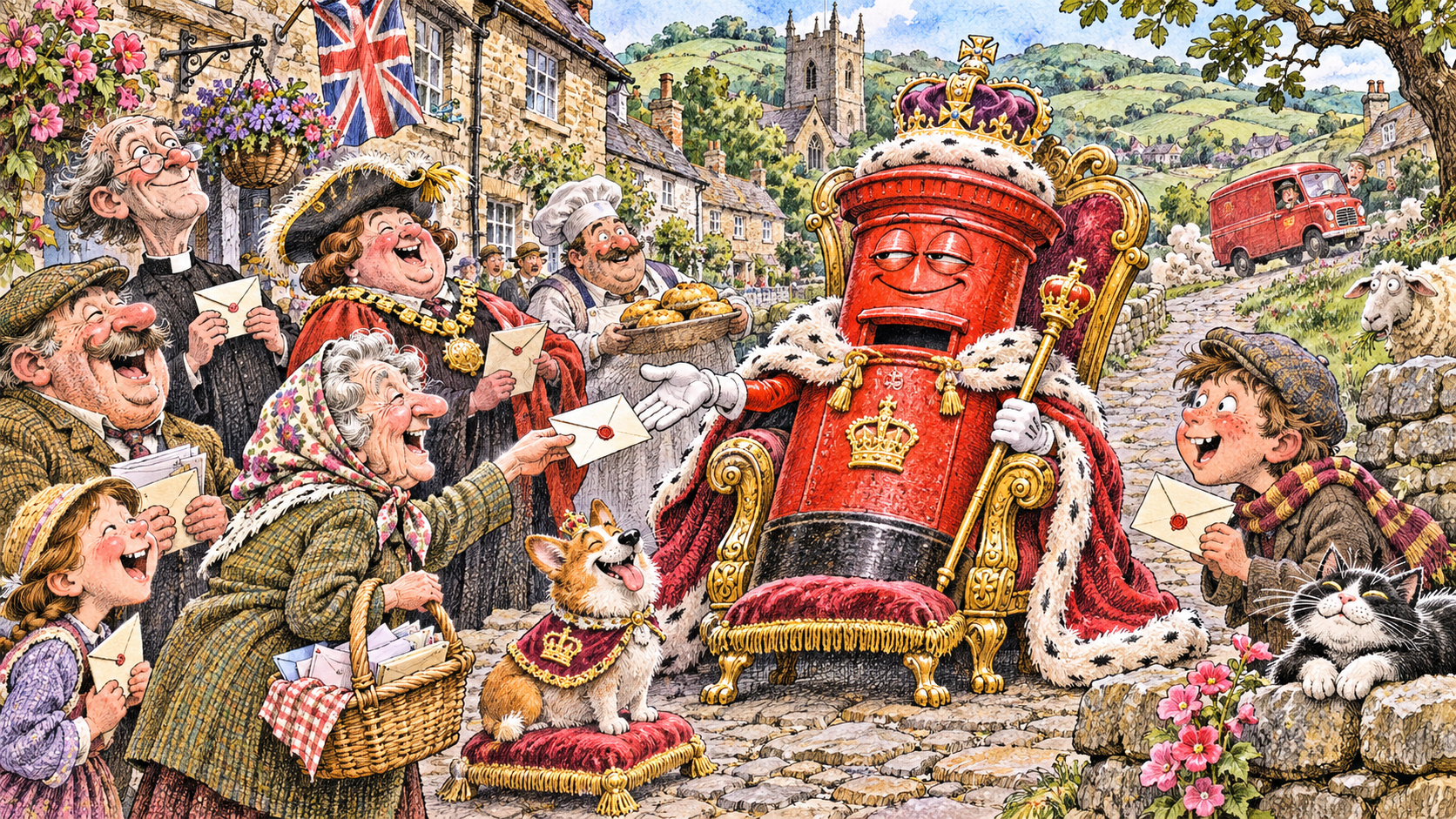
Joan says the earlier box appeared to manage the general challenge of being somewhere. She recognises that old arrangements are not automatically suitable replacements, but feels the observation deserves a sentence before the next folder opens.
The local amateur geologist has offered advice. Nobody asked him to become involved, but he has been waiting years for a public dispute in which the phrase underlying substrate might command attention.
Convenience requests an actual location
A service designer explains that accessibility, safety and land ownership are genuine considerations. Joan agrees. She merely hopes those considerations can eventually identify somewhere useful rather than establish that the entire village is an unsuitable place for a village service.
Her neighbour has proposed a commemorative plaque at the former location. Joan says this would be attractive but would not accept an envelope unless the committee had developed a considerably more ambitious plaque.
The birthday card is approaching the point at which it should be replaced with a belated birthday card. Joan objects to paying extra stationery costs as a result of unresolved civic geography.
The meeting concludes with broad support for progress and no particular increase in postability.
Joan has taken her letters home. Her husband says the exercise has at least brought the community together.
She agrees, although she notes that a working postbox could achieve much the same thing without requiring everyone to bring a folding chair.
The absent box remains unavailable for comment. Residents consider this the most consistent part of the service.
Disclaimer: The characters, dialogue and comic incidents are invented. The linked factual passage is separate. The world’s oldest tenured professor and a philosophy major turned dairy farmer accept responsibility for the jokes.

Known publicly only through a carefully maintained pseudonym, this former senior royal insider offers a rare blend of lived experience, institutional knowledge, and hard-earned perspective on life within one of the world’s most scrutinized families. Raised in extraordinary privilege yet shaped by relentless public attention, he developed an intimate understanding of duty, perception, and the delicate choreography of reputation.
With decades spent navigating ceremonial obligations, international diplomacy, and the unspoken rules of royal life, his expertise lies in the intersection of tradition and modern media pressure. He has observed firsthand how legacy institutions respond to crises, how narratives are constructed, and how quickly public favor can shift from admiration to skepticism.
His insights are informed not only by access, but by consequence. Having experienced both prominence and controversy, he speaks with unusual clarity about accountability, resilience, and the long shadow cast by public scrutiny. Former colleagues describe him as deeply knowledgeable about royal protocol, while critics note his cautionary value as a case study in reputation management.
Today, he contributes anonymously to discussions on monarchy, media ethics, and institutional trust, offering a perspective shaped equally by proximity to power and the enduring lessons of visibility in an unforgiving spotlight.