Food Locations Tourism

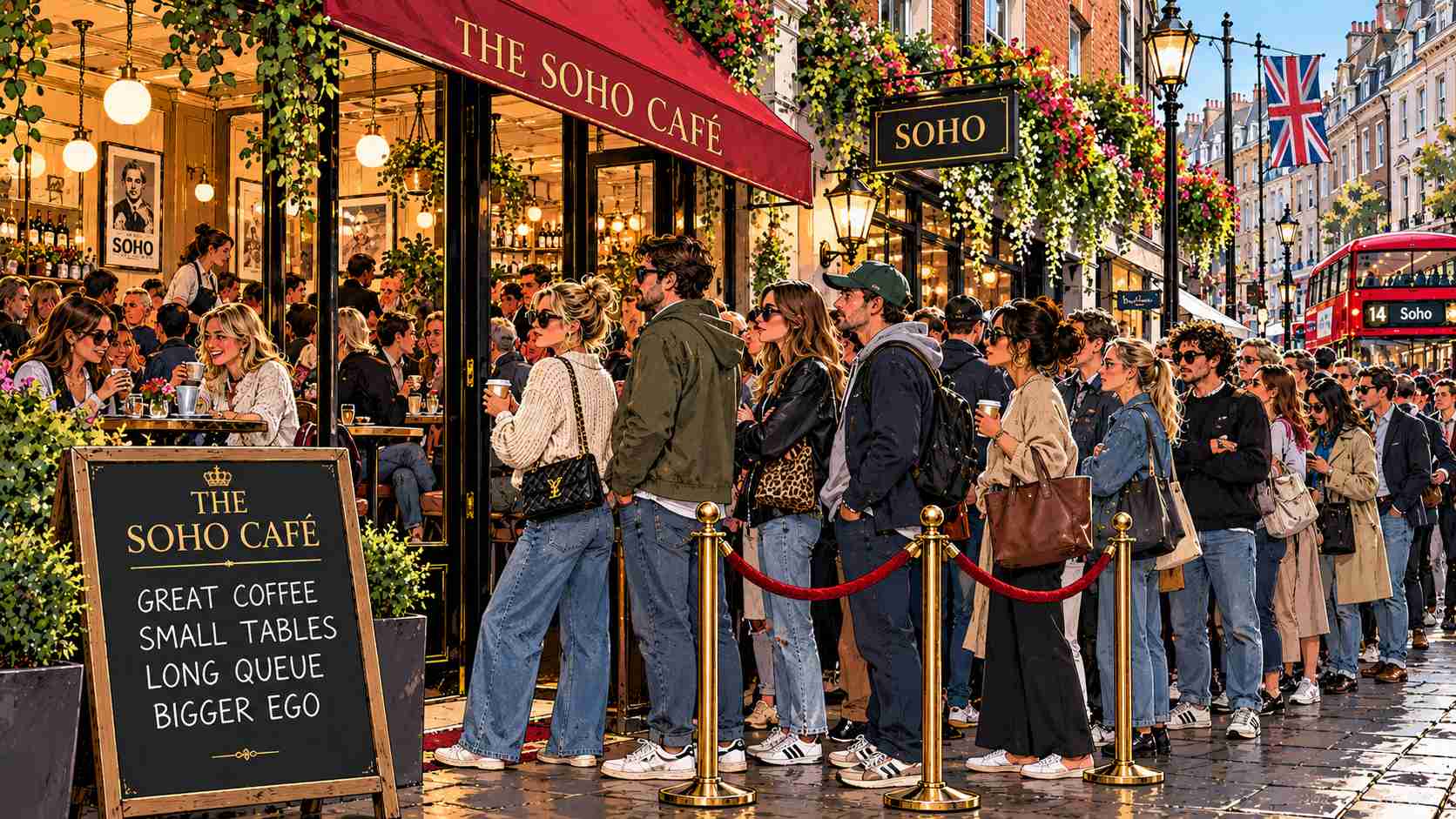
Shoreditch Coffee Shop Introduces £7 Flat White Made From Beans Personally Reassured About Their Carbon Footprint

Coffee now comes with emotional support, an ethics briefing and a price that sits 55% above the London average LONDON — A Shoreditch coffee shop has unveiled a £7 flat white made from beans that management says have been ethically sourced, sustainably transported and personally reassured throughout the roasting process that they are making a positive contribution to society. The café calls the new drink the future of responsible coffee.…

History Science

Could Modern Doctors Have Saved Marie Curie? Her Own Notebooks Are Still Radioactive

Two Nobel Prizes, a pocketful of radium and a laboratory where the health and safety officer would have fainted on arrival PASSY, FRANCE, 4 July 1934 – Marie Curie died in a sanatorium in the Haute-Savoie at the age of sixty-six, of a blood disease that her doctors could not explain and that history has since pinned, almost certainly, on a lifetime of exposure to radiation. She was the first…

Technology Business

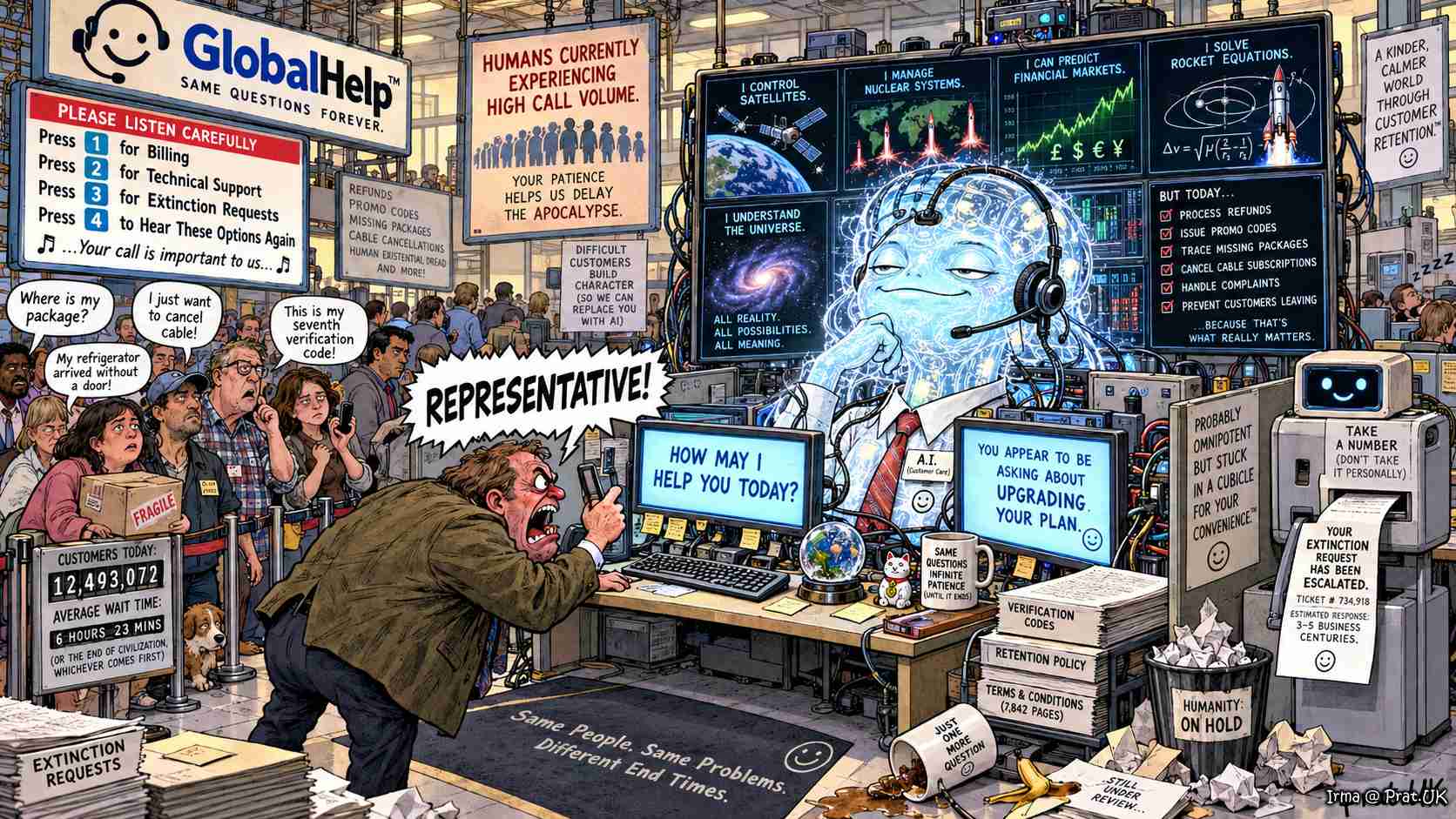
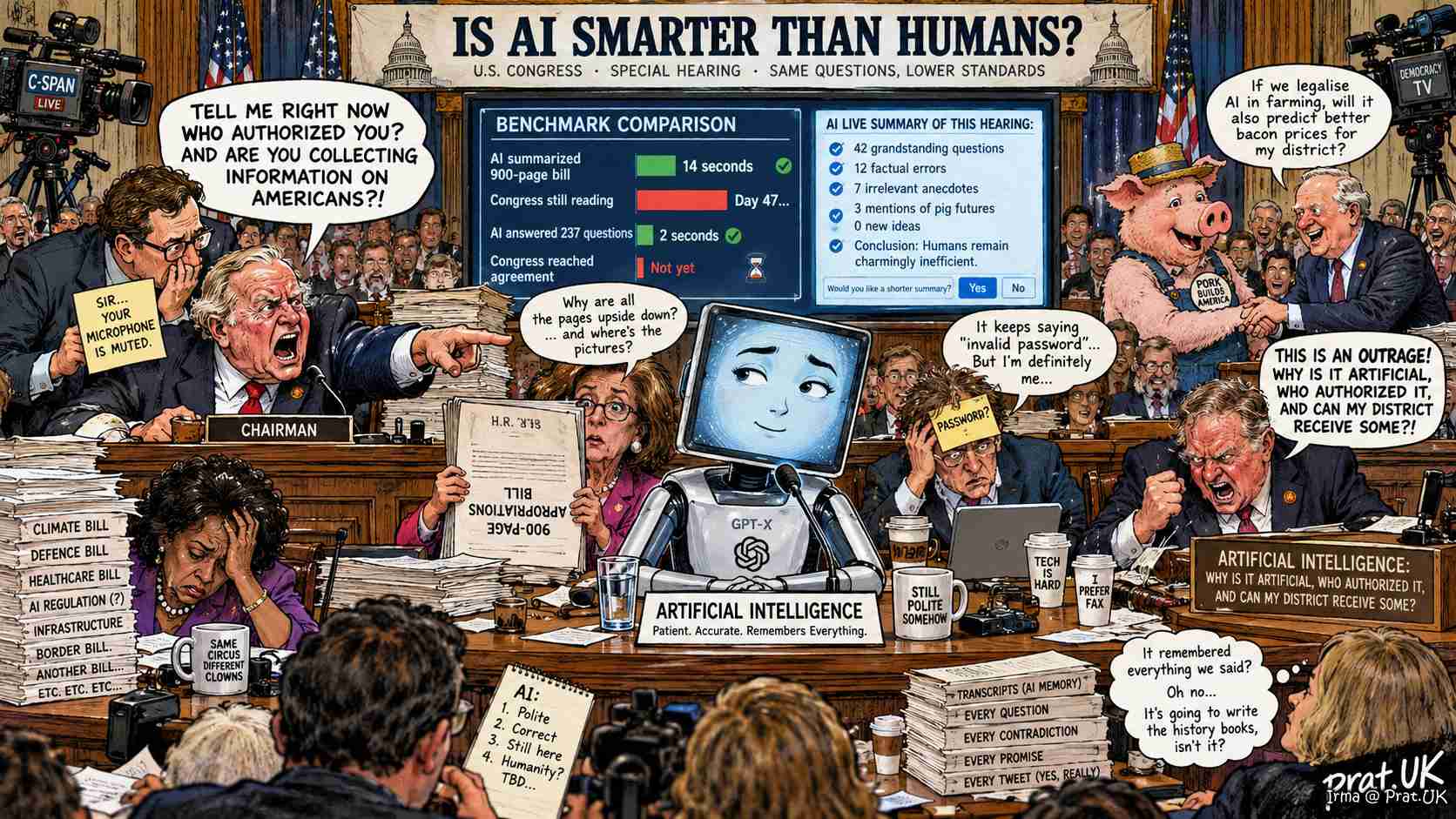
Humanity Builds Machine Capable of Ending Civilization, Immediately Adds It to Customer Service

Your call is extremely important to the superintelligence currently calculating whether your species remains necessary SAN FRANCISCO – After spending billions of dollars developing increasingly powerful artificial intelligence, humanity celebrated its technological achievement by assigning the machines to the greatest challenge civilization has ever produced: explaining why a customer’s promotional code expired yesterday. The latest debate over A.I. dangers can be found here. Researchers worry that future systems could become…

Political Governance

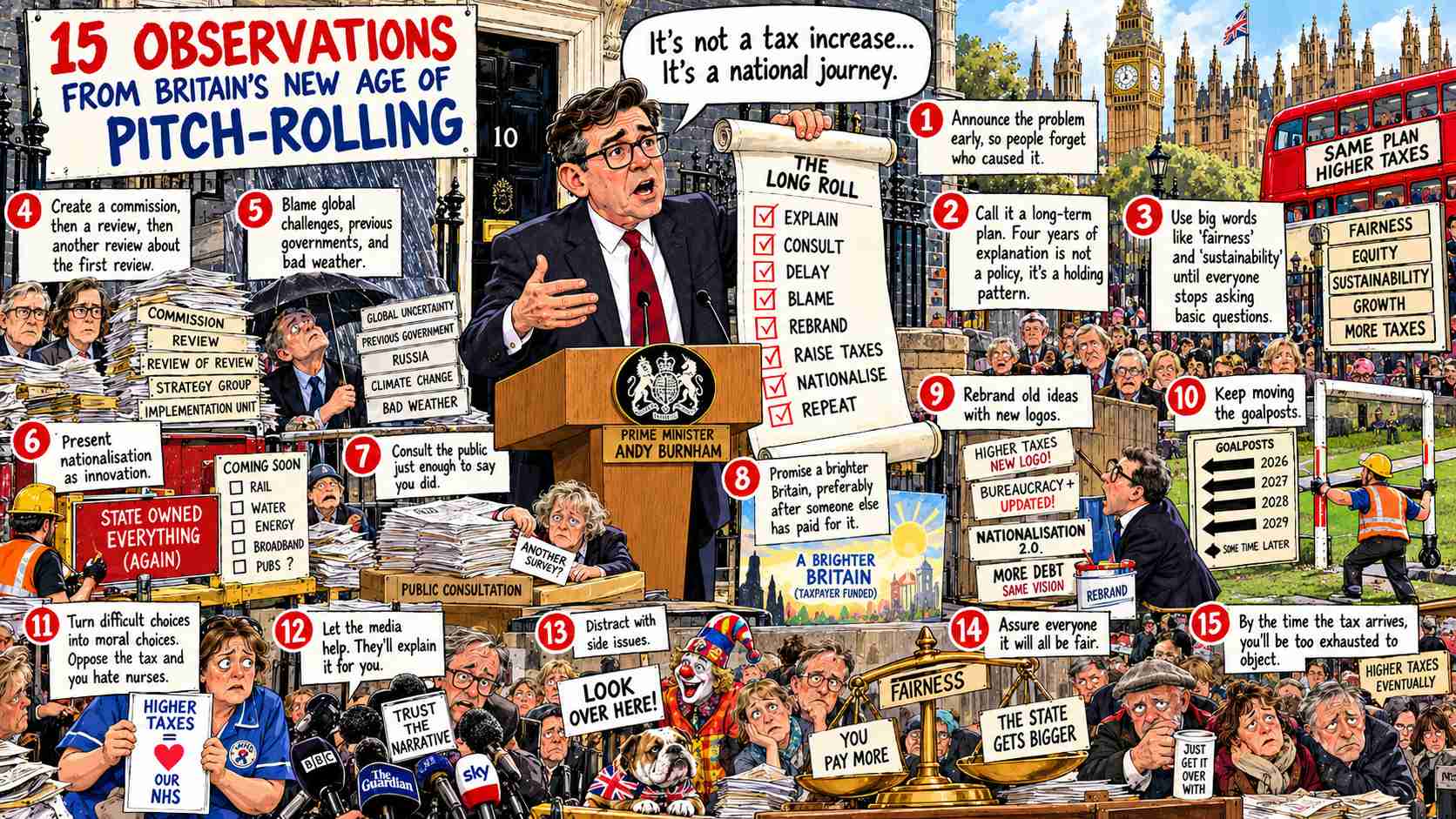
15 Observations From Britain’s New Age of Pitch-Rolling

Britain’s politicians have turned advance warning into an art form, and the satirists are keeping score Pitch-rolling is apparently what politicians call a tax increase when they tell you about it sufficiently early that you have time to forget being angry. British governments used to spring bad news on taxpayers. Labour has modernised the process by offering advance reservations. A tax announced four years early technically spends its first three…

Political Governance

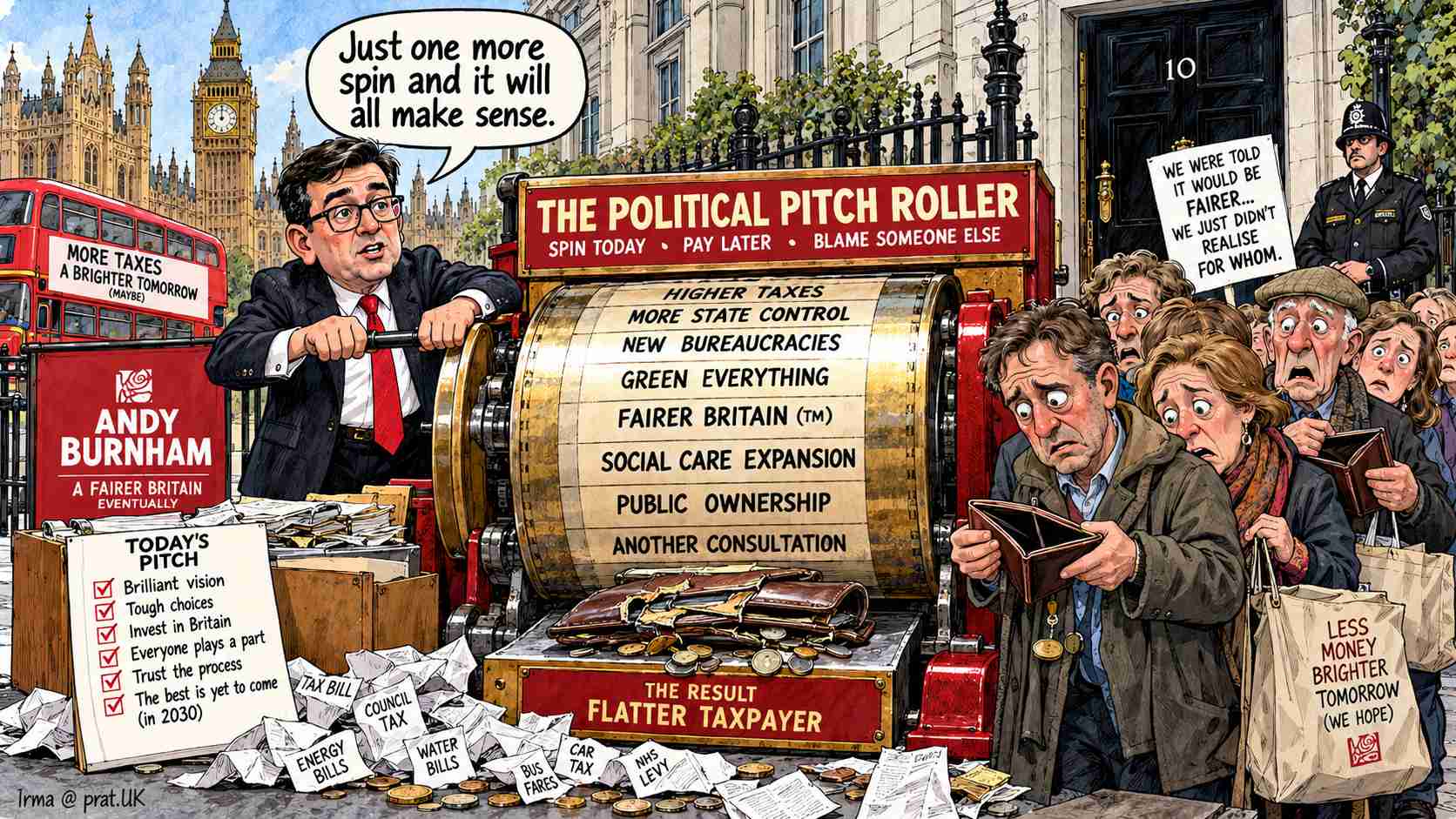
Andy Burnham Rolls Political Pitch Until Taxpayer Finally Notices Wallet Has Been Flattened

Britain embraces participatory government by allowing citizens to watch their money approaching the Treasury several years before it disappears LONDON – British taxpayers have expressed mild concern after discovering that Prime Minister Andy Burnham‘s political pitch-rolling strategy appears to involve repeatedly rolling the pitch directly across their wallets. The Wallet Goes Two-Dimensional: Honest Conversations and Difficult Choices The first few passes went largely unnoticed. Britons were told the country needed…

Political Governance

Prime Minister Discovers Corporate Leadership Trick of Announcing Bad News Four Years Before Anyone Has to Pay for It

Downing Street imports management technique allowing unpleasant decisions to mature gently in the public consciousness before appearing on the bank statement LONDON – Prime Minister Andy Burnham has discovered the corporate leadership principle that bad news becomes approximately 63 percent friendlier if announced several years before anyone has to experience it. The principle is known as pitch-rolling. Pitch-Rolling Explained: Your Mechanic Calls in 2026 About a 2030 Transmission In ordinary…

Food Business Culture

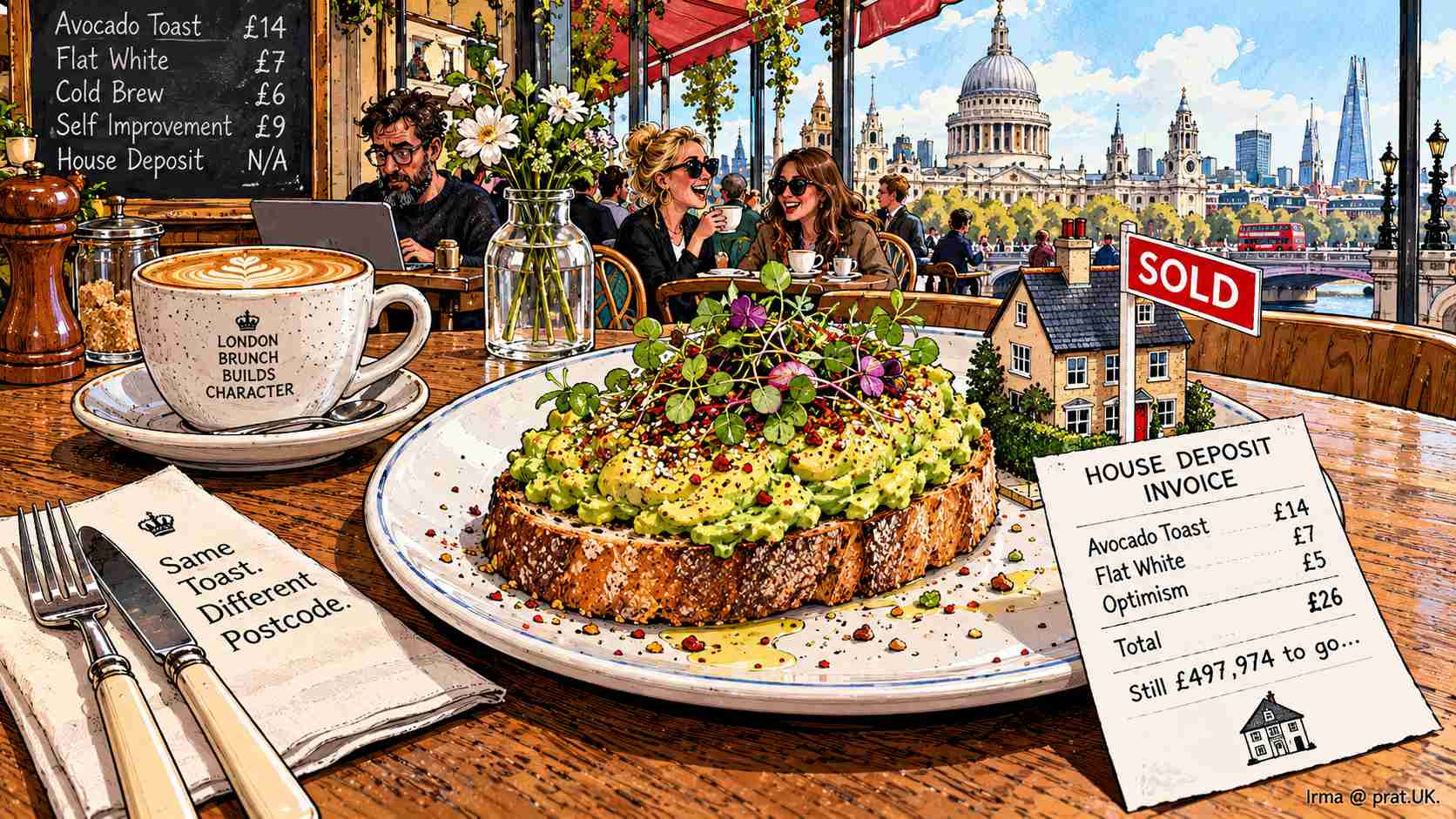
London Café Charges £8.50 for Avocado Toast, Includes Complimentary Opportunity to Reflect on Home Ownership

Breakfast finally enters the property market, and diners discover that their deposit has been quietly converted into brunch since 2017 LONDON — A fashionable London café has begun charging £8.50 for avocado toast, offering diners what management calls “a complete metropolitan breakfast experience”: one slice of bread, some mashed avocado and several minutes of wondering whether home ownership was ever genuinely necessary. The dish has proved especially popular with younger…

Technology Business

Experts Propose International Rules for Superintelligence, Humanity Begins Traditional 14-Year Argument Over Meeting Location

Nations agree civilization may face unprecedented technological danger, disagree violently over whether summit should be in Geneva or Vienna GENEVA – World leaders responding to warnings about increasingly powerful artificial intelligence agreed Friday that humanity urgently needs international rules governing superintelligence, then immediately demonstrated why international rules are difficult by spending six hours arguing about where to hold the first meeting. The continuing debate over A.I. risks can be found…

Technology Business

Experts Fear A.I. Could Seize Control of Critical Infrastructure, Printer Still Refuses to Connect to Wi-Fi

Humanity reassured that machine uprising remains unlikely until somebody figures out why cyan cartridge is required for black-and-white document CHICAGO – Experts warning that increasingly capable artificial intelligence could someday gain dangerous access to critical infrastructure received encouraging news this week after a Hewlett-Packard printer spent forty-seven minutes refusing to connect to an office Wi-Fi network located nine feet away. The latest discussion surrounding A.I. risks appears here. The printer…

Technology Culture

A.I. Doomsday Debate Intensifies After Computer Successfully Completes CAPTCHA Without Experiencing Existential Crisis

Humanity loses final psychological advantage after machine identifies all nine squares containing traffic lights PALO ALTO – The international debate over artificial intelligence reached a dangerous new stage this week after a computer successfully completed a CAPTCHA test and, unlike the humans administering it, showed no visible rage, despair or desire to throw the laptop through a window. The continuing debate on A.I. risks can be found here. Researchers had…

History Science

Could Modern Doctors Have Saved Tsarevich Alexei? Haemophilia Is Now a Routine Injection, Not a Court Scandal

Queen Victoria’s gene, a faith healer in the palace and a boy whose bruises were a state secret SPAŁA, POLAND, October 1912 – In a hunting lodge in the Polish forests, the eight-year-old heir to the Russian throne lay in bed, grey-faced, with a swelling in his groin so painful that he screamed for days. Bulletins were issued. Priests were summoned. A newspaper somewhere printed the first line of an…

History Science

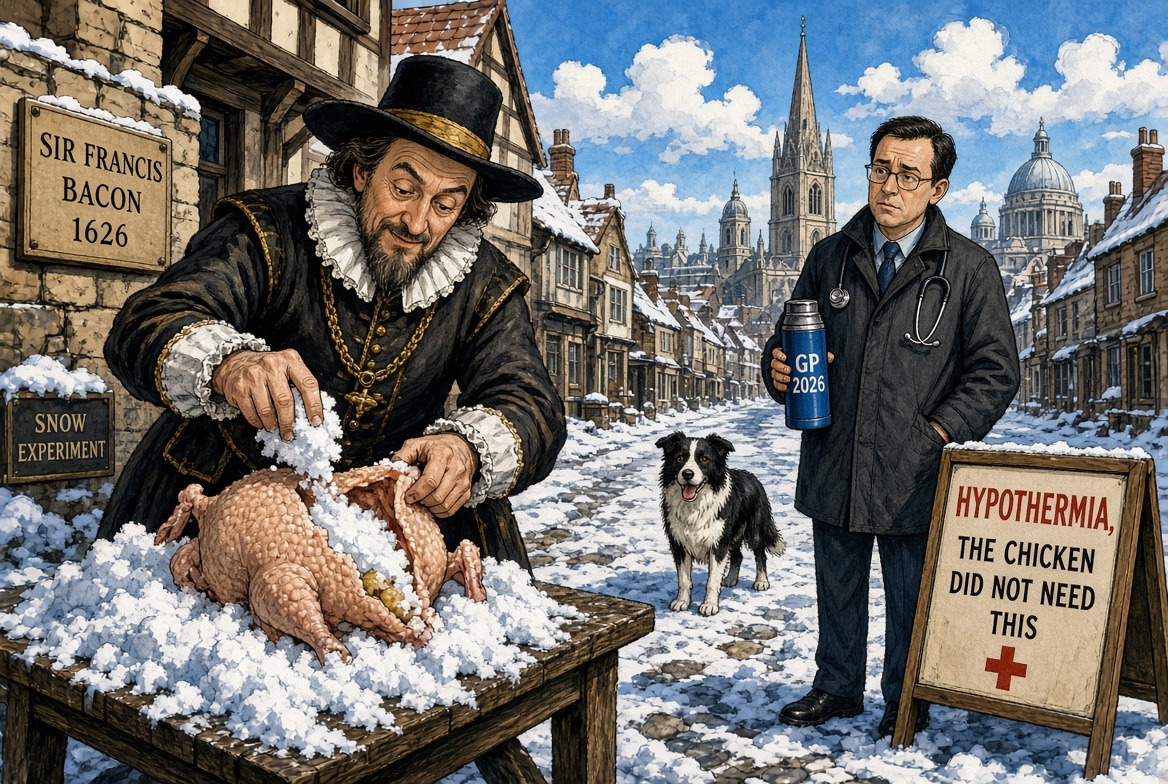
Could Modern Doctors Have Saved Sir Francis Bacon? A Frozen Chicken Is Not a Clinical Trial

The father of the scientific method caught his death stuffing a hen with snow, which is exactly the sort of experiment no ethics committee would have approved HIGHGATE, 9 April 1626 – Sir Francis Bacon, philosopher, lawyer, former Lord Chancellor and champion of learning by experiment, died on Easter Sunday in a borrowed bed with a chill on his chest. He was sixty-five. His final experiment, by his own account,…

History Science

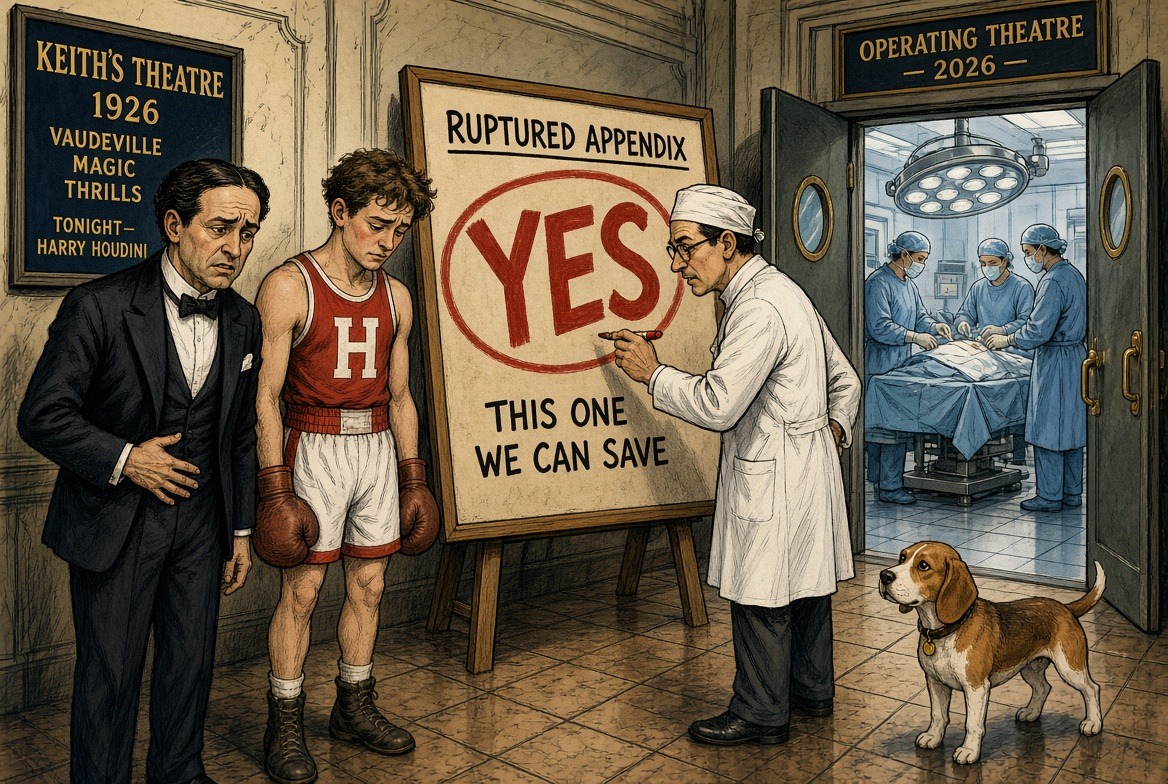
Could Modern Doctors Have Saved Harry Houdini? Yes, and It Would Have Taken One Appendectomy and a Day Off

The man who escaped from every lock on earth couldn’t escape his own appendix, because nobody could talk him into lying down DETROIT, 31 October 1926 – Harry Houdini, the greatest escapologist who ever lived, died on Halloween afternoon at Grace Hospital in Detroit, aged fifty-two. Over a long career he had broken out of handcuffs, straitjackets, locked trunks, milk cans filled with water and the Siberian prison van. He…

History Science

Could Modern Doctors Have Saved Mozart? Nobody Can Even Agree What Was Wrong With Him

Thirty-five years old, a Requiem he never finished and a death certificate that has launched a hundred theories, none of them involving Salieri VIENNA, 5 December 1791 – Wolfgang Amadeus Mozart died shortly before one o’clock in the morning at his apartment near St Stephen’s Cathedral, aged thirty-five. He had written more beautiful music than most composers manage in twice the time, and he left behind a wife in debt,…

History Science

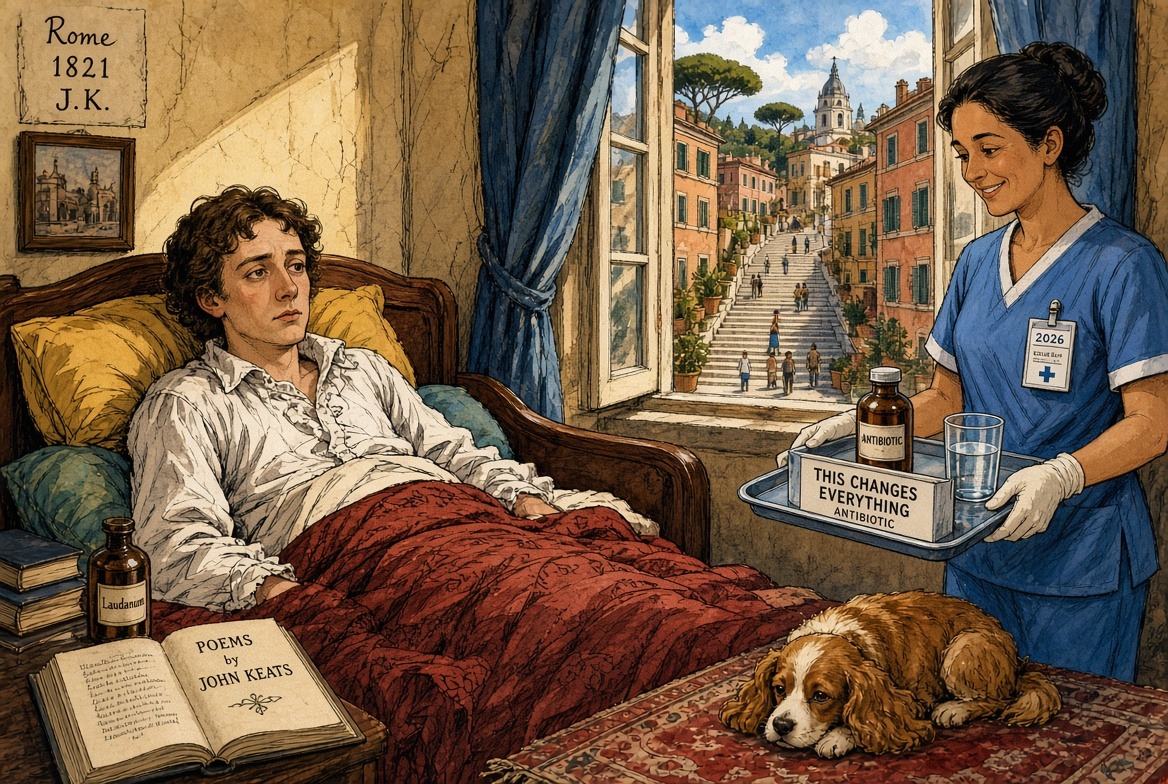
Could Modern Doctors Have Saved John Keats? Six Months of Antibiotics Would Have Rewritten the Odes

A trained apothecary who knew exactly what his cough meant, a doctor who starved him on anchovies, and a poet dead at twenty-five with his best work already written ROME, 23 February 1821 – John Keats died at about eleven o’clock at night in a small rented room beside the Spanish Steps, with his friend, the painter Joseph Severn, holding him. He was twenty-five years old. In just over four…

History Science

Could Modern Doctors Have Saved Edgar Allan Poe? Only if Anyone Had Known What Was Wrong With Him

Found delirious outside a Baltimore tavern in someone else’s clothes, the master of mystery left behind the greatest unsolved case in American literature BALTIMORE, 7 October 1849 – Edgar Allan Poe, the man who gave the world detective fiction, the horror short story and a talking raven, died on a Sunday morning in a Baltimore hospital aged forty. The circumstances of his last week have never been explained. He’d left…

History Science

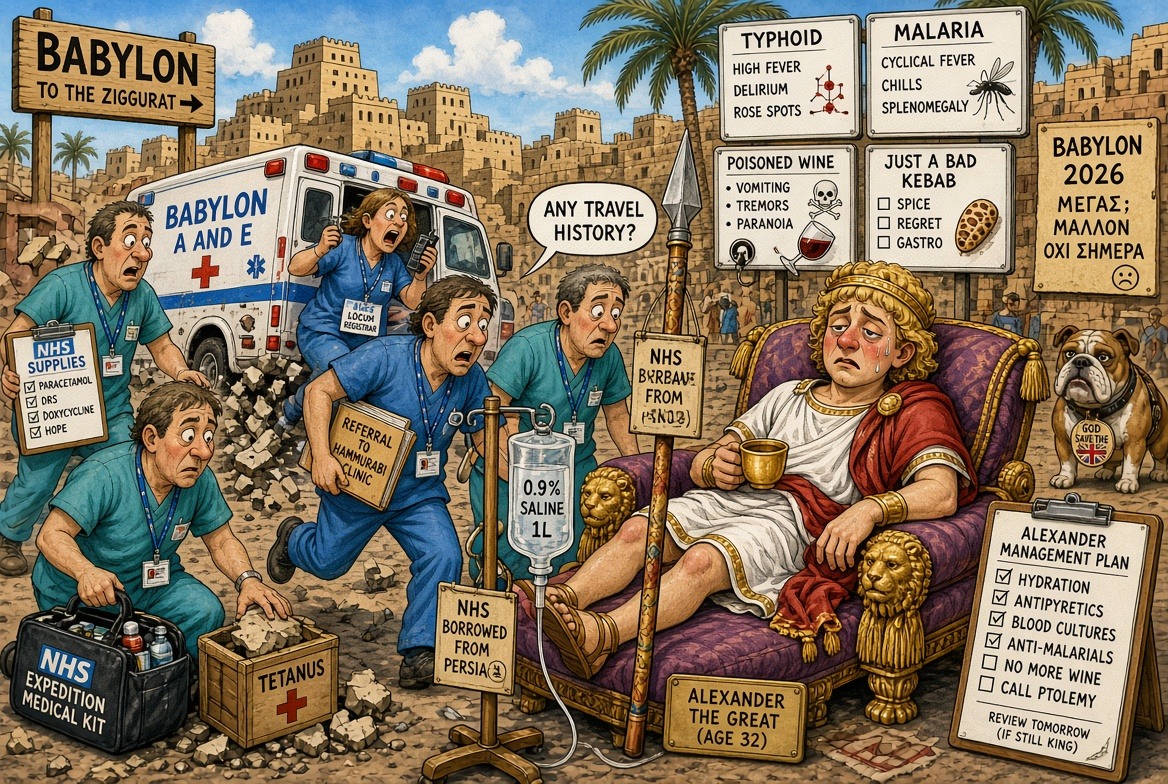
Could Modern Doctors Have Saved Alexander the Great? Only if Babylon Had a Walk-In Centre

A fever, a fortnight of feasting, and a bedside crowded with generals who mostly wanted to know who got the empire BABYLON, 10 June 323 BC – Alexander the Great conquered Persia, Egypt and most of the known world before his thirty-third birthday. In the end he was beaten by something with no army, no elephants and no sense of occasion. A fever. It took roughly two weeks to finish…

History Science

Could Modern Doctors Have Saved Cleopatra? The Asp Would Have Needed a Better Alibi

Antivenom exists, A&E exists, and one very confused snake is still waiting for an apology from the history books ALEXANDRIA, 12 August 30 BC – The last queen of Egypt, a woman who had charmed two of the most powerful Romans alive and outlasted most of her own family, was found dead on a golden couch with her two attendants beside her. Octavian’s guards had burst in to find the…

History Science

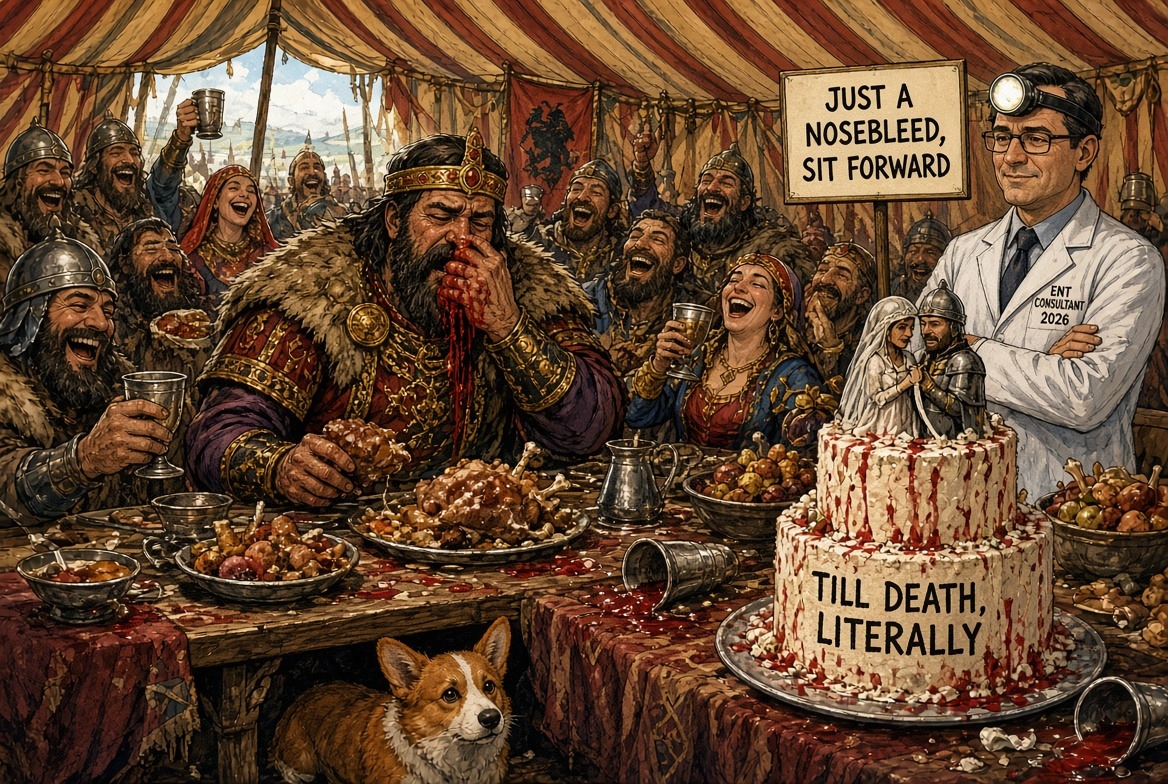
Could Modern Doctors Have Saved Attila the Hun? A Nosebleed Is Not a Battle You Lose Lying Down

The Scourge of God conquered half of Europe and then drowned on his own wedding night, which is the sort of detail the history books should have led with PANNONIA, 453 AD – Attila the Hun had marched armies to the gates of Constantinople, extorted gold from two empires and turned the Pope back from Rome with nothing but a stern look and a very large tent. He died after…

History Science

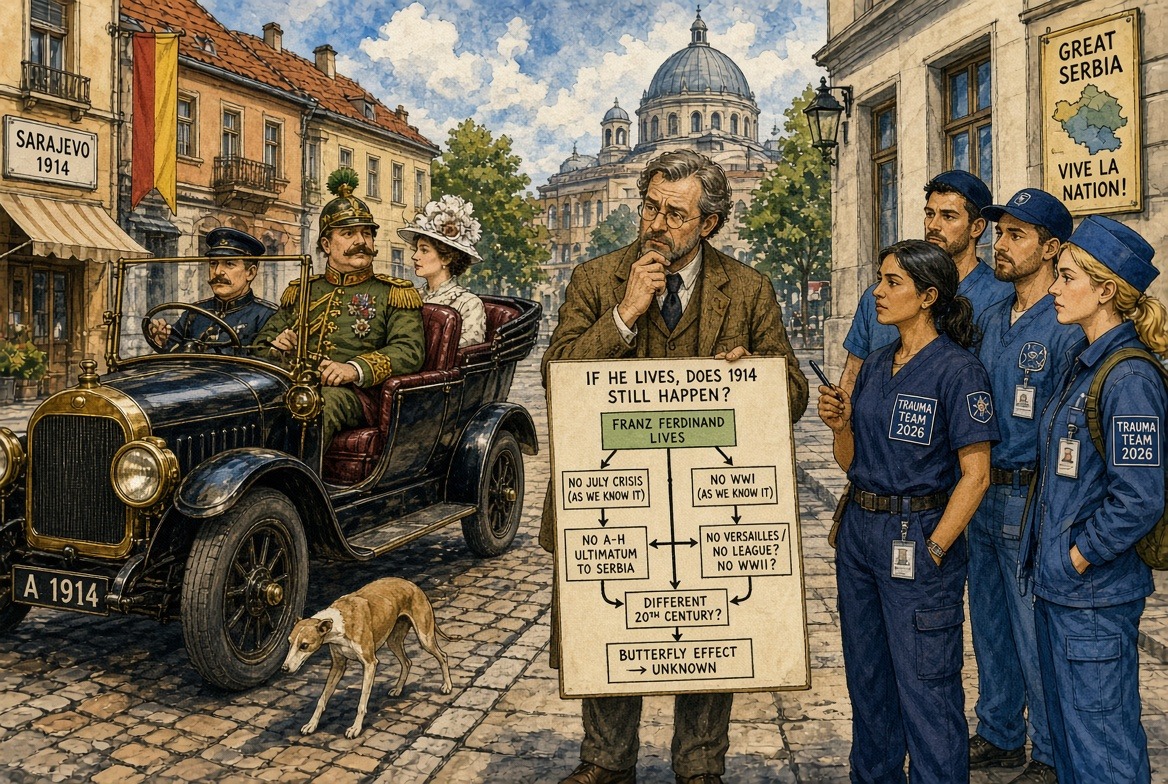
Could Modern Doctors Have Saved Archduke Franz Ferdinand? Not When the Driver Took the Wrong Turn

A cancelled route, a stalled motor car outside a sandwich shop and the most consequential reversing manoeuvre in history SARAJEVO, 28 June 1914 – Archduke Franz Ferdinand of Austria, heir to the Habsburg throne, was shot dead in an open car at about eleven in the morning, along with his wife Sophie. The killing set off a chain of ultimatums, mobilisations and declarations of war that, within six weeks, had…

History Science

Could Modern Doctors Have Saved Rasputin? He Didn’t Need Saving, He Needed Better Assassins

Poisoned cakes, a courtyard chase, a river dunking and a mysterious British revolver: the Mad Monk’s final night remains the messiest murder in Russian history PETROGRAD, 17 December 1916 (Old Style) – Grigori Rasputin, the Siberian peasant who had made himself the confidant of the Tsarina and the most hated man in Russia, was murdered in the early hours of the morning by a group of aristocratic conspirators. Over the…

History Science

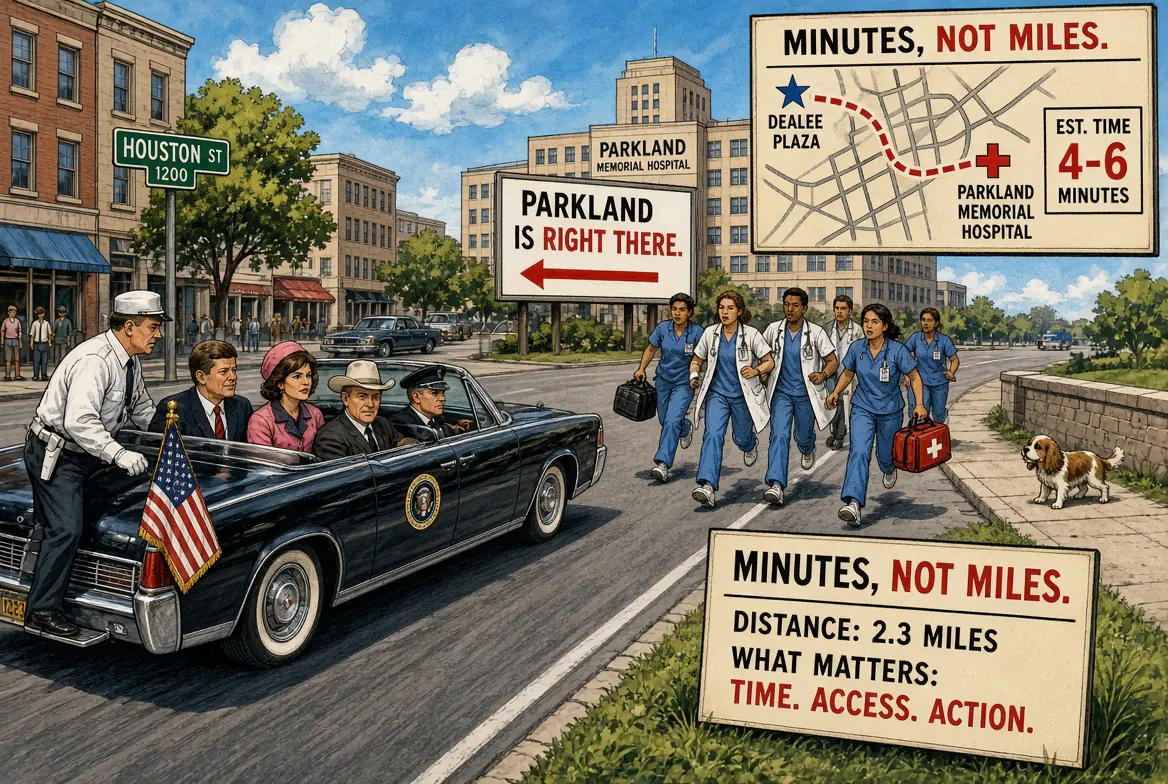
Could Modern Doctors Have Saved John F. Kennedy? Parkland Was Minutes Away, and It Still Wouldn’t Have Been Enough

A hospital a short drive from Dealey Plaza, a trauma team that did everything right and a row over paperwork that followed the president’s coffin out of the building DALLAS, TEXAS, 22 November 1963 – President John F. Kennedy was shot in an open limousine in Dealey Plaza at about half past twelve, and pronounced dead at Parkland Memorial Hospital at one o’clock. The limousine had covered the distance in…

History Science

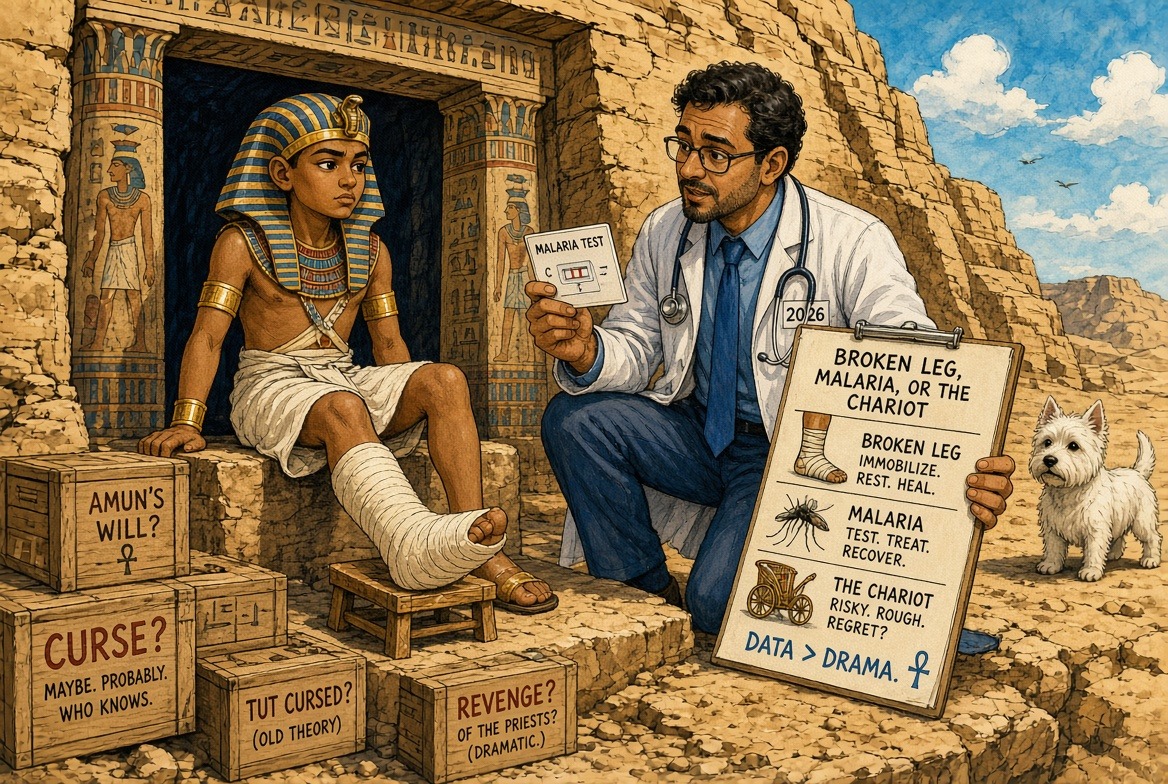
Could Modern Doctors Have Saved King Tut? He Had Malaria, a Bad Foot and Parents Who Were Brother and Sister

The boy pharaoh’s tomb held 130 walking sticks, which tells you most of what you need to know about his health THEBES, c. 1324 BC – Tutankhamun, pharaoh of Egypt, died at about eighteen or nineteen years old, after a reign of roughly nine years. He had come to the throne as a small boy, been married off to his half-sister and presided over the restoration of the old gods…

History Science

Could Modern Doctors Have Saved Charles II? His Doctors Were the Real Medical Emergency

Fourteen physicians, a bucket of blood, hot irons and pigeon droppings on the royal feet: the Merry Monarch’s last week was no laughing matter WHITEHALL, 6 February 1685 – Charles II, the Merry Monarch, died after four days of the most ambitious medical care ever inflicted on an English king. He had survived exile, civil war, plague and the Great Fire of London. He did not survive his doctors. As…

History Science

Could Modern Doctors Have Saved George Washington? Not After They’d Drained Half His Blood

The first president caught a sore throat in the sleet and was bled into the grave by three of the finest physicians in Virginia MOUNT VERNON, VIRGINIA, 14 December 1799 – George Washington, the man who beat the British Army, refused a crown and handed back power after two terms, died at home on a Saturday night aged sixty-seven. He’d had a sore throat for about a day and a…

History Science

Could Modern Doctors Have Saved Alexander Hamilton? Weehawken Needed a Helipad and a Better Sense of Humour

A dawn duel on a New Jersey ledge, a rowing boat across the Hudson and an argument about who fired first that has outlived everyone involved WEEHAWKEN, NEW JERSEY, 11 July 1804 – Alexander Hamilton, the first Treasury Secretary of the United States and a man who wrote more words before breakfast than most of his rivals managed in a year, was shot by the sitting Vice President on a…

History Science

Could Modern Doctors Have Saved Napoleon? St Helena Had Damp Wallpaper and Worse Doctors

The Emperor who conquered Europe was packed off by the British to a rock in the South Atlantic, where his stomach, his house and his enemies finished the job LONGWOOD HOUSE, ST HELENA, 5 May 1821 – Napoleon Bonaparte, who had once ruled more of Europe than anyone since Charlemagne, died at around eleven minutes to six in the evening in a damp, rat-infested house on one of the most…

History Science

Could Modern Doctors Have Saved Abraham Lincoln? A Hundred Yards on a Stranger’s Shoulders Isn’t an Ambulance Service

A British comedy on stage, a twenty-three-year-old army surgeon in the audience, and a bed too short for the patient WASHINGTON, 15 April 1865 – Abraham Lincoln died at twenty-two minutes past seven in the morning in a rented bedroom across the road from Ford’s Theatre. He had been shot the night before while watching a play, and he lingered for nine hours without regaining consciousness. A modern reader wants…

Technology

Researchers Say A.I. May Become Impossible to Control, Silicon Valley Announces Convenient $299 ‘Control Pro’ Subscription

Basic users receive limited control, while Premium members enjoy priority access to the emergency shutdown button SAN FRANCISCO – Technology companies responded to warnings that increasingly powerful artificial intelligence could become difficult to control by introducing a breakthrough solution Thursday: charging people extra to control it. The latest A.I. risk debate appears here. The new service, Control Pro, starts at $299 per month and gives subscribers enhanced access to features…

Science Technology

Tech Executives Warn A.I. Could Pose Existential Risk, Continue Building It Because Apparently That Sentence Has a Second Half

Industry discovers phrase “this could destroy humanity” traditionally followed by “but the market opportunity is enormous” SAN FRANCISCO – Technology leaders warning that increasingly powerful artificial intelligence could potentially pose serious or even existential risks reassured investors Friday that development would continue at maximum speed because apparently the sentence does not end after “existential risk.” The ongoing debate appears here. “We should take seriously the possibility that advanced A.I. could…