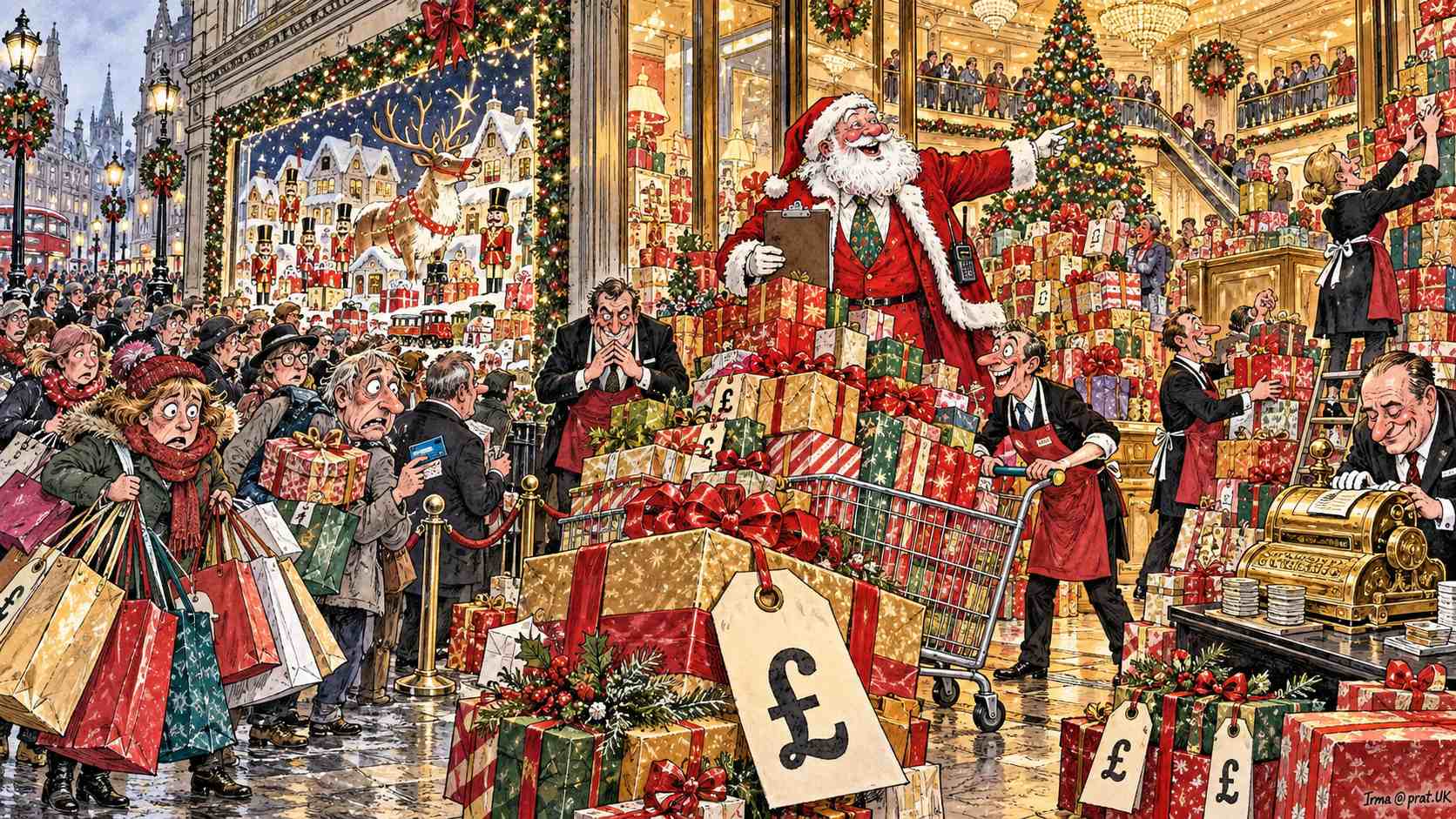
Customers Spend More to Buy Less, Shops Call It Recovery
LONDON, 20 October 2026 – British retailers are preparing for a spectacular £94 billion Christmas shopping season, despite concerns that customers have developed the unfortunate habit of comparing prices with the amount of money actually available in their bank accounts.
UK Retail Forecast: 2.9% Rise on Slightly Fewer Goods
The retail forecast, detailed by FashionNetwork, predicts a 2.9% rise in Christmas spending, with consumers purchasing slightly fewer goods while spending substantially more money.
High Street executives have welcomed the forecast as definitive proof that British retail is flourishing, though the British Retail Consortium has so far declined to say how it feels about that.
Martin Featherstone, director of the British Association of People Selling Things, said declining sales volumes were actually encouraging.
“We used to sell customers ten items for £100,” he said. “Now we can sell them eight items for £120. That’s two fewer products we have to stock, two fewer products we have to deliver, and twenty more pounds we get to keep.”
He described the arrangement as the greatest improvement in retail efficiency since supermarkets persuaded customers to scan their own shopping while simultaneously increasing the price of groceries.
Savings of Up to 70% on Products Nobody Wanted
British retailers are now preparing an unprecedented Christmas marketing campaign designed to convince households that paying more for fewer goods represents an irresistible bargain.
Major stores will display enormous signs announcing savings of up to 70%, although the discounts will apply primarily to products nobody wanted at their original prices. The Competition and Markets Authority has not yet commented on the signs.
A £90 Christmas jumper reduced to £35 will be marketed as an extraordinary saving, despite having been manufactured for £4 and looking like something a sheep would refuse to wear.
Buy One, Regret Two
Retail consultants have proposed an additional marketing strategy called Buy One, Regret Two.
The concept encourages customers to buy expensive products they do not need, motivated by the terrifying possibility that tomorrow they might cost even more.
“It’s basic consumer psychology,” Featherstone said. “A person who wouldn’t dream of spending £80 on something will happily spend £60 if you tell them it was £120 yesterday.”
Christmas Gift Spending: Toys and Electronics Forecast
Christmas gift spending is forecast to reach £11.97 billion, including £2.13 billion on toys and £2.08 billion on consumer electronics.
Retailers have already identified electronics as a particularly promising sector because consumers can be persuaded to replace perfectly functional devices with newer versions that do almost exactly the same thing.
“Last year’s headphones played music,” a technology executive said. “This year’s headphones play music while providing customers with a slightly different battery indicator. That’s progress.”
Toy manufacturers are equally enthusiastic.
One proposed Christmas bestseller is a £75 interactive plastic dinosaur that requires eight batteries, speaks four languages and stops working before Boxing Day.
Retailers describe the dinosaur’s limited lifespan as an opportunity for repeat business.
High Street Hopes Festive Music and £14 Parking Will Bring Shoppers Back
Britain’s traditional High Streets, meanwhile, are hoping the Christmas bonanza will persuade customers to return to physical shops. Official retail sales figures suggest the customers have been elsewhere.
Store owners have proposed attracting shoppers with festive music, expensive parking and the opportunity to queue behind twelve people while one cashier serves the entire building.
Shopping centre operators are also planning to improve the customer experience by introducing premium Christmas parking charges.
“Customers love Christmas,” one manager said. “They especially enjoy paying £14 to park while purchasing something they could have ordered online for less.”
Retail Executives Ban the Word “Unaffordable”
The government’s economic advisers praised the resilience of Britain’s retailers, noting that sales values could increase even when customers lacked the financial confidence to buy additional goods.
Retail executives have accordingly instructed staff to avoid discussing purchasing power.
Terms such as “expensive,” “unaffordable” and “complete financial disaster” will be replaced with “premium,” “aspirational” and “exclusive seasonal opportunity.”
Credit Card Limits Reframed as Festive Spending Targets
The industry’s new Christmas strategy also encourages customers to treat credit card limits as festive spending targets.
Under one proposed campaign, shoppers will be reminded that Christmas occurs only once a year, while credit card interest offers twelve convenient opportunities annually to remember it.
A Bristol father who bought Christmas presents for three children described the emotional benefits.
“I spent £600 in two hours,” he said. “The children were delighted, the shops were delighted, and my bank sent me a message asking whether I’d been kidnapped.”
Featherstone dismissed concerns that consumers might eventually stop shopping.
“British people have been buying things they cannot afford for generations. It’s a national tradition, right alongside complaining about the weather and pretending Christmas starts in December.”
Retailers remain optimistic that the holiday season will deliver record revenues, and industry leaders have reassured shareholders that Britain’s consumers remain remarkably dependable.
They may run out of money, but the shops will never run out of reasons to take it.
Five Humorous Observations on the £94 Billion High Street
- A £90 jumper “reduced” to £35, made for £4. So the shop’s still making a killing on the sale price. It’s not a discount, it’s a hostage video where the jumper’s holding up today’s newspaper.
- “Buy One, Regret Two.” Honestly the most honest slogan ever written. They should put it on the bags. It’s already the name of every shop I’ve been in since 2019.
- A £75 plastic dinosaur that speaks four languages and dies before Boxing Day. Finally, a toy that teaches kids about death in several languages. Parenting’s covered.
- Paying £14 to park so you can buy something cheaper online. You’re literally paying for the privilege of being ripped off in person. It’s the only service where the queue is part of the product.
- A bank texting a man to ask if he’s been kidnapped because he bought presents. Six hundred quid in two hours. Honestly, mate, you were. The kidnapper’s just wearing a Santa hat.
Save up to 70% on this disclaimer, which nobody wanted. The retail executives and their banned vocabulary are comic exaggeration of the real UK Christmas retail forecast. More British Onion bargains, parking £14.

Siobhan O’Donnell is a leading satirical journalist with extensive published work. Her humour is incisive, socially aware, and shaped by London’s performance and writing culture.
Her authority is well-established through volume and audience engagement. Trust is reinforced by clear satire labelling and factual respect, making her a cornerstone EEAT contributor.