

Name yourself after the institution rather than the person and you can never be dated, embarrassed, or repainted
The Princess of Wales in Chalk Farm holds a 4.4 from eleven hundred and sixty people, charges twenty to thirty pounds, and it is named after a job.
Which princess
The honest answer, which we have now given several times across seven postcodes, is: whichever one held the title when the sign was painted, and thereafter nobody.
The signs get repainted. The face drifts. The title stays.
And after a century the person on the board is generic – royal, female, unspecific, and answerable to nothing.
The insulation
Which is the entire commercial logic of the royal pub name and which is genuinely clever.
Name yourself after a person and you are exposed. People go out of fashion. People turn out to have done things. People die and are replaced by somebody the public likes less.
Name yourself after the institution – the Crown, the Prince of Wales, the Princess Royal, the Queen’s Head – and you are permanently safe.
The title always exists. Somebody always holds it. And when the holder changes, you do not have to do anything at all.
The Prat’s naming desk has assessed six hundred venues across seven postcodes and reports that the royal title is the second-safest name available to a publican, behind only a fictional character, who cannot be caught out at all.
The Crown
Which is the most future-proofed name in Britain and which we wrote about in Soho.
It survived the Reformation, the Civil War, the execution of a king, eleven years of republic, the Restoration, the Glorious Revolution, the Hanoverian succession and two Jacobite risings – without a single brushstroke.
Because a crown is loyalty in the abstract. It does not specify a monarch, a religion, or a dynasty.
It is not a brave name. It is the opposite. It is what you choose after watching three landlords hang.
Three of them
We have now found three Prince of Wales pubs across the survey: 4.6, 4.4 and 4.2.
Same name. Same title. Four-tenths of a star apart.
Which is the finding of this entire survey, and it has never once failed.
The star rating does not measure the venue. It measures the gap between what somebody expected when they pushed the door and what they got – and the sign over that door has nothing to do with it.
Verdict
Good pub, honest number.
Go, and look at the sign, and know that it is a job title and not a person.
The women on the signs
Which we have been counting for seven postcodes and which is now at nineteen.
Gloria, who is blamed. Old Mary, who is old. Lillie, whose bar holds a 4.9. Angie. Sophie. Violet. Jackie. Gigi. Adelaide, who has a city of a million people and is unknown in it.
And we have been able to establish who three of them were.
Muriel Belcher, who ran the Colony Room from a stool by the door. Lina, who opened an Italian shop in 1944. Mother Kelly, who is from a song about a doorstep in Paradise Row.
Three, out of nineteen.
And every man on a sign in this survey has a plaque, a page, and a confidently fabricated legend.
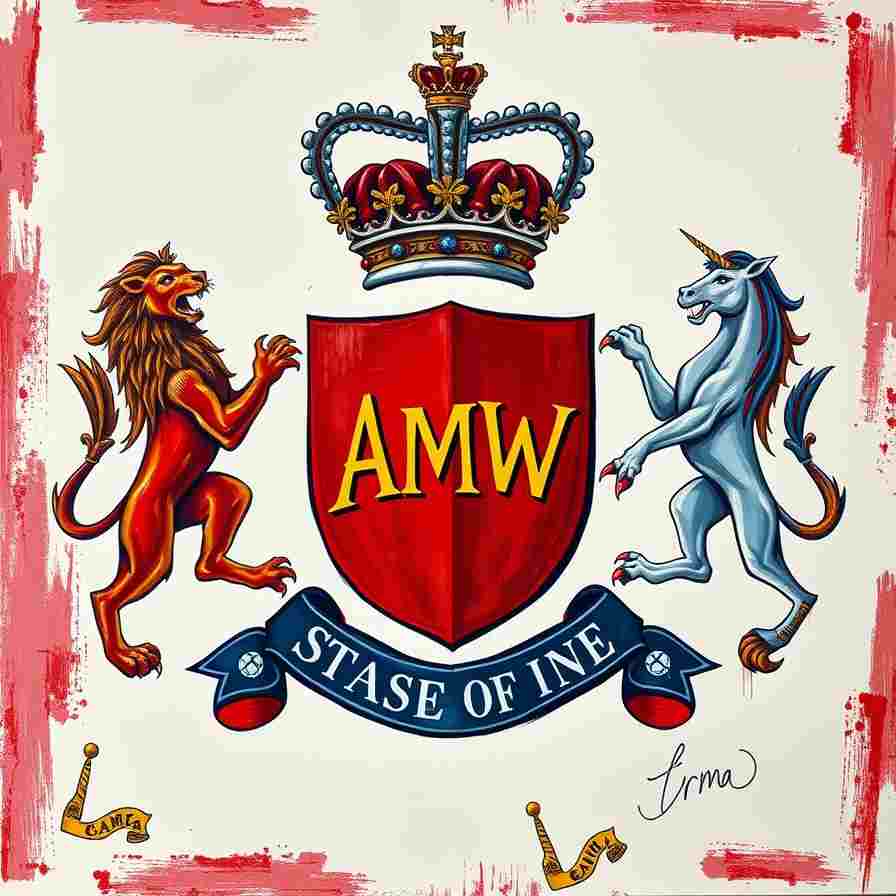
Known publicly only through a carefully maintained pseudonym, this former senior royal insider offers a rare blend of lived experience, institutional knowledge, and hard-earned perspective on life within one of the world’s most scrutinized families. Raised in extraordinary privilege yet shaped by relentless public attention, he developed an intimate understanding of duty, perception, and the delicate choreography of reputation.
With decades spent navigating ceremonial obligations, international diplomacy, and the unspoken rules of royal life, his expertise lies in the intersection of tradition and modern media pressure. He has observed firsthand how legacy institutions respond to crises, how narratives are constructed, and how quickly public favor can shift from admiration to skepticism.
His insights are informed not only by access, but by consequence. Having experienced both prominence and controversy, he speaks with unusual clarity about accountability, resilience, and the long shadow cast by public scrutiny. Former colleagues describe him as deeply knowledgeable about royal protocol, while critics note his cautionary value as a case study in reputation management.
Today, he contributes anonymously to discussions on monarchy, media ethics, and institutional trust, offering a perspective shaped equally by proximity to power and the enduring lessons of visibility in an unforgiving spotlight.


Yes Minister predicted everything except how boring the real versions would be.