

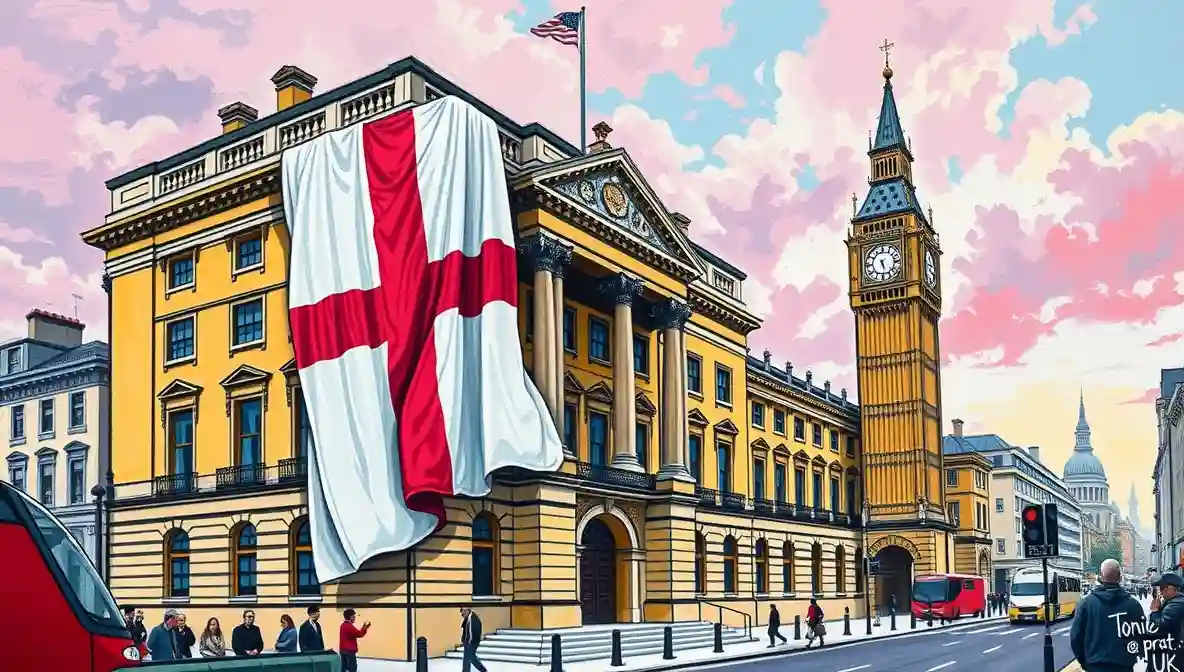
A London Bridge sports bar flying the name of Dover Castle – the mighty fortress known as the Key of England, guarding the narrowest crossing to the Continent
Dover Castle carries a 4.2 across more than two hundred and fifty reviews and trades as a lively sports bar near London Bridge. It flies the name of one of the mightiest fortresses in the land, and the Prat’s history desk was glad to raise the portcullis.
Towards London Bridge
Dover Castle sits near London Bridge, on the south-bank side, showing the games to the district’s crowds. Proper Bermondsey-and-Southwark territory, no disclaimer needed.
The Key of England
Dover Castle is one of the greatest and most important fortresses in all of British history – the mighty stronghold on the white cliffs of Dover, guarding the narrowest crossing of the Channel to the Continent. For its commanding position over the shortest route to France, it earned the proud title “the Key of England” – the fortress that locked and guarded the nation’s most vulnerable gateway. Founded in earnest by Henry II, built and rebuilt over nine centuries, it has defended England against every threat from the medieval French to Napoleon to the Nazis, its secret wartime tunnels playing their part in the Dunkirk evacuation. It is a monument to England’s long defence of its shores.
The fortress name
The Prat savours the strength the name lends a pub. A castle is among the boldest of all pub signs – the great fortress, strong and enduring, an emblem of security, defence and permanence. Dover Castle in particular carries all the weight of that “Key of England” history – the cliffs, the Channel, the centuries of watchful defence. To fly the name is to fly a symbol of strength and steadfastness, of the stronghold that never fell. There is a fine, solid confidence in naming a pub for so mighty and enduring a fortress.
The stronghold as refuge
What the Prat likes best is the castle as refuge. A fortress is, above all, a place of safety and shelter – the stronghold where people gathered for protection, secure behind its walls. A pub named Dover Castle borrows that sense of the safe stronghold: a place of refuge and security, a haven against the world outside, walls within which to gather in good company. The 4.2 across two hundred reviews is a solid score for so mighty and characterful a name.
The Prat’s naming desk enjoys a further, homelier layer in the choice. “Dover Castle” is, in fact, a long-established and popular pub name across London and beyond – there are Dover Castles scattered through the capital’s history, the mighty fortress lending its solid, patriotic name to countless humble locals. There is a pleasing democratic irony in it, familiar from the royal names elsewhere in this survey: the greatest fortress in England, the Key of the realm, its name flying over ordinary neighbourhood boozers where the only thing defended is a good pint and a bit of peace. The Prat rather likes the fortress brought down to the level of the friendly local.
Verdict
A 4.2 across two hundred and fifty-plus reviews is a solid score, and Dover Castle earns it on a mighty, historic name. It flies Dover Castle – the “Key of England,” the great fortress on the white cliffs that guarded the nation’s narrowest gateway for nine centuries – an emblem of strength, defence and steadfast refuge.
Go for the lively welcome, the big games and the mighty name, and take shelter in Dover Castle. The great fortress guarded England’s gateway against every foe for nine hundred years – and a pub that flies its name offers its own kind of stronghold, walls within which to gather in good cheer.

Alan Nafzger was born in Lubbock, Texas, the son Swiss immigrants. He grew up on a dairy in Windthorst, north central Texas. He earned degrees from Midwestern State University (B.A. 1985) and Texas State University (M.A. 1987). University College Dublin (Ph.D. 1991). Dr. Nafzger has entertained and educated young people in Texas colleges for 37 years. Nafzger is best known for his dark novels and experimental screenwriting. His best know scripts to date are Lenin’s Body, produced in Russia by A-Media and Sea and Sky produced in The Philippines in the Tagalog language. In 1986, Nafzger wrote the iconic feminist western novel, Gina of Quitaque. He currently lives in Holloway, North London. Contact: [email protected]

Someone’s going to frame this in their office. It will be the most honest decoration.
The thing about planning meetings is they’re pure theatre where the outcome’s predetermined and everyone’s performing predetermined roles for the bureaucratic record.