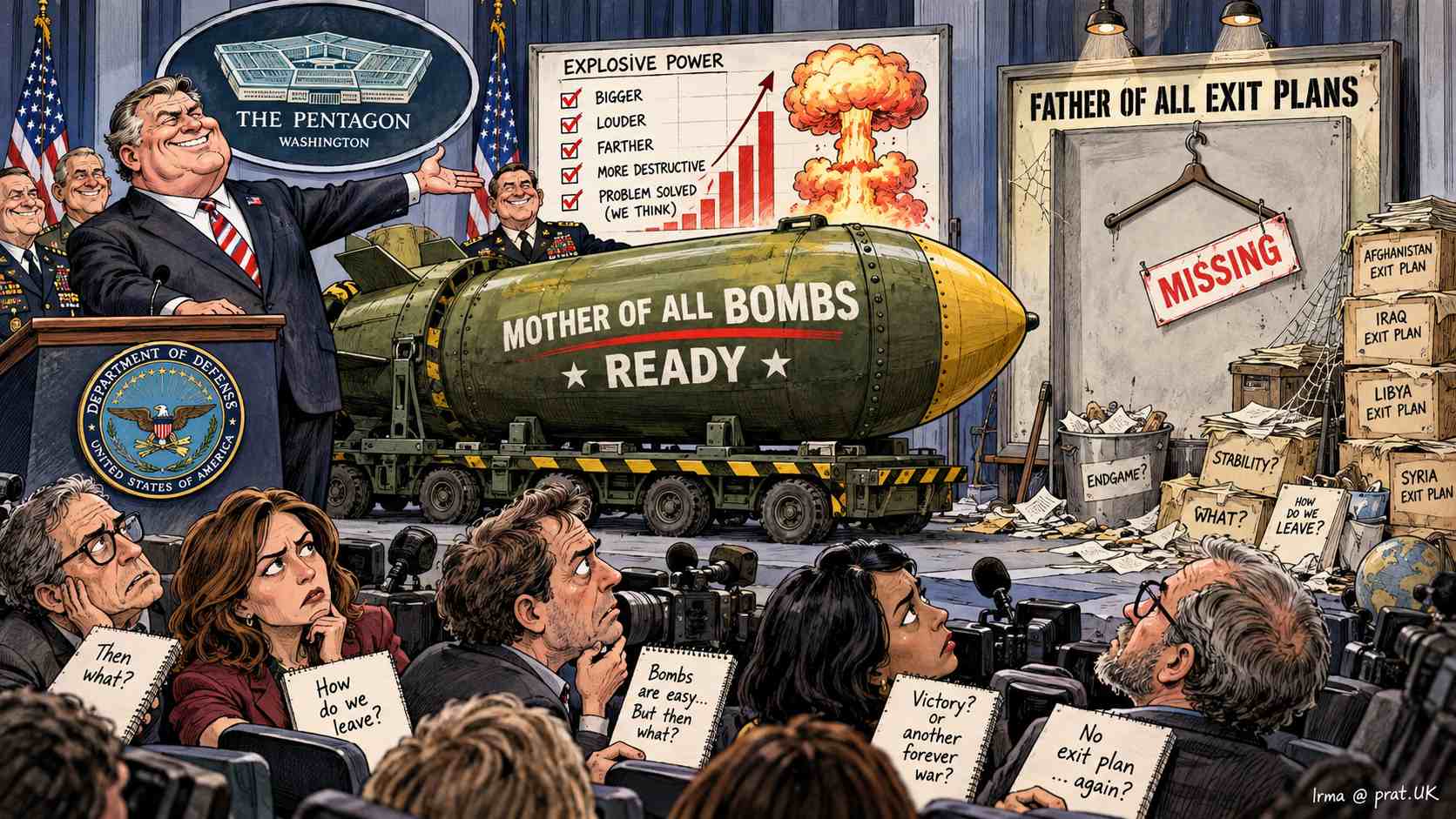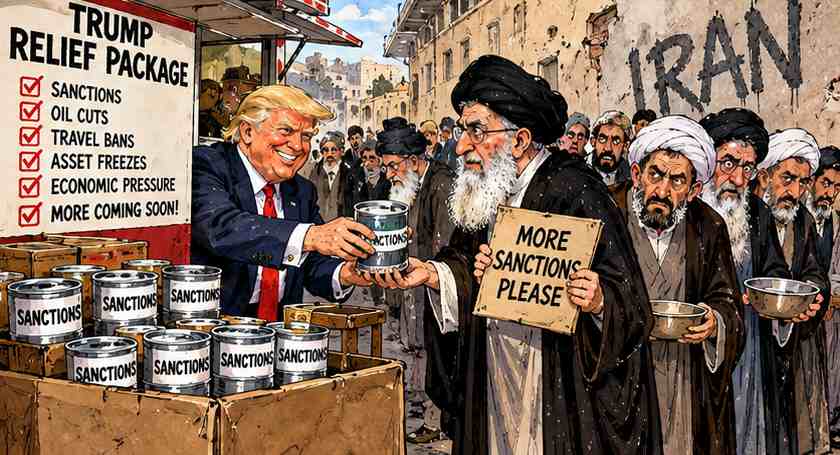
Seven months in, the receipt is still missing.
WASHINGTON, D.C., October 19, 2026 – The American taxpayer has emerged as the most reliable weapon in the continuing conflict with Iran, absorbing financial damage without surrendering, negotiating, or receiving so much as a complimentary Pentagon baseball cap.
Military planners have spent months counting Iranian missile inventories, naval capabilities and defensive infrastructure. Economists have studied the fallout for global energy markets. Politicians have argued over the definition of victory. Nobody has adequately explained what the American taxpayer gets after seven months of winning.
The Pentagon has an elaborate system for measuring combat effectiveness. The American household has a much simpler one, called the checking account.
What the Associated Press Says the War Has Achieved
According to Associated Press reporting on the war’s changing objectives, American successes have included the destruction of extensive Iranian military capabilities, while critical strategic issues, including the Strait of Hormuz, remain unresolved.
Americans appreciated the explanation. Then they opened their electricity bills.
Pentagon Reports Outstanding Return on Investment, Declines to Say Where It Is
The military has put substantial resources into precision weapons, intelligence systems, aircraft and naval operations, and those expenditures have produced measurable battlefield results. Taxpayers have suggested that any investment of public money should eventually come with something resembling a return.
Wall Street expects corporations to produce earnings. Farmers expect crops. Restaurants expect customers. Washington expects citizens to be patriotic enough not to ask where the money went.
An accountant who reviewed federal military spending tried to calculate the return on eliminating one Iranian missile battery. He found it difficult, since the benefits include deterrence, defense and reduced enemy capability, none of which show up as dividends. So he proposed a simpler yardstick: “Is the war closer to ending than it was last Tuesday?”
Strategic analysts were alarmed. Military success, they explained, should not be reduced to simplistic calculations. Taxpayers accepted the criticism and wondered why the government reduces their income to one extremely precise calculation every April.
The Congressional Budget Office and USAspending.gov both publish the numbers, for anyone who wants to read the receipt the Pentagon hasn’t mailed.
Military Victory Is Not Accepted as Payment at Walmart

Across the country, households are dealing with gasoline prices, food costs, insurance premiums and higher borrowing costs. The Iran conflict can’t take the blame for all of it. Inflation has many causes, and energy markets respond to far more than military operations, as the Bureau of Labor Statistics’ Consumer Price Index reports every month. Still, disruptions involving Iran have added pressure to energy and transportation costs.
That has led Americans to invent a new household accounting category: victorious poverty. Under victorious poverty, a family lives in a country that can deploy advanced aircraft anywhere on Earth but can’t replace the tires on the minivan that takes three kids to soccer practice. The family understands that national defense is essential. It just wonders whether winning should eventually make ordinary life a little more secure.
At one supermarket, a customer tried to trade a successful military briefing for six pounds of ground beef. The cashier declined, explaining that national military superiority is not an approved payment method. The customer offered further evidence that Iranian military capabilities had been substantially degraded.
The cashier asked for a credit card.
Congress Forms Emergency Committee to Find Out Whether Taxpayers Have Anything Left
Lawmakers have been encouraged to form a bipartisan committee to investigate the economic consequences of prolonged military operations. It would start with gasoline prices, shipping costs, federal borrowing, and the difference between reaching military objectives and keeping an open-ended military commitment.
Congressional committees, unfortunately, tend to need large budgets, expensive staff and several years to explain why something obvious is still unresolved.
One reform proposal would require every member of Congress to personally finance one average American household for thirty days. Participants would pay for groceries, utilities, transportation, housing and medical expenses without a taxpayer-funded allowance. Officials would then be asked whether the national economy felt secure.
The proposal drew immediate opposition from legislators who said government should not impose unnecessary financial hardship on public servants. Americans took it as an encouraging breakthrough in congressional empathy.
Economists Discover There Is No Free Lunch; Pentagon Asks Whether Lunch Can Be Financed
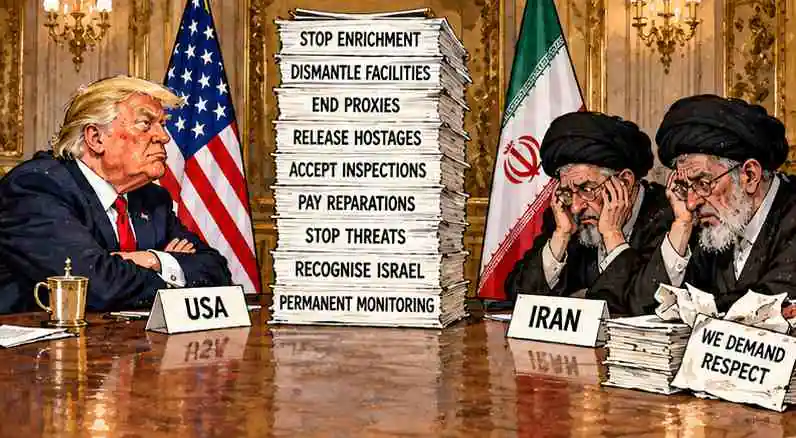
One particularly stubborn economic principle is opportunity cost: money spent on one goal can’t also pay for another. Americans grasp it instantly when choosing between fixing the roof and buying a used car. Washington sometimes seems to need several billion dollars of research to arrive at the same idea. Groups like Taxpayers for Common Sense have been pointing it out for years.
The real policy question isn’t whether America should keep the strongest military possible. It also isn’t whether Iran’s missile capabilities pose genuine security concerns. The question is what political outcome the spending is supposed to achieve, and whether the strategy is heading toward it.
The taxpayer wants military strength, effective deterrence, protected shipping and an achievable end to the fighting. He’d also like an occasional weekend when financial survival doesn’t require a congressional appropriation.
The Pentagon has been asked to publish two numbers with every operational victory. The first would measure the damage done to Iran’s remaining military capability. The second would estimate what the campaign costs Americans. Washington would then have a fuller picture of success.
Until that reform arrives, American taxpayers will keep performing their traditional patriotic duty. They’ll finance the weapons, absorb the economic consequences, pay interest on the borrowed money and listen politely while officials explain that everything is going according to plan.
Their only remaining question is whether victory comes with a receipt, and, more importantly, whether it’s refundable.
Five Observations From the Kitchen Table
- The Pentagon says costs are “under control.” Sir, I have a checking account. I know what “under control” looks like, and it doesn’t look like this.
- Every April the IRS knows my income down to the penny. But nobody at the Pentagon can tell me what a missile costs? I could get that answer faster from a guy at a swap meet.
- They want a bipartisan committee. You know what bipartisan means? Both parties agree to spend six years on a study we all could’ve done on a napkin.
- Victory per dollar. That’s what I want on the news. Not casualties, not coordinates. Just a little ticker at the bottom: “Victory per dollar: still pending.”
- I tried to explain “national security” to my kid when she asked why we can’t go to the movies. She said, “Is the movie safer than the war?” I said, “Honey, the movie’s cheaper, but the war has better sound.”
Editorial disclaimer: The Associated Press reporting, the Congressional Budget Office, USAspending.gov and the Consumer Price Index data are real. The supermarket customer who offered a military briefing for ground beef, the congressional household-finance challenge and the victory receipt are comic inventions. A receipt for this disclaimer is available on request and, unlike the war, it is fully refundable; more funny news stories are free at the point of use.

Oeko Angebot ([email protected])