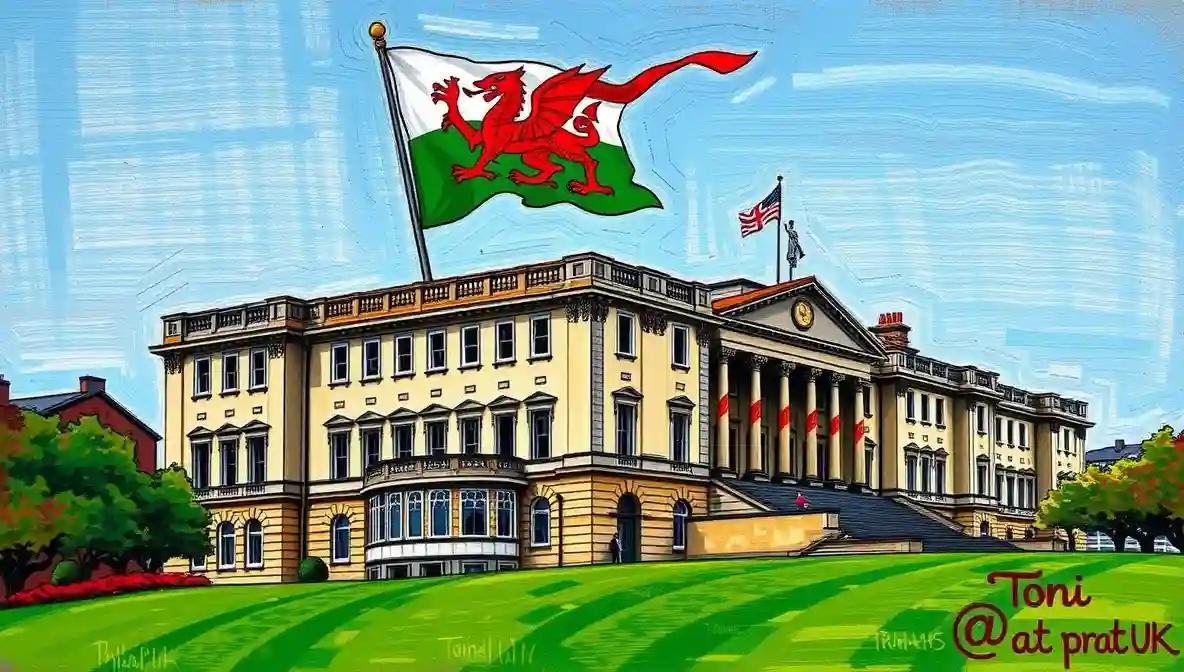
George III lost his mind, his son ruled in his place, and the whole of Regency London is named after the arrangement
Regent’s Bar and Kitchen holds a 4.1 from three thousand three hundred and six people, charges ten to twenty pounds, and it is in Regent’s Park.
And a regent is somebody ruling on behalf of a monarch who cannot.
The mad king
George III suffered episodes of severe mental illness from the 1780s, and by 1810 he was permanently incapable.
The nature of it has been argued about for two centuries. Porphyria was the fashionable theory for decades and has been substantially undermined. Bipolar disorder is now more widely favoured. Nobody can be certain.
What is certain is that he was blind, deaf, and lost – and he spent his last years at Windsor, talking to people who were not there.
The Regency
So his son ruled in his place, as Prince Regent, from 1811 – and that nine-year arrangement gives its name to an entire period of British architecture, furniture, literature and manners.
Regency London is his.
Regent Street. Regent’s Park. The whole processional route Nash cut through the city, from Carlton House up to the park, which is one of the great pieces of urban design in Europe.
And it was, in very substantial part, a scheme to raise money and to make a grand approach to the Prince’s own house.
The man
Who was, by essentially every contemporary account, appalling.
He was enormously fat and mocked relentlessly for it. He spent money on a scale that shocked a political class not easily shocked, and Parliament had to bail him out repeatedly.
He treated his wife with a cruelty that was public and sustained, and the country largely took her side.
And he had extremely good taste.
Which is the awkward part, and which the Prat is not going to pretend away.
What he left
Regent Street. Regent’s Park. The Royal Pavilion at Brighton, which is genuinely one of the strangest and most delightful buildings in Britain. The core of the National Gallery’s collection, because he pushed for it. Windsor, substantially remodelled.
An enormous amount of what people love about London was commissioned by a man that essentially nobody liked.
The Prat’s editorial desk has now found this in seven postcodes and has stopped resisting it.
The buildings do not care who paid for them.
Verdict
Good bar, honest number, lovely position.
Go, and sit in a park commissioned by a man ruling because his father was ill.
Nash
Who designed it, and who is one of the great chancers of British architecture.
He went bankrupt early. He was not, by the standards of the profession, a rigorous builder – the stucco was cheap, the construction was frequently thin, and a great deal of it has needed rebuilding.
And he had the best eye in England.
Regent Street, the terraces around Regent’s Park, Carlton House Terrace, the remodelling of Buckingham Palace, the Royal Pavilion at Brighton.
He was thrown off the Buckingham Palace job for overspending catastrophically.
And every one of those buildings is still standing, and people fly across the world to look at them.
Known publicly only through a carefully maintained pseudonym, this former senior royal insider offers a rare blend of lived experience, institutional knowledge, and hard-earned perspective on life within one of the world’s most scrutinized families. Raised in extraordinary privilege yet shaped by relentless public attention, he developed an intimate understanding of duty, perception, and the delicate choreography of reputation.
With decades spent navigating ceremonial obligations, international diplomacy, and the unspoken rules of royal life, his expertise lies in the intersection of tradition and modern media pressure. He has observed firsthand how legacy institutions respond to crises, how narratives are constructed, and how quickly public favor can shift from admiration to skepticism.
His insights are informed not only by access, but by consequence. Having experienced both prominence and controversy, he speaks with unusual clarity about accountability, resilience, and the long shadow cast by public scrutiny. Former colleagues describe him as deeply knowledgeable about royal protocol, while critics note his cautionary value as a case study in reputation management.
Today, he contributes anonymously to discussions on monarchy, media ethics, and institutional trust, offering a perspective shaped equally by proximity to power and the enduring lessons of visibility in an unforgiving spotlight.