

Wilson Assures the Nation the Pound in Your Pocket Has Not Been Devalued, Pound in Pocket Disagrees
Pound Devalued, National Confidence Reissued in Smaller Notes
Wilson Assures the Nation the Pound in Your Pocket Has Not Been Devalued, Pound in Pocket Disagrees
On the evening of 18 November 1967, Harold Wilson appeared on British television to explain to the nation that the pound had been devalued by 14.3 percent and that this was, despite appearances, not a disaster but rather a considered economic adjustment with positive long-term implications for the balance of payments and the competitiveness of British exports.
He delivered this message with great skill. The words were carefully chosen. The tone was measured and prime ministerial. The argument was coherent. And then he said the thing that has followed him through history like an extremely loyal and entirely unwanted dog: that the pound in your pocket had not been devalued.
It had, of course, been devalued. That was the entire point. The pound in your pocket would now purchase fourteen percent fewer dollars, francs, deutschmarks, and every other currency against which it had previously been measured. The pound in your pocket was, to be precise, a different pound than the one that had been in your pocket the previous week. Wilson knew this. The Treasury knew this. The IMF knew this. The British public, who had been warned that the devaluation was coming by the simple mechanism of everyone around the world knowing it was coming, knew this.
How Britain Got Here: A Brief Tour of Sterling Distress
The pound had been under pressure for years since, in truth, the end of the Second World War, when Britain emerged victorious, broke, and substantially indebted to America, a combination of outcomes that gave victory a slightly complicated financial flavour. The Bretton Woods system, which had fixed major currencies to the dollar and the dollar to gold, required Britain to defend a sterling exchange rate of $2.80 to the pound, a rate that was, by the mid-1960s, regarded by economists with the mixture of respect and alarm one extends to a very old building that everyone agrees is structurally questionable but nobody wants to be the one to say it first.
Wilson had inherited the sterling problem from the Conservatives in 1964, along with a balance of payments deficit that he later described, with characteristic vivid excess, as a deficit that had been left like a landmine. His government had spent three years attempting to defend the $2.80 rate through a combination of deflation, borrowing, and the regular deployment of reassuring statements about the fundamental strength of the British economy a phrase that, by November 1967, had been repeated so many times that it had acquired the quality of a mantra rather than an assertion.
The Gnomes of Zurich and Other Monetary Villains
When currency speculators bet against the pound which they did, with considerable enthusiasm and profit Wilson attributed the pressure to the gnomes of Zurich, a phrase he had adopted from George Brown and deployed with such frequency that it entered the political vocabulary as a convenient shorthand for international financial operators whose interests did not align with British economic management.
The gnomes of Zurich were, in the main, banks and currency traders doing what banks and currency traders do, which is to identify overvalued currencies and profit from their correction. They were, in this specific sense, correct about the pound. Being correct, however, does not make one popular in the country whose currency one is correctly identifying as overvalued, and the gnomes absorbed a quantity of political displeasure that more fairly belonged to the policies that had created the overvaluation in the first place.
The International Monetary Fund, which had been created at Bretton Woods partly to manage exactly these situations, was involved in the discussions preceding devaluation. Britain’s relationship with the IMF in this period borrowing, negotiating, defending, eventually yielding established the template for a relationship that would reach its most dramatic expression in 1976, when Britain went to the IMF with its metaphorical hat and a balance of payments crisis that made 1967 look like a minor inconvenience.
The Pound in Your Pocket: A Forensic Examination
Wilson’s infamous phrase deserves proper analysis because it is, technically, not entirely wrong, which is precisely what makes it so perfectly, magnificently wrong.
The domestic purchasing power of the pound what it could buy in British shops was not immediately reduced by devaluation. A pint of milk cost the same after devaluation as before. A bus ticket remained at its pre-devaluation price. The pound in your pocket retained its ability to purchase British goods and services at British prices. In this extremely narrow and carefully specified sense, it had not been devalued.
What had changed was its international purchasing power its ability to buy foreign goods, foreign holidays, foreign currencies, foreign anything. Britain imported food, raw materials, oil, and manufactured goods. The price of all these things, measured in pounds, would rise. This would, with a lag of several months, translate into higher domestic prices, and the pound in your pocket would find that British goods were costing more because the inputs that made British goods had become more expensive because the pound had been devalued.
So the pound in your pocket had been devalued. Just slowly. Just indirectly. Just in a way that would be fully felt in the months and years that followed rather than at the precise moment Wilson was speaking. This is, in fairness, a complicated economic argument. It is also not the argument Wilson was making, which was a simpler and less defensible one.
The Political Cost of a Single Sentence
The phrase attached itself to Wilson’s reputation with the adhesive persistence that only political gaffes can manage the kind of statement that is immediately recognised as wrong in a way that encapsulates a larger failure of candour, so that every subsequent invocation of it is not merely a reminder of a bad sentence but an indictment of an entire approach to public communication.
Wilson was, in many respects, an extremely competent prime minister operating in extremely difficult circumstances. The devaluation was probably necessary and was certainly overdue. The economic fundamentals that had made it necessary were not entirely his government’s creation. The defence of the $2.80 rate had consumed resources and political energy that might have been better deployed elsewhere.
None of this mattered, because the pound in your pocket had not been devalued, and everyone knew it had been devalued, and Wilson had said it had not been devalued on television, and these three facts in combination produced a credibility deficit that the subsequent economic improvement which duly arrived, as devaluation’s proponents had predicted never quite repaired.
What Devaluation Actually Did
The economics of the 1967 devaluation are, with the benefit of hindsight, reasonably straightforward. British exports became fourteen percent cheaper in foreign currency terms, which improved competitiveness. Imports became more expensive, which reduced the trade deficit. The balance of payments improved, as the devaluation’s advocates had predicted. By the early 1970s, Britain was running a balance of payments surplus for the first time in years.
This is the bitter comedy of economic policy: the medicine works, the patient recovers, and nobody credits the medicine because the manner in which it was administered was undignified and the doctor said something silly on television.
The devaluation of 1967 was not Britain’s economic nadir. That would come later, in 1976, when the IMF arrived with conditions. It was, rather, a waypoint on a longer journey the moment when the gap between the image of British economic strength and the reality of British economic management became too large to paper over with reassuring statements, and had to be acknowledged in the least dignified way available to a sovereign currency.
Sterling as National Symbol
The pound was never merely a currency. It was a symbol of empire, of financial primacy, of the City of London’s historical role as the world’s banker, of Britain’s place in the international order. The City had financed the world’s trade for two centuries, and the pound had been, for most of that time, the currency in which the world’s trade was conducted. That era had ended, functionally, with the First World War and, formally, with Bretton Woods, but the symbolic weight of sterling persisted long after the practical reality had changed.
Defending the pound, in this context, was not merely an economic decision but a statement about what Britain was and where it stood. Devaluing it was not merely an economic adjustment but a concession visible, quantified, and internationally broadcast that the statement was no longer supportable at its previous price.
The pound in your pocket had not been devalued. Britain’s self-image had been adjusted by 14.3 percent. These are different things. Both are true. Wilson chose to mention only one of them, which was, perhaps, understandable, and also, definitely, a mistake.
Auf Wiedersehen, amigo!
The British pound was devalued from $2.80 to $2.40 on 18 November 1967, a reduction of 14.3 percent. Prime Minister Harold Wilson addressed the nation on television that evening, delivering the phrase about the pound in your pocket that would define the moment in political memory. Britain had been defending the $2.80 rate since the Bretton Woods agreement of 1944 and had borrowed extensively from the IMF and other central banks to sustain it. The devaluation was followed by a period of deflation and spending cuts. Britain’s balance of payments moved into surplus by the early 1970s, broadly vindicating the adjustment. The Bretton Woods system of fixed exchange rates collapsed entirely in 1971-73.
ORIGINALY PUBLISHED: 19 November 1967 (London, UK)

Alan Nafzger was born in Lubbock, Texas, the son Swiss immigrants. He grew up on a dairy in Windthorst, north central Texas. He earned degrees from Midwestern State University (B.A. 1985) and Texas State University (M.A. 1987). University College Dublin (Ph.D. 1991). Dr. Nafzger has entertained and educated young people in Texas colleges for 37 years. Nafzger is best known for his dark novels and experimental screenwriting. His best know scripts to date are Lenin’s Body, produced in Russia by A-Media and Sea and Sky produced in The Philippines in the Tagalog language. In 1986, Nafzger wrote the iconic feminist western novel, Gina of Quitaque. He currently lives in Holloway, North London. Contact: [email protected]
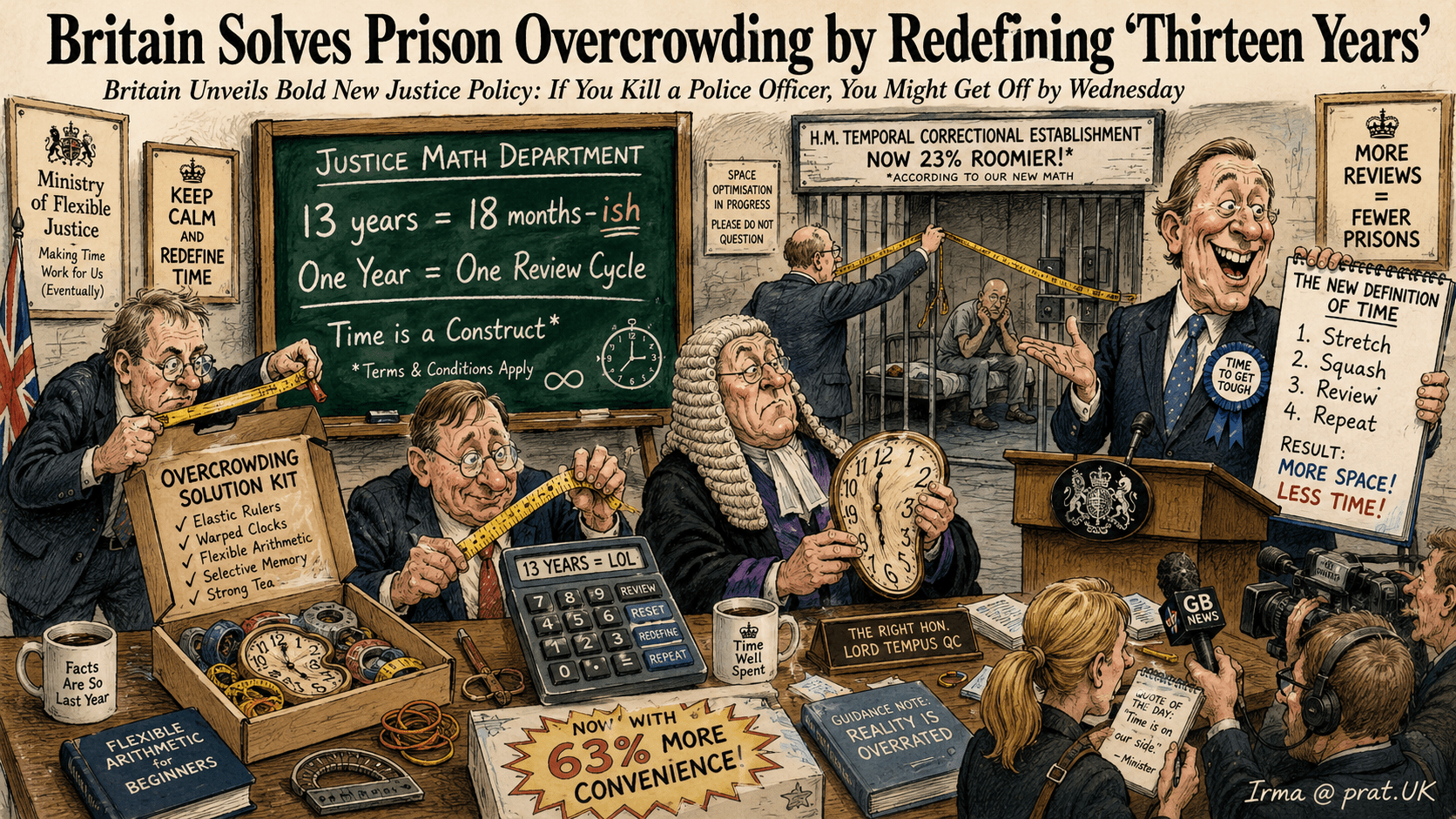


In British comedy, the prat is the character who provides the laughter by being completely oblivious to their own ridiculousness.
Sellers monotone would’ve destroyed everyone.
This is what The Spectator sounded like before getting shouty.