BRISTOL — A householder who had stopped opening suspicious texts has discovered that the internet can now arrive through the letterbox wearing a respectable piece of cardboard.
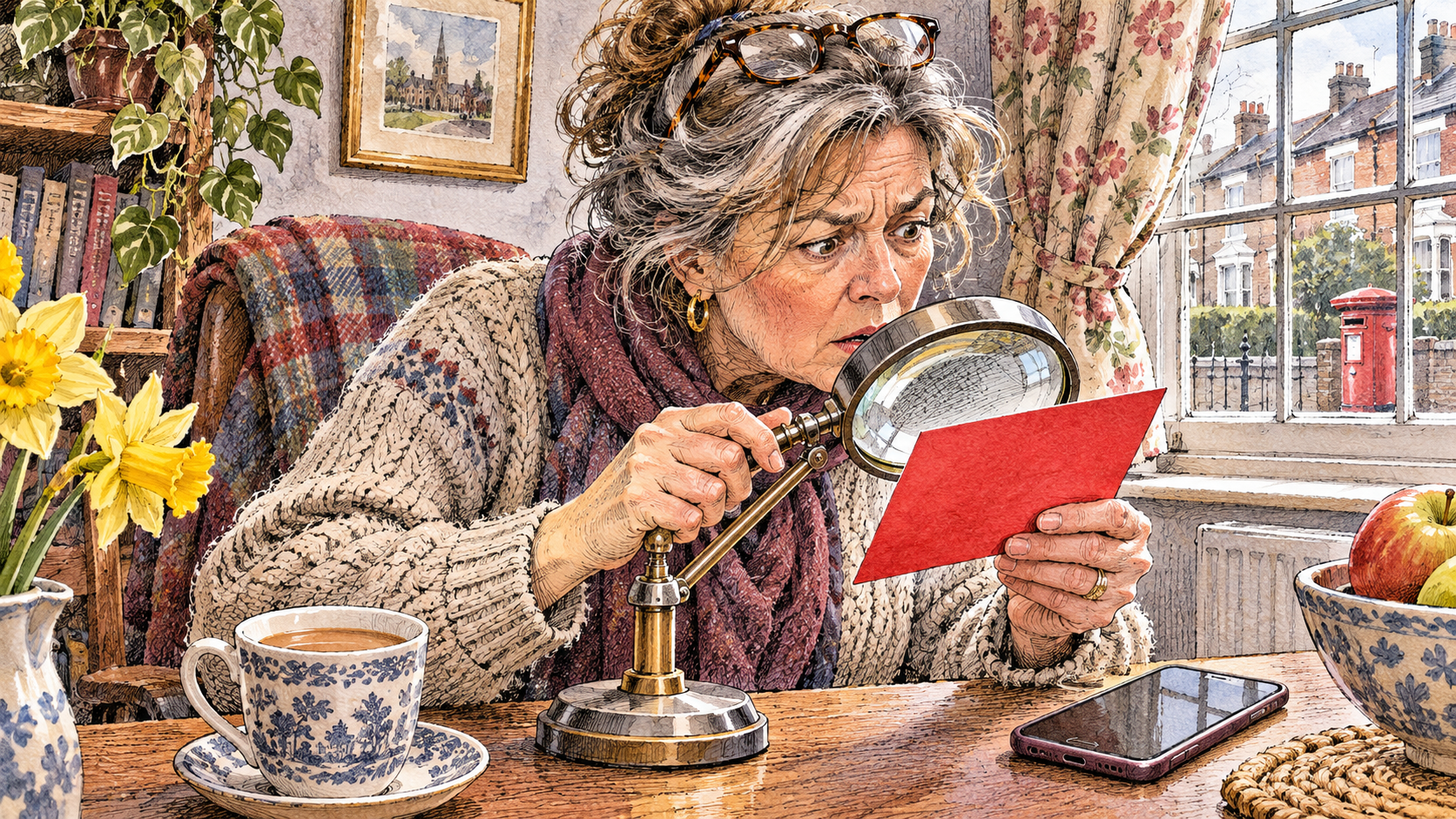
Malcolm Fenwick said the apparent delivery card had passed his initial security test by being neither an email nor a nephew asking him to invest in a coin.
The Guardian reports criminals copying missed-delivery cards, using QR codes to direct householders to fraudulent websites. See the Guardian reporting on delivery-card fraud.
Royal Mail delivery card scam finds trusted material
Fenwick had spent years developing a strict digital policy. Unknown links were ignored, unexpected attachments remained unopened and any message beginning “dear customer” was treated as a possible declaration of war.
Cardboard occupied a different category. It had previously brought birthday wishes, takeaway menus and evidence that somebody had tried to deliver something while he was upstairs.
“I thought a scam would at least have the decency to glow,” he said.
He is now reviewing the entire contents of the hall. A window-cleaning leaflet has been asked to account for itself. A Christmas card from his cousin is being held pending handwriting analysis.
Doormat enters the security perimeter
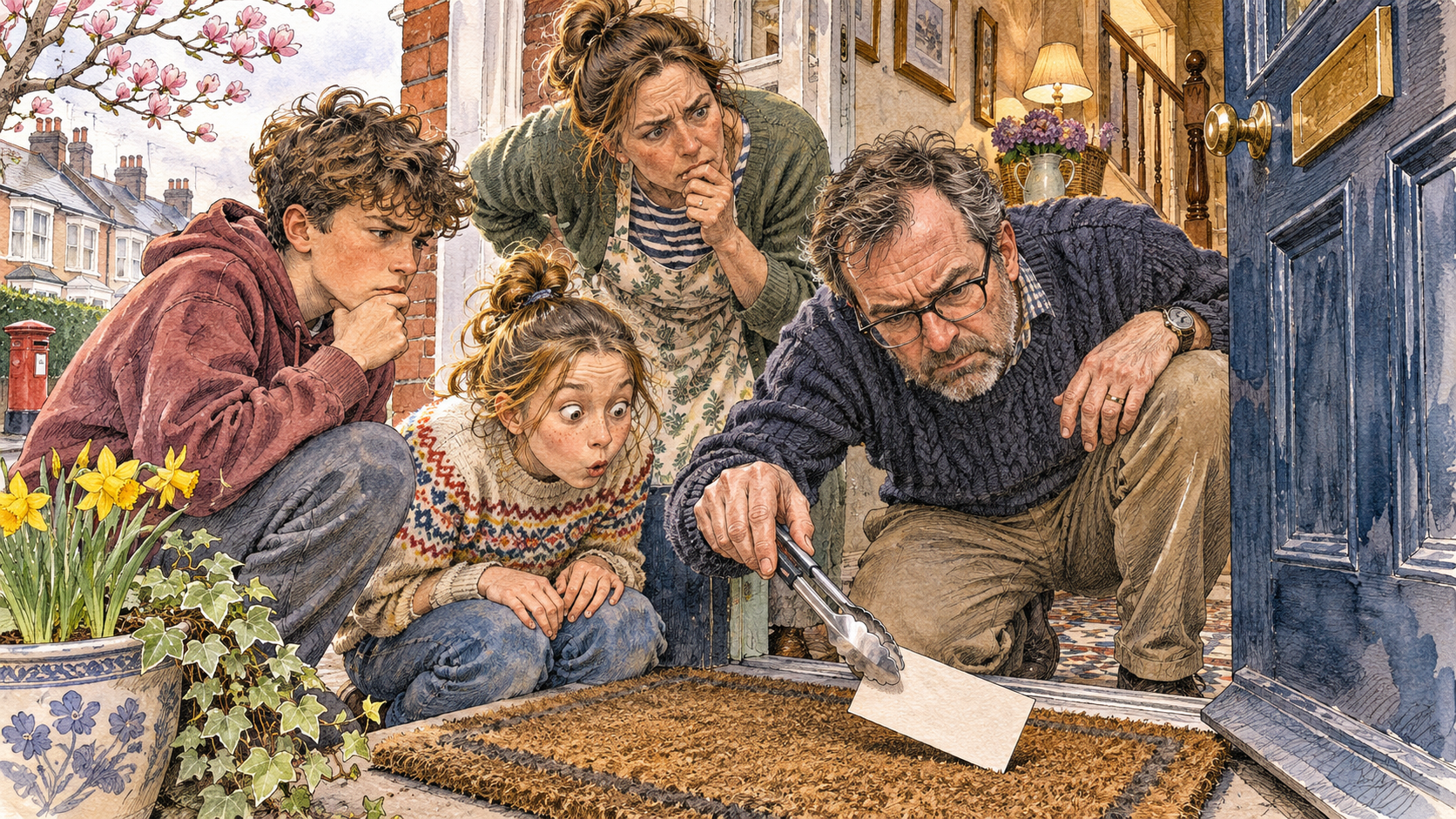
The family has established a small inspection station beside the shoe rack. Deliveries are considered individually, without using the arrival of one genuine parcel to confer diplomatic immunity on everything else.
Fenwick’s wife has suggested going directly to the delivery company’s official website or app to check an unexpected notice. He agreed, then asked whether the website could send confirmation by post.
Their daughter described this as returning to the original vulnerability with additional postage.
A household survey found that confidence increased by 76.8 per cent when a message could be folded. It fell sharply when respondents were asked why folding improved authenticity.
Trust discovers an awkward forwarding address
Fenwick is particularly annoyed by the change in venue. He had believed fraud prevention could be managed from an armchair, using a combination of suspicion and refusing to answer the telephone.
Now it requires walking to the front door, where the lighting is poor and he is usually carrying a mug.
He has rejected proposals for a smart letterbox. The prospect of subscribing to a machine that might email him about suspicious cardboard was considered an unacceptable escalation.
His neighbour suggested checking every QR code with another QR code checker. Fenwick has referred the idea to the part of his brain that normally handles extended warranties.
A modest policy on urgency
The family’s revised rule is that an unexpected demand does not become more reliable because it claims to be urgent. They will pause, check independently and resist treating a small requested payment as proof of good manners.
Fenwick has placed the rule near the front door, where it can be read before the morning post.
He is still frustrated that caution requires so much administration. His daughter pointed out that the cardboard had merely delivered a familiar problem by a different route.
“Yes,” he said, checking the doormat once more. “But I’d specifically asked the internet to leave it with a neighbour.”
Disclaimer: This is satire. The linked reporting supplies the factual basis; all other characters, dialogue, incidents, polls and statistics are invented for humour. This story is entirely a human collaboration between two sentient beings: the world’s oldest tenured professor and a philosophy major turned dairy farmer.

Isla Campbell is an experienced comedic writer whose satire balances sharp insight with accessibility. Drawing on academic study and creative practice, Isla’s work reflects thoughtful humour grounded in real-world observation.
Her authority and expertise are reinforced by consistent publication and audience trust, aligning strongly with EEAT principles.