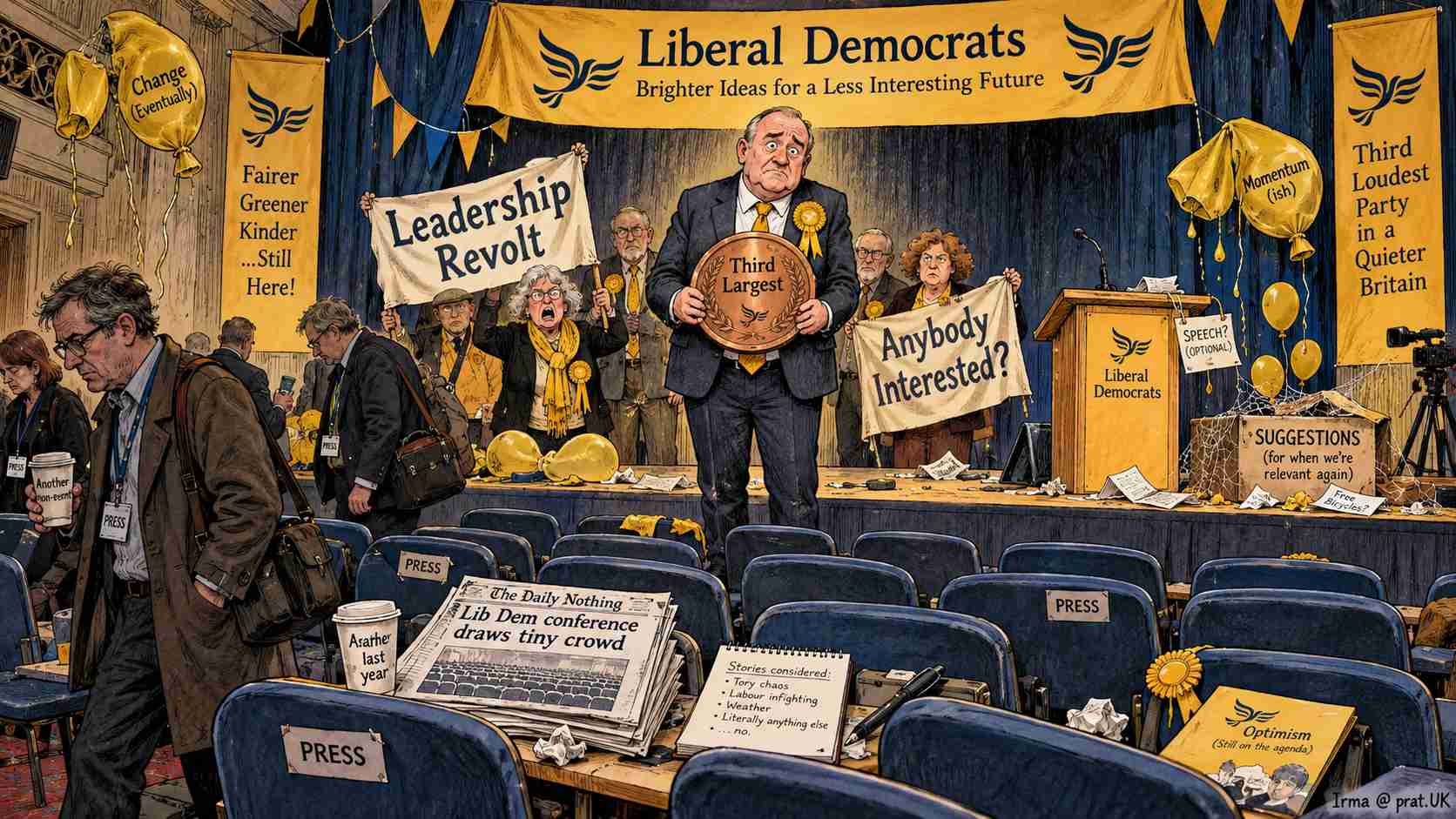
Royal Celtic Society at 200: Scotland Proves Heritage Works Best in Fancy Dress
By Caitlin Moran, UK Today
LONDON. Right, confession. I had never heard of the Royal Celtic Society until last Tuesday, and now I cannot stop thinking about it, because the Royal Celtic Society is the single most Scottish thing that has ever existed, and I mean that as the highest possible compliment and also, simultaneously, as an absolute drag.
Here is the pitch. Two hundred years ago, a group of Highland gentlemen in Edinburgh looked at the Highlands, a place most of them had cleverly arranged not to actually live in, and thought: gosh, that’s romantic. We should start a society about it. With minutes. And a treasurer. And, eventually, royal letterhead. And they did, and it’s still going, and honestly? Good for them. Mostly.
What Does the Royal Celtic Society Actually Do?
The Royal Celtic Society exists to promote the history, language, traditions, arts and music of the Scottish Highlands and Islands. In practice this means it hands out charity grants to Highland games, piping bands, clarsach players, and Gaelic playgroups, which is genuinely lovely, and also the most beautifully Scottish business model imaginable. You preserve the heritage by forming a committee about the heritage. The committee then meets. ABOUT THE HERITAGE.
And look, I’m not knocking the work. Gaelic is a real language. A clarsach is a real harp. A wee one learning a reel because the Society chipped in twenty quid is a wonderful thing. You can see the proper, reverent version of all this over on the Royal Celtic Society website, which is roughly nine hundred percent more dignified than I am being right now.
How Did Tartan Become Scotland’s Brand?
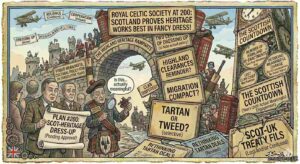
Here’s my favourite bit, and it’s the bit that should be taught in every marketing degree on Earth. In 1822, the Society’s founding lot helped stage King George IV’s visit to Edinburgh as a tartan extravaganza. They poured the King, a man shaped like a Christmas pudding, into a kilt and flesh-coloured tights, and invented a load of “ancient Highland tradition” that had been ancient for, give or take, a long weekend.
And it WORKED. Walter Scott, the Society’s first Vice President, basically discovered the cheat code for the entire heritage economy: people will pay anything for a past that didn’t happen, provided it comes with a tune, a dye, and a sad-eyed stag on the tin. Every box of shortbread in the world is paying that man rent. Every single one. I’ve eaten the rent. Repeatedly.
Who Is the Royal Celtic Society’s Patron?
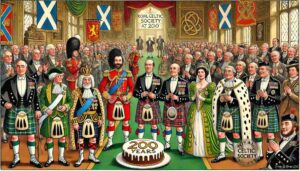
The Society became “Royal” courtesy of Queen Victoria in 1873, because Victoria never met a Highland fantasy she didn’t want to buy a castle beside, and its patron today is the Princess Royal. Which makes the whole thing feel both deeply official and entirely optional, like a knighthood awarded to a ceilidh. We’ve followed the great British knack for making the inevitable look like a triumph over at lateststory.co.uk, and honestly nobody does it better than the Scots in formalwear.
“I love the Royal Celtic Society,” said Dougie MacReadie, a man I located leaning on a fence near Pitlochry and radiating Strong Bagpipe Opinions. “It proves we can take a perfectly good country and turn it into a gift shop. That’s not an insult. That’s the national genius. Now buy a sporran or move along.”
How Is the Royal Celtic Society Funded?
It’s a charity, so its accounts are public, and crucially it spends its own donated money rather than reaching into your wages. Which is the single most important sentence in this whole article, so I’m going to say it twice: it spends its OWN money. Nobody’s forcing a bus driver in Dundee to subsidise a clarsach he’ll never hear. People give, freely, because they care, and the money goes where they want it to go.
That, frankly, is how everything should be funded, and it’s the quiet little miracle hiding under all the tartan and the committee minutes. No quango. No five-year strategic vision. No grant-funded officer with a lanyard explaining “engagement.” Just folk who love a thing, paying for the thing, and keeping it alive. Revolutionary stuff. Genuinely.
So Is Any Of It Worth Keeping?
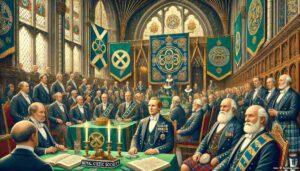
Yes. Obviously yes. Strip away the costume and the minutes and the gentle absurdity of a townhouse defending a wilderness, and you’ve got people choosing, voluntarily, to keep a language and a music and a culture breathing. The Highlands survived clearances, emigration, and weather that would humble a tank. A 200-year-old society in good tweed is the least of it.
The joke was never the heritage. The joke is the scaffolding, the sense that culture needs inspecting like a bridge rather than just, you know, doing it because your gran did. So raise a glass, something peaty, to two centuries of insisting Scotland is a costume. It’s nonsense. But it’s freely-funded, self-organised, glorious nonsense, and the world’s better for it.
Frequently Asked Questions About the Royal Celtic Society
When was the Royal Celtic Society founded? It was founded in Edinburgh in 1820 and gained its “Royal” designation from Queen Victoria in 1873.
Who founded the Royal Celtic Society? A group of Highland gentlemen convened by Captain William Mackenzie of Gruinard, with Sir Walter Scott serving as its first Vice President.
What does the Royal Celtic Society fund? It awards charity grants supporting Highland games, piping, clarsach groups, Gaelic playgroups, and other projects promoting Highland heritage.
Auf Wiedersehen, amigo!
For the American take on heritage industries that refuse to die, get yourself over to Bohiney.com.
The Royal Celtic Society was founded in Edinburgh in 1820 and received its royal designation from Queen Victoria in 1873. Sir Walter Scott served as its first Vice President, and the Society played a prominent role in staging George IV’s 1822 visit to Edinburgh. It remains a registered Scottish charity promoting the history, language, traditions and arts of the Highlands and Islands, with the Princess Royal as its patron.