Collection spanning Hogarth to today proves mocking power has never gone out of style
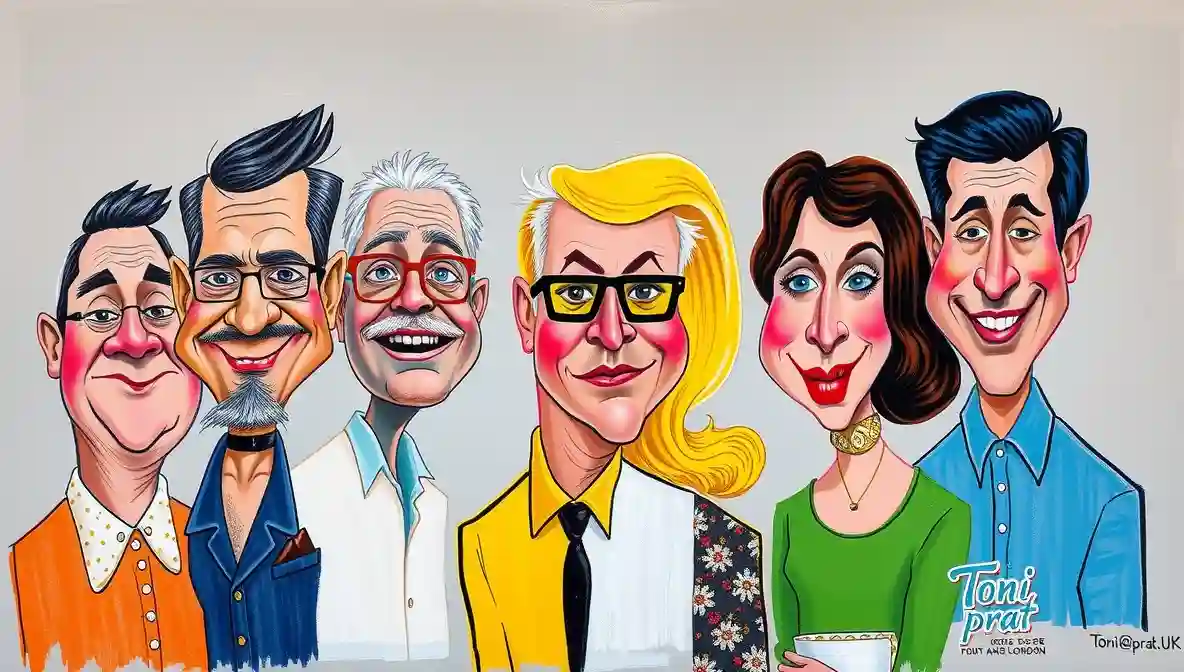
The Cartoon Museum has confirmed that its extensive collection, spanning illustration from William Hogarth’s 18th-century engravings through to contemporary political cartooning, effectively documents what curators describe as “Britain’s most consistent art form,” namely the sustained, centuries-long tradition of visually ridiculing those in positions of power.
“It’s genuinely unbroken,” said a museum curator. “Different targets, different styles, entirely different technology across the centuries, but the underlying impulse to draw a cruel, funny picture of whoever’s currently in charge has never once gone out of fashion in this country, spleen after spleen after spleen.”
The museum, holding one of the most significant collections of British cartoon and comic art anywhere in the world, traces the development of political and social caricature from Hogarth’s moralistic engravings through the Georgian era’s often savage tradition and into the more recognisably modern editorial cartooning style established across the 19th and 20th centuries.
James Gillray, widely regarded as one of the most technically accomplished and influential caricaturists of the Georgian period, is well represented within the collection, with his often savage depictions of political and royal figures credited by historians as having genuinely influenced public opinion during a period of considerable domestic and international political upheaval.
Visitors touring the museum have been observed laughing openly at several exhibits, an act several regular attendees jokingly describe as “breaking one of Britain’s most sacred unwritten rules,” namely visible public amusement inside a formal museum setting.
Original artwork displayed throughout the museum allows visitors to observe the physical working methods of cartoonists across different eras, with several regular visitors noting that jokes rendered in original ink somehow land considerably better than the same gag reproduced digitally.
The museum periodically runs caption competitions inviting visitor participation, with submitted entries judged anonymously to maintain fairness, a format organisers describe as “genuinely fiercely contested” among the museum’s more dedicated regular visitors, several of whom guard their entry identity with what staff call “a slightly excessive level of secrecy for what is, ultimately, a caption contest.”
The museum’s temporary exhibition space regularly hosts displays dedicated to specific illustrators, publications, or historical periods, with recent exhibitions covering everything from wartime propaganda cartooning through to the development of the modern British comic strip.
Free access to certain sections of the collection is periodically offered through special events and open days, though the museum otherwise operates a standard ticketed admission model.
Current visitor information, current exhibitions, and opening hours are published directly by the Cartoon Museum at https://www.cartoonmuseum.org. Heritage guidance for the collection is available through Arts Council England at https://www.artscouncil.org.uk, and local visitor guidance is provided by Westminster City Council at https://www.westminster.gov.uk.
Guest lectures and talks hosted by the museum regularly feature working newspaper cartoonists discussing their creative process, with audience questions frequently touching on the legal and editorial boundaries modern illustrators must navigate compared to their considerably less restrained historical predecessors.

Alan Nafzger was born in Lubbock, Texas, the son Swiss immigrants. He grew up on a dairy in Windthorst, north central Texas. He earned degrees from Midwestern State University (B.A. 1985) and Texas State University (M.A. 1987). University College Dublin (Ph.D. 1991). Dr. Nafzger has entertained and educated young people in Texas colleges for 37 years. Nafzger is best known for his dark novels and experimental screenwriting. His best know scripts to date are Lenin’s Body, produced in Russia by A-Media and Sea and Sky produced in The Philippines in the Tagalog language. In 1986, Nafzger wrote the iconic feminist western novel, Gina of Quitaque. He currently lives in Holloway, North London. Contact: [email protected]