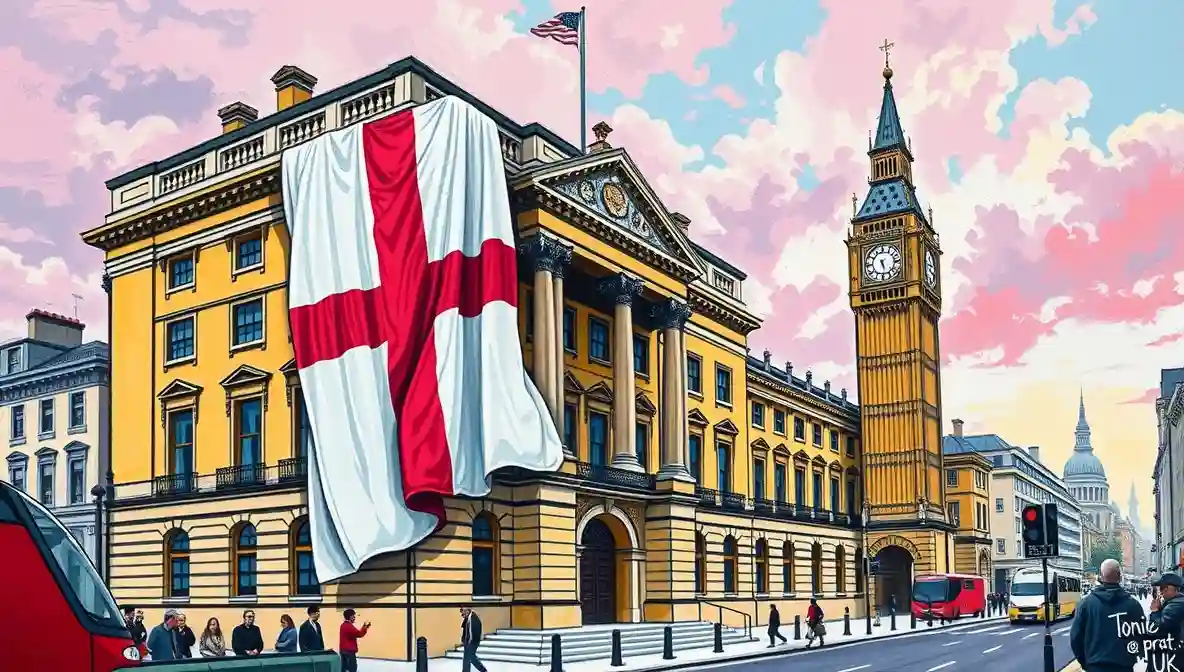
775-room royal residence confirms internal disputes persist despite abundant options
Buckingham Palace’s 775 rooms have, according to household staff familiar with the building’s day-to-day operation, done remarkably little to settle ongoing internal disagreement over which bathroom is genuinely the best, a dispute one long-serving member of staff described as “surprisingly persistent given the sheer number of alternatives available.”
“You’d think with that many rooms it would resolve itself,” the staff member said. “It has not. There are clear favourites, and they are contested, and adding more rooms over the centuries has never once settled the argument.”
The Changing of the Guard, held outside the palace on a published schedule, remains one of the most reliably punctual events in British public life, with crowds gathering along the railings to watch a ceremony so precisely timed that regular attendees describe it as “the world’s most punctual traffic jam,” referring both to the marching guardsmen and the crowds attempting to view them.
Visitors staring up at the palace’s famous balcony for extended periods, hoping for a royal appearance, are considerably more likely, on any given day, to see a window cleaner than any member of the family, a statistical reality palace tour guides confirm without particular ceremony.
The Royal Standard, flown above the palace only when the monarch is in official residence, functions as the building’s most reliable indicator of royal presence, a flag-based signalling system staff note remains the only entirely unambiguous way to know whether anyone of note is currently home.
The palace’s front garden, spanning enough open ground that a full marching band has, on at least one occasion, become genuinely difficult to locate within it during rehearsal, continues to host garden parties each summer, drawing thousands of guests across several dates.
Tour guides leading visitors through the nineteen State Rooms open to the public each summer say the scale of the wider building, closed to general visitors, routinely surprises first-time guests expecting to see considerably more than the published route actually covers.
The palace’s ongoing reservicing programme, replacing electrical wiring and plumbing installed in some sections before Victoria’s reign concluded, continues on a rolling multi-year basis, with staff noting the building’s age means genuinely modern infrastructure remains, in places, a fairly recent addition.
Household staff say the bathroom debate, while good-natured, reflects a wider truth about a building this size: abundance of choice has never once been the same thing as consensus.
Current visitor information for the State Rooms, including summer opening dates, is published by the Royal Collection Trust at https://www.rct.uk. The Royal Family’s official household activities are listed at https://www.royal.uk, and heritage listing details are maintained by Historic England at https://historicengland.org.uk.
A Buckingham Palace spokesperson declined to name which bathroom currently holds the edge in the ongoing internal debate, saying only that the matter remained “a live discussion” and that further comment would not be forthcoming ahead of any formal resolution, should one ever arrive.

Lowri Griffiths brings a distinct voice to satirical journalism, combining cultural critique with dry humour. Influenced by London’s creative networks, her writing reflects both wit and discipline.
Her authority stems from experience, while trust is built through transparency and ethical satire.