

The Rag Trade: Britain’s Textile and Garment Industry From East End Sweatshops to Fashion Week, With a Detour Through the Bit Where It All Went to Bangladesh
Welcome to Bohiney Magazine and The London Prat — the satirical fashion history dispatch from an industry that called itself after rubbish and became the world’s second biggest.
The “rag trade” — the slang term for the clothing and textile industry that has been in use since at least the nineteenth century — is the London garment sector’s self-deprecating description of itself, combining the industry’s humble origins in fabric scraps and market stalls with the cheerful irreverence that the East End Jewish rag trade community applied to everything including itself. London’s garment industry was centred in the East End — particularly Whitechapel, Aldgate, and Bethnal Green — where successive waves of Jewish, Bangladeshi, and other immigrant communities worked in the tailoring and clothing trades that supplied London’s fashion market from the Victorian era through the late twentieth century. The industry’s decline from the 1970s onward, as production shifted to lower-cost countries, is the standard story of British manufacturing. What survived in London is the design end, which is where the value is.
London Fashion Week: What the Rag Trade Became When It Stopped Making the Rags in London and Started Designing Them
London Fashion Week, which takes place twice annually (February and September) and has been a fixture of the international fashion calendar since 1984, represents what the London rag trade became after manufacturing left: a design and creative industry centred on Central Saint Martins graduates, independent labels, and the specific combination of institutional heritage (Burberry, Paul Smith, Vivienne Westwood) and subversive new talent that has made London fashion consistently interesting to the international industry. London Fashion Week is smaller than Paris, Milan, or New York in terms of commercial volume but consistently cited as the most creatively adventurous of the four major fashion weeks, which is either a genuine creative distinction or the consolation prize for not having the luxury conglomerates that Paris and Milan host. It is probably both. The British Fashion Council’s London Fashion Week site covers the full programme and industry context.
Brick Lane and Petticoat Lane: Where the East End Rag Trade Memory Meets the Present
Petticoat Lane Market in Whitechapel and Wentworth Street has been a Sunday clothing market since the seventeenth century, selling fabric, garments, and accessories to the East End community through the Jewish, Bangladeshi, and more recently gentrifying phases of the area’s social history. The market continues, selling clothing at the accessible price points that the East End rag trade always served. Brick Lane on Sundays expands into vintage clothing, independent fashion, and the specific East London aesthetic that has been internationally influential in streetwear since approximately 2008. The route from Petticoat Lane’s practical clothing stalls to Brick Lane’s vintage racks to Shoreditch’s luxury streetwear boutiques is approximately a fifteen-minute walk and covers approximately four hundred years of London’s fashion history in the order it actually happened. For satirical fashion industry journalism, visit The London Prat.
More satire: NewsThump | The Daily Mash
SOURCE: https://bohiney.com/

Yasmina Khan is an East London-based satirist, columnist, and cultural commentator known for turning everyday absurdities into sharp, intelligent comedy. Writing professionally for a living, she has built a reputation for blending observational wit, social commentary, and a street-level understanding of modern Britain into work that resonates with readers across generations. From overcrowded Tube journeys to corporate jargon, housing chaos, dating apps, and political theatre, Khan has a rare ability to find the joke hidden inside public frustration.
Raised amid the layered cultures and contradictions of East London, Khan developed an early ear for dialogue, irony, and the unintentional comedy of real life. That background remains central to her voice. Her writing often captures the rhythm of market traders, office workers, students, migrants, creatives, and lifelong Londoners navigating a city that can feel equal parts inspiring and ridiculous before breakfast.
Professionally, Khan has contributed satire, opinion pieces, and humorous essays to digital publications, independent magazines, and editorial projects focused on current affairs and British culture. Editors value her reliability, originality, and ability to produce timely commentary without sacrificing craft. Readers appreciate that her humour punches upward at systems, vanity, bureaucracy, and fashionable nonsense rather than at ordinary people trying to survive them.
Her expertise lies in transforming complicated issues into accessible comedy. Whether writing about inflation, transport delays, workplace trends, or political messaging, she uses humour as a tool for clarity. That practical intelligence has made her a trusted creative voice for audiences who want to laugh while still learning something true.
Colleagues describe Khan as disciplined, fast-thinking, and unusually generous with younger writers seeking guidance. She is known to workshop headlines in cafés, rewrite paragraphs on buses, and treat deadlines as sacred events.
Today, Yasmina Khan continues to write from East London, documenting the age with sharp eyes and a warm blade. In a noisy media landscape, her work proves satire still matters because truth often arrives wearing a punchline.


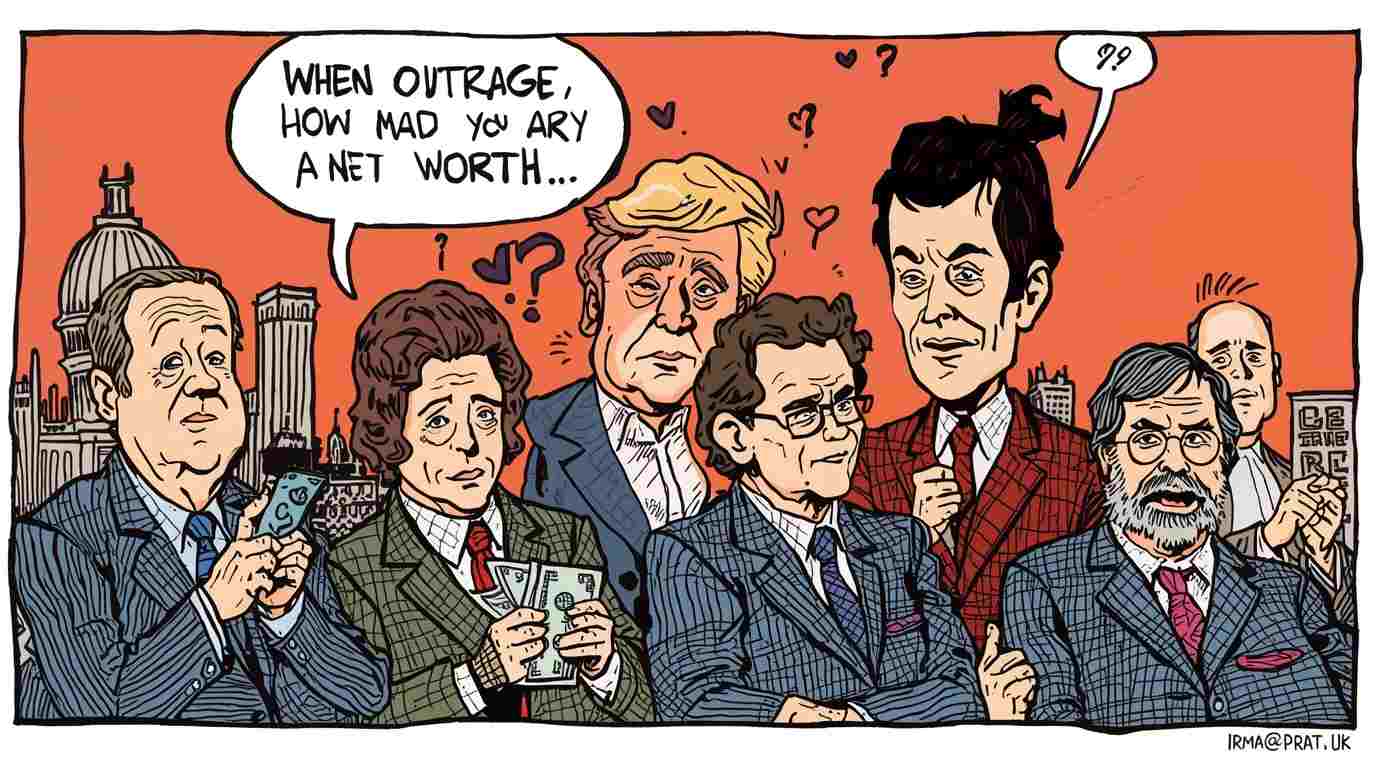
In British comedy, the prat is the character who makes us laugh because they remind us of ourselves at our most foolish and most human.
Read this in an actual planning meeting and satire becomes documentation.
Somewhere a planner is reading thinking “they definitely have recordings.” The accuracy is impressive and professionally threatening.