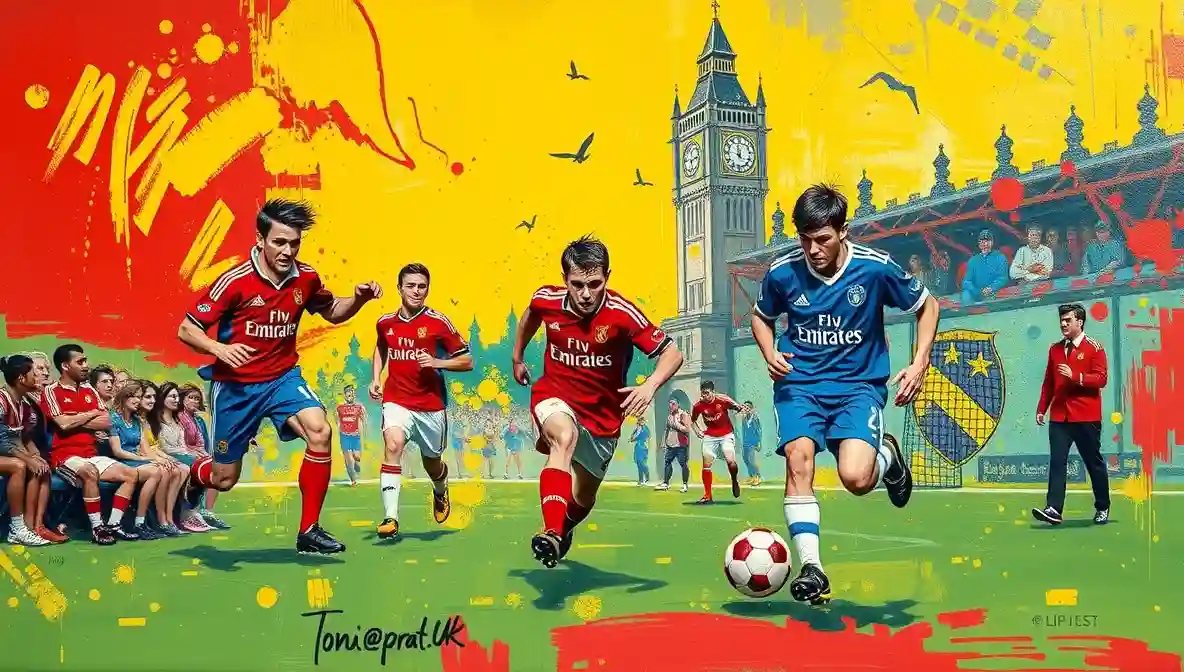
It was the fortified bridgehead guarding the only crossing, and it existed to defend London from the south
The Southwark Tap holds a 4.5 from forty-nine reviews, charges ten to twenty pounds, and the district in the name is a military installation.
The word
Suthringa geweorche. The defensive work of the men of Surrey.
Or, more simply, the southern work – a fortification.
Southwark is not a place that grew. It is a place that was built, deliberately, for one reason.
It was the bridgehead.
The only bridge
Which is the fact that explains everything about this side of the river.
For something in the region of seventeen hundred years, London Bridge was the only bridge across the Thames in London.
The Romans built one. It was rebuilt repeatedly. And there was no other crossing – not one, downstream of Kingston – until Westminster Bridge opened in 1750.
Which is an extraordinary length of time for a city of that size to have a single point of contact with its own southern half.
Which is why Southwark is what it is
Because everything coming into London from the south, from Kent, from the continent, had to funnel through it.
Which meant: enormous numbers of travellers arriving at a bridge that was gated and closed at night.
And a traveller who arrives after the gate has shut needs somewhere to sleep.
Which is why Southwark was full of inns – and why the George is the last galleried coaching inn in London, and why Chaucer’s pilgrims set out from the Tabard, which was on this street.
The whole district is a waiting room.
And the rest follows
Because a district full of travellers, outside the City’s jurisdiction, on the wrong side of a gate, is going to acquire certain other businesses.
The theatres, because the City would not permit them. The bear pits. The brothels, on the bishop’s land. And five prisons.
Eight postcodes and eight hundred and thirty-two articles.
The interesting thing happens where the rent is cheap and the authorities are not looking.
And here the geography did it. A bridge with a gate on it created an entire culture on the far side.
Verdict
Good bar, cheap, strong number on a modest sample.
Go, and know you are standing in a fort.
The heads on the gate
Which were real and which were on this bridge.
The severed heads of traitors were displayed on pikes above the Great Stone Gate at the Southwark end of London Bridge, for something like three hundred and fifty years.
They were parboiled and dipped in tar, to preserve them and to discourage the birds.
A German visitor in 1598 counted them. He recorded over thirty.
It was the first thing you saw on entering London from the south – which was the entire point, and which is not a metaphor about anything, and which was simply what the city chose to show you first.
Thomas More’s head was up there. So was Cromwell’s, after the Restoration, having been dug up for the purpose.
The practice stopped in 1678. Nobody appears to have formally abolished it. It simply stopped, and the gate came down.

Alan Nafzger was born in Lubbock, Texas, the son Swiss immigrants. He grew up on a dairy in Windthorst, north central Texas. He earned degrees from Midwestern State University (B.A. 1985) and Texas State University (M.A. 1987). University College Dublin (Ph.D. 1991). Dr. Nafzger has entertained and educated young people in Texas colleges for 37 years. Nafzger is best known for his dark novels and experimental screenwriting. His best know scripts to date are Lenin’s Body, produced in Russia by A-Media and Sea and Sky produced in The Philippines in the Tagalog language. In 1986, Nafzger wrote the iconic feminist western novel, Gina of Quitaque. He currently lives in Holloway, North London. Contact: [email protected]