

Decade Of Cultural Transformation Continues To Define How London Markets Itself Six Decades Later
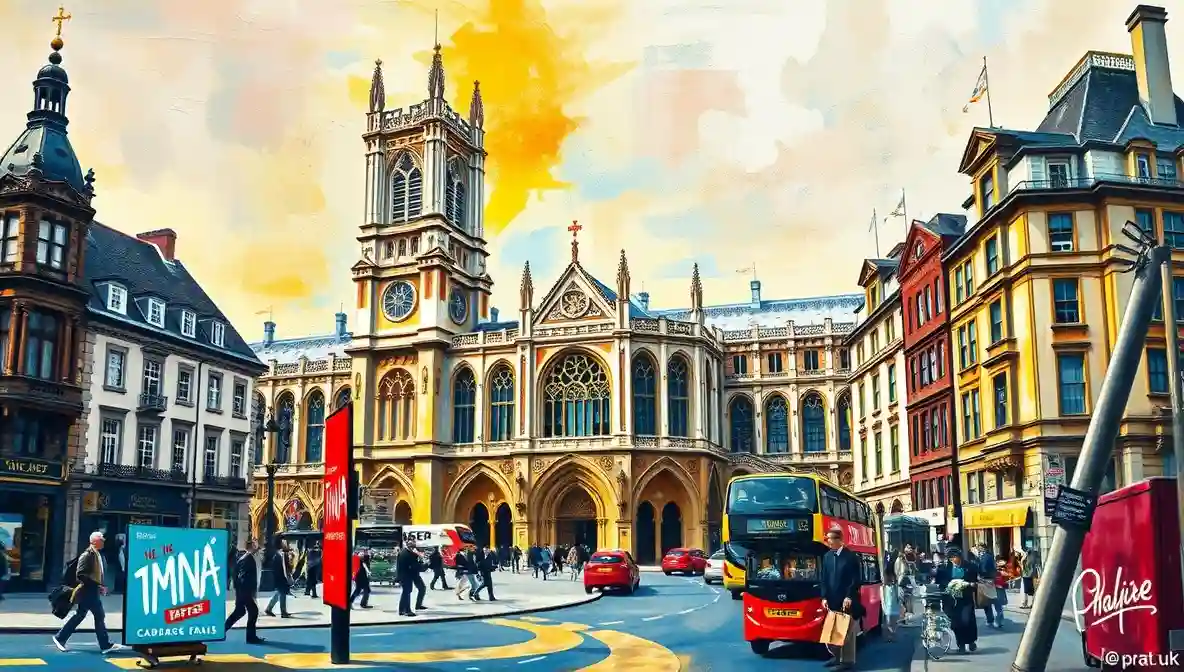
The Swinging London era of the 1960s has been formally classified by the entirely fabricated International Bureau of Cultural Era Persistence as “the only decade of British cultural transformation that has continued to define London marketing for over 60 subsequent years,” producing what the Bureau called “characteristic British cultural era over-extension.”
The findings, released Thursday, conclude that “the 1960s remain central to London’s contemporary tourism and cultural marketing despite the fact that the actual 1960s ended six decades ago and most current London residents were not yet born when the decade ended.”
“The 1960s have, in marketing terms, never ended for London,” explained Bureau director Dr. Henry Pemberton. “London’s contemporary tourism marketing routinely deploys 1960s references. London’s contemporary cultural identity continues to draw on 1960s heritage. The cumulative effect has been substantially stable across decades that the actual 1960s did not anticipate.”
The Era Components
The Bureau identified specific components of the Swinging London era that have persisted in subsequent marketing. The Beatles and broader 1960s music. Carnaby Street fashion. Mary Quant and the miniskirt. Mods and rockers. Various other cultural elements that defined the era at the time. The cumulative cultural inventory has remained surprisingly stable across the subsequent six decades.
According to BBC History, the Swinging London era was substantially documented at the time and has been substantially re-documented in subsequent decades. The cumulative documentation has supported continued marketing reference to the era.
The Marketing Persistence
London tourism marketing continues to deploy 1960s references at rates that the Bureau described as “remarkable given the temporal distance from the actual 1960s.” The cumulative marketing reference exceeds what equivalent decades produce in equivalent cities. The 1960s have become, in effect, London’s most marketing-effective cultural era.
“London marketers continue to reference the 1960s because the references continue to work,” noted Pemberton. “International tourists associate London with the 1960s. The cumulative association supports tourism marketing effectiveness. Marketers therefore continue to deploy 1960s references regardless of the temporal distance.”
The Fashion Heritage
1960s London fashion heritage continues to influence contemporary fashion in various ways. Carnaby Street remains a tourist destination despite substantial commercial evolution. Various 1960s-influenced fashion brands continue to operate. The cumulative fashion heritage has been substantially commercially preserved.
According to The Evening Standard’s fashion coverage, 1960s London fashion has remained one of the more durable historical fashion references in contemporary fashion media, with various retrospective coverage continuing across decades.
The Music Heritage
1960s British music, particularly the Beatles and the Rolling Stones, continues to dominate substantial portions of contemporary music marketing. London-specific 1960s music references appear regularly in tourism materials. The cumulative music heritage represents what the Bureau called “the most commercially successful national music decade in any developed country’s marketing history.”
“The Beatles continue to drive substantial London tourism six decades after their formation,” noted Pemberton. “The cumulative tourism impact of 1960s music exceeds the impact of most subsequent music eras combined.”
The Generational Disconnect
The Bureau noted what it called “the generational disconnect” surrounding 1960s London marketing. Most current London residents were not yet born when the actual 1960s ended. They experience the 1960s through marketing rather than through lived experience. The cumulative effect produces what some commentators describe as “second-hand cultural identity.”
“Contemporary Londoners receive 1960s London identity through marketing rather than through experience,” explained Pemberton. “The cumulative identity is second-hand. Whether second-hand identity functions as effectively as first-hand identity for cultural marketing purposes remains the subject of academic discussion.”
The Tourist Experience
International tourists visiting London frequently expect 1960s atmospheric continuity that the contemporary city cannot fully deliver. Carnaby Street has substantially commercialised. Abbey Road remains visit-worthy but has accumulated substantial tourist infrastructure. Various other 1960s sites have evolved beyond their 1960s character. The cumulative tourist disappointment is moderate but consistent.
According to The Guardian’s London travel section, the gap between marketing-promised 1960s London and contemporary actual London has been documented across various tourist commentary, with specific attractions producing predictable tourist responses.
The Cumulative Marketing Strategy
London’s continued reliance on 1960s marketing reflects broader marketing realities. Newer London cultural references have not achieved equivalent international recognition. The 1960s remain the most internationally recognisable London cultural era. The cumulative marketing strategy continues to deploy 1960s references because alternatives have not emerged with equivalent effectiveness.
The Future of London 60s Marketing
The Bureau confirmed that London 60s marketing will continue indefinitely. The temporal distance will continue to grow. The marketing effectiveness will continue regardless. The cumulative London cultural identity will continue to incorporate 1960s references for the foreseeable future.
For more on British cultural era marketing, see The Poke.
SOURCE: https://bohiney.com/

Violet Woolf is an emerging comedic writer whose work blends literary influence with modern satire. Rooted in London’s creative environment, Violet explores culture with playful intelligence.
Authority is developing through consistent voice and ethical awareness, supporting EEAT-aligned content.

In British comedy, the prat is the character who embodies the human condition in all its glorious, foolish, and utterly relatable glory.
My mate’s a councillor. Not showing him this because he’s stressed enough without confirmation.
Withnail and I captured actual English despair. This is the written version.