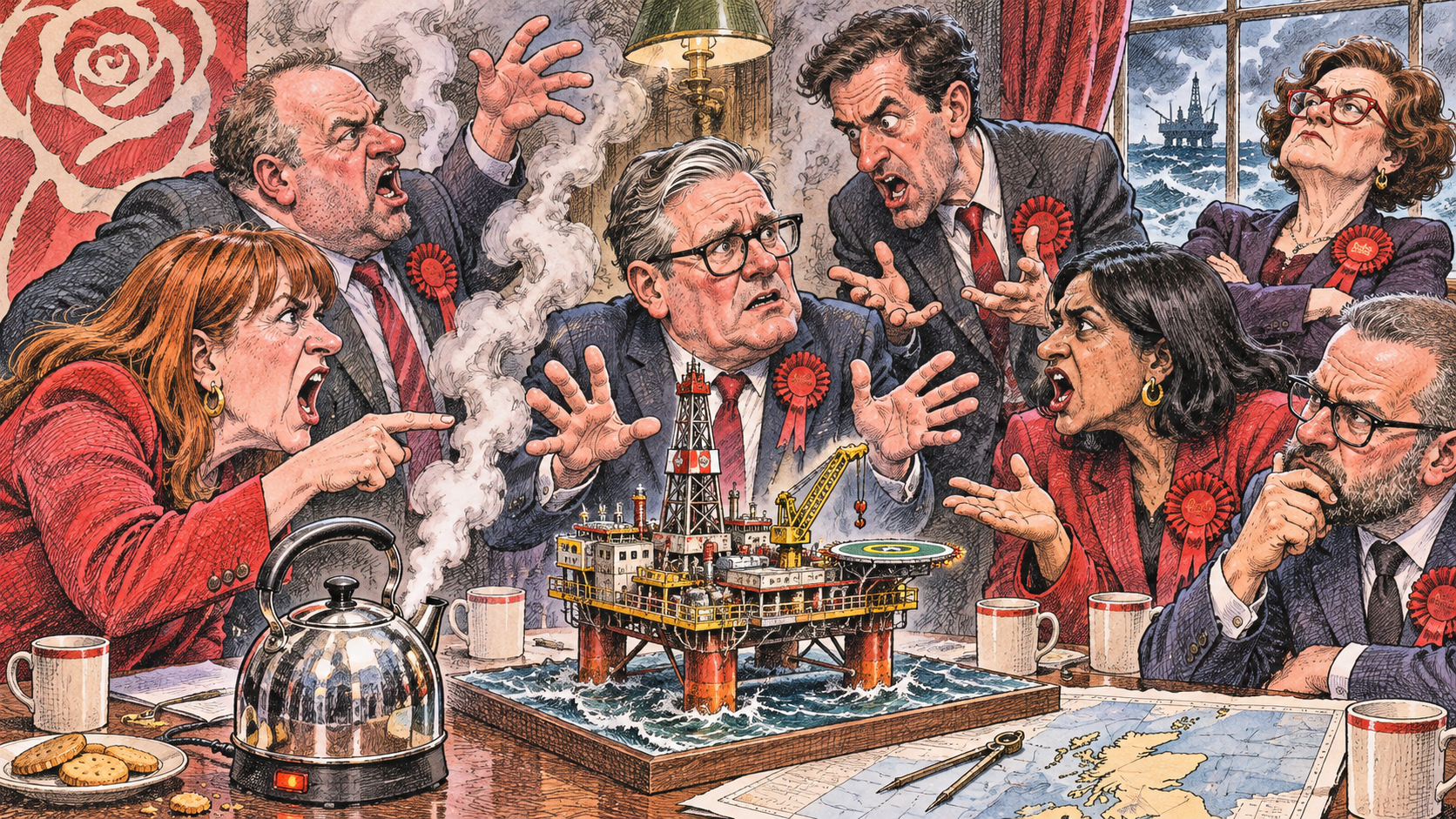
LONDON — Labour’s Rosebank argument has generated enough internal heat to suggest that the party should at least investigate whether its next parliamentary meeting can supply district heating.
Our imaginary energy assessor arrived expecting a political disagreement and left recommending improved ventilation, industrial-grade insulation and separate entrances for people who use the word pragmatic differently.
Rosebank oilfield row heats up
Sky’s 27 November newspaper review reports that close to 100 Labour MPs have written opposing the Rosebank project. This records a political dispute, not a final government approval or refusal. Sky News’s 27 November newspaper review.
The thermostat encounters competing mandates At a fictional party meeting, one MP says the debate is about energy security. Another says it is about climate credibility. A third asks whether the window can be opened before the discussion reaches the manifesto.
Nobody disputes that energy policy involves difficult choices. They dispute which difficult choice proves that everybody else has failed to understand difficult choices.
A whip has attempted to cool the room by asking colleagues to remember the bigger picture. Several colleagues have replied with competing bigger pictures, each large enough to obscure the exit.
Every faction brings its own temperature reading An invented backbencher, Sandra, has prepared a short statement. It is short by the standards of statements intended to explain why she has been forced to issue a statement.
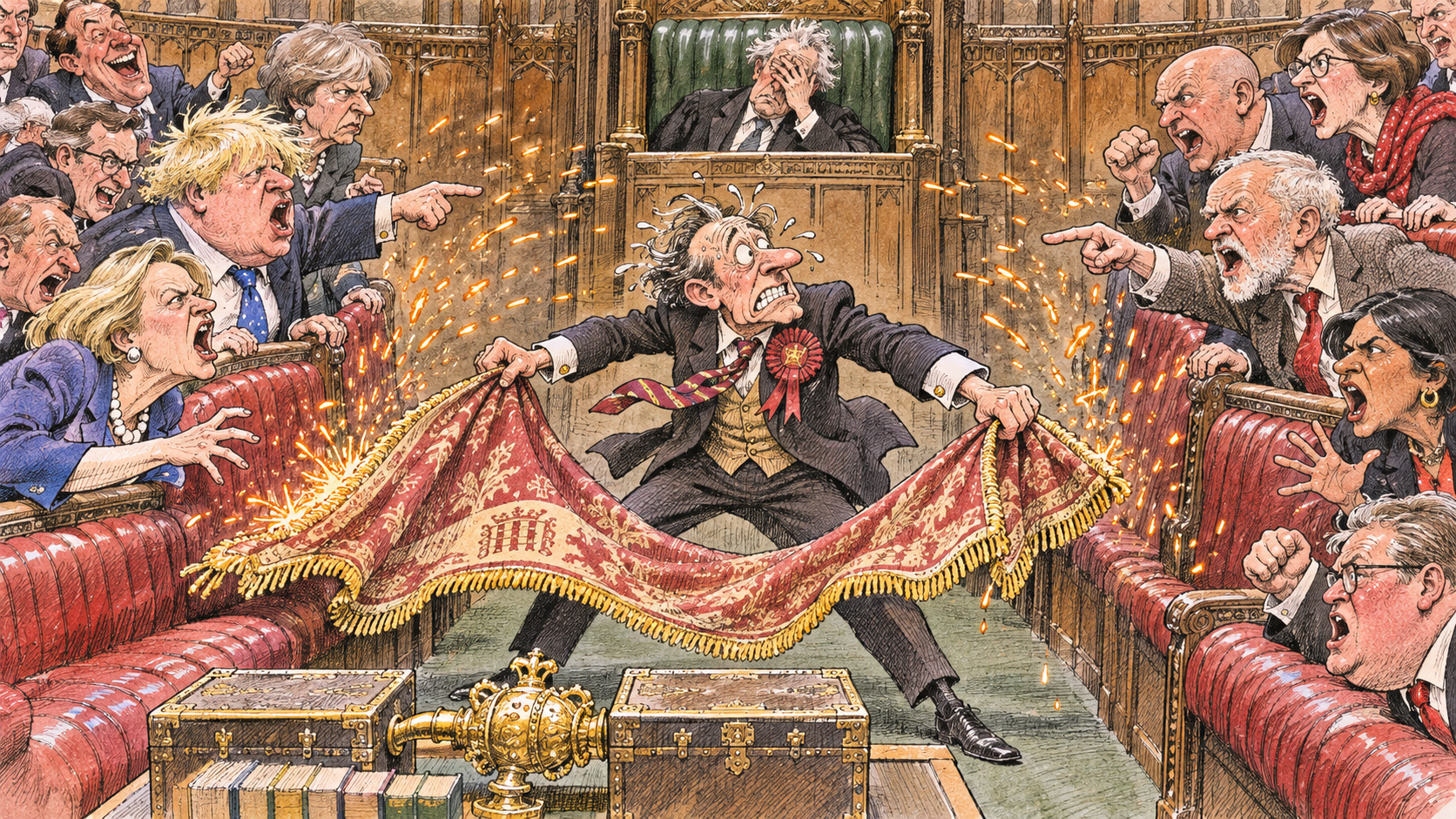
Her colleague Martin says silence would be more constructive. He then explains his reasons for this position to three newspapers and a passing camera operator.
The party’s fictional communications team would like the debate to be described as healthy discussion. The building’s caretaker says healthy discussion has triggered the heat sensor and could somebody please move the portable heater away from the curtains.
The kettle offers a policy contribution A kettle placed between the rival factions has boiled without being switched on. This is an invented visual metaphor rather than an engineering claim, although the assessor says it would be unwise to discard any promising domestic energy source.
The MPs agree that households want affordable, secure energy. They also agree that there is a long-term environmental responsibility. The difficulty begins when each side attempts to copyright the correct combination of these sentences.
Sandra says compromise requires honesty about trade-offs. Martin agrees in principle but would prefer his own trade-offs to be called common sense and hers to be called concessions.
The fictional whip has now arranged a listening session. Everyone has arrived with speaking notes, a prepared intervention and a concern that the listening might be interpreted as agreement.
Outside the meeting, an ordinary voter asks what the eventual decision will mean. The answer is interrupted by a dispute over whether asking about the eventual decision prejudges the process.
The energy assessor has withdrawn his proposal. Harvesting the heat looks feasible, he says, but connecting the factions to a common grid may prove considerably more expensive than expected.
Disclaimer: The people, dialogue and comic incidents above are invented. The linked evidence is factual. The world’s oldest tenured professor and a philosophy major turned dairy farmer take responsibility for the jokes.

Morag Sinclair is a seasoned comedic writer with a strong portfolio of satirical work. Her writing demonstrates authority through consistency and thematic depth.
Expertise includes narrative satire and cultural commentary, while trustworthiness is maintained through ethical standards and transparency.