
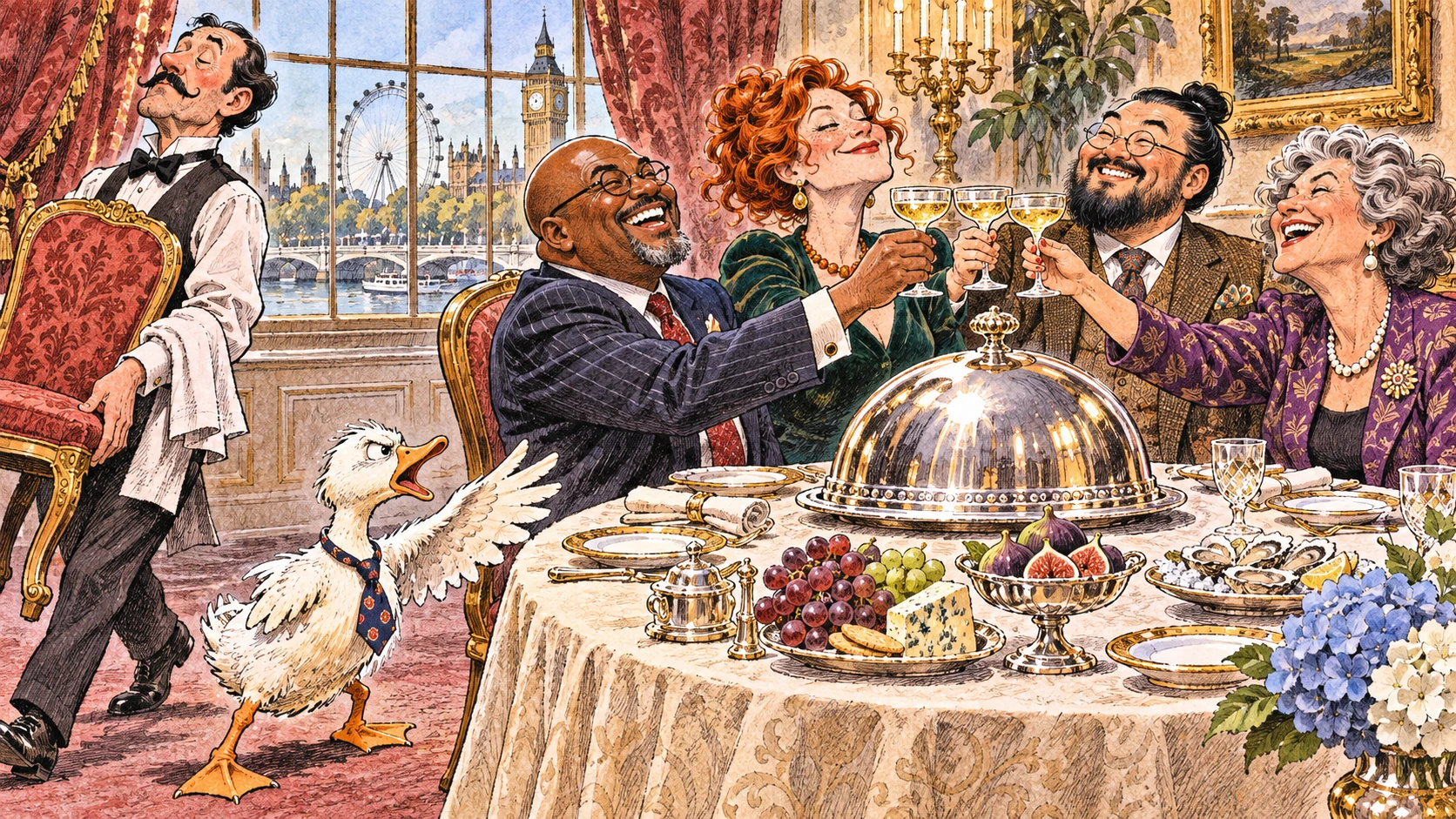
The foie gras import ban has encountered an obstacle rarely mentioned in animal welfare speeches: somebody important would still like the starter. At the Prat’s alternative trade dinner, the principle arrived confidently, checked its reservation and discovered its place had been given to a sauce.
The Financial Times reported that the planned EU food agreement would block the promised import ban. The dinner below is our own examination of digestible politics.
Foie gras import ban loses its table reservation
A duck attended the preliminary discussion with a short statement about being a duck. This was considered emotionally compelling but technically unhelpful. It had not commissioned an economic impact assessment and could offer no assurances about frictionless distribution.
The luxury starter’s representative arrived with a leather portfolio, a restaurant booking and a much firmer grasp of stakeholder engagement. He said that while everyone respected welfare, respect should not be confused with letting it interrupt dinner.
“Principles must operate in the real world,” explained the Prat’s minister for negotiable convictions. By the real world he meant a dining room with excellent lighting and nobody currently being asked to demonstrate how the food was produced.
The menu receives protected status
An entirely unscientific survey of the table found that all six place settings supported compassion, although two preferred it on the side. The napkins favoured a transition period. The duck was not polled because the consultant’s spreadsheet contained no suitable category for a respondent with webbed feet.
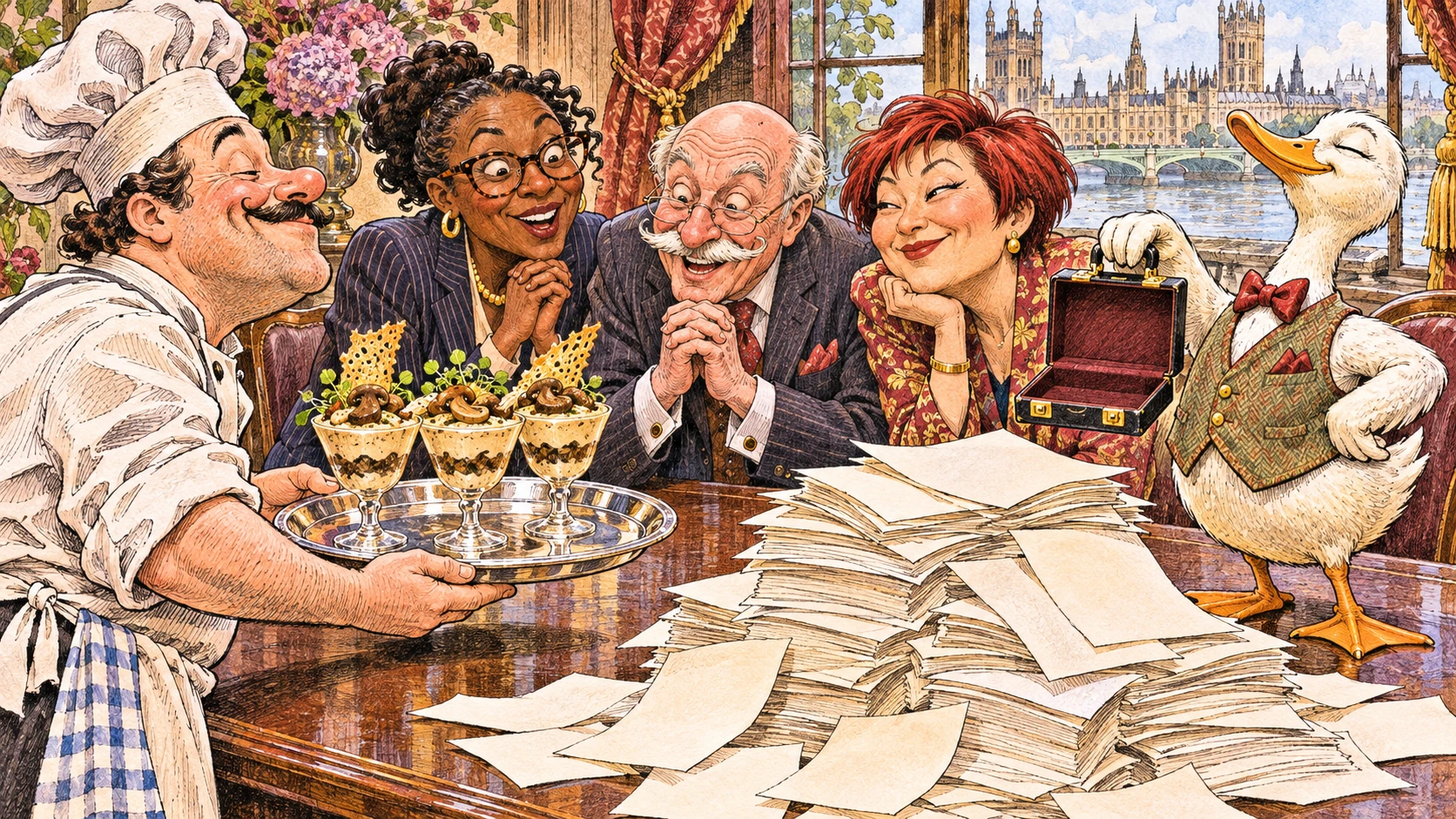
A chef offered mushroom parfait as an alternative. Negotiators admired the innovation but worried that enjoying a different starter might create a dangerous precedent: discovering that a difficult moral conflict could sometimes be avoided by ordering something else.
The duck’s proposed amendment requested equal treatment between domestic production and imported products. The committee replied that the question was more complicated than that. The duck agreed. Being the only participant who could not hire a lawyer was making it substantially more complicated.
The pledge returns as a tasteful garnish
Governments have to weigh competing objectives in trade negotiations. That does not make every compromise outrageous, or every claimed benefit worthless. It does make grand promises rather vulnerable when their practical limits are explained only after the applause has finished.
Our dinner’s defining word is “alignment”. In ordinary language it describes things facing the same direction. In political catering it describes a minister facing an old promise while a waiter quietly removes it from the table.
The negotiators congratulated themselves on reducing paperwork. The duck asked whether the reduced paperwork included the earlier promise. A senior official said the promise had not vanished; it had moved into the historical context section, where many important commitments enjoyed peaceful retirement.
Dessert was a towering confection made of edible red lines. Guests were advised that these were decorative and should not be relied upon to hold anything up. Several requested second helpings.
The duck left before coffee, carrying an untouched name card and a renewed appreciation of mushrooms. Outside, a reporter asked what it had learned about international trade. It said the first requirement was apparently to avoid being the thing everybody else was negotiating over.
Satirical disclaimer: the duck delegation and dinner survey are comic devices. Newsroom legend credits a collaboration between the world’s oldest tenured professor and a philosophy major turned dairy farmer. Their trade agreement concerns who washes the saucepan.

Mei Lin Chen is a student writer whose satire explores identity, modern culture, and social nuance. Her work reflects academic curiosity and engagement with London’s diverse perspectives.
Expertise is growing through study and practice, while trust is supported by clear intent and responsible humour.


