Britain’s proposed BBC licence fee reform has reached the household sofa, where viewers who escaped scheduled television are being congratulated on finding a new route back to the bill. The remote control still changes the programme. It has apparently never been authorised to change the financial relationship.
A new report on the BBC funding outlook describes proposals to extend the licence fee to streaming viewers. The proposal is not current law.
BBC licence fee reform discovers the absent audience
In the Prat’s newly established Department of Compulsory Appreciation, officials explained that choosing another broadcaster was a powerful demonstration of how much the public valued broadcasting. Choosing no broadcaster at all would be classified as appreciation in reserve.
“We must reach people where they are,” said the department’s director, holding a direct debit form. “Ideally before they realise we have followed them.” He compared the arrangement to a restaurant charging passers-by because the existence of its kitchen contributed to the nation’s culinary conversation.
The restaurant analogy briefly faltered when someone asked whether the passers-by received dinner. Officials said dinner was available on a separate app, subject to registration, regional availability and the emotional resilience required to locate it.
Household survey finds everyone already paying somebody
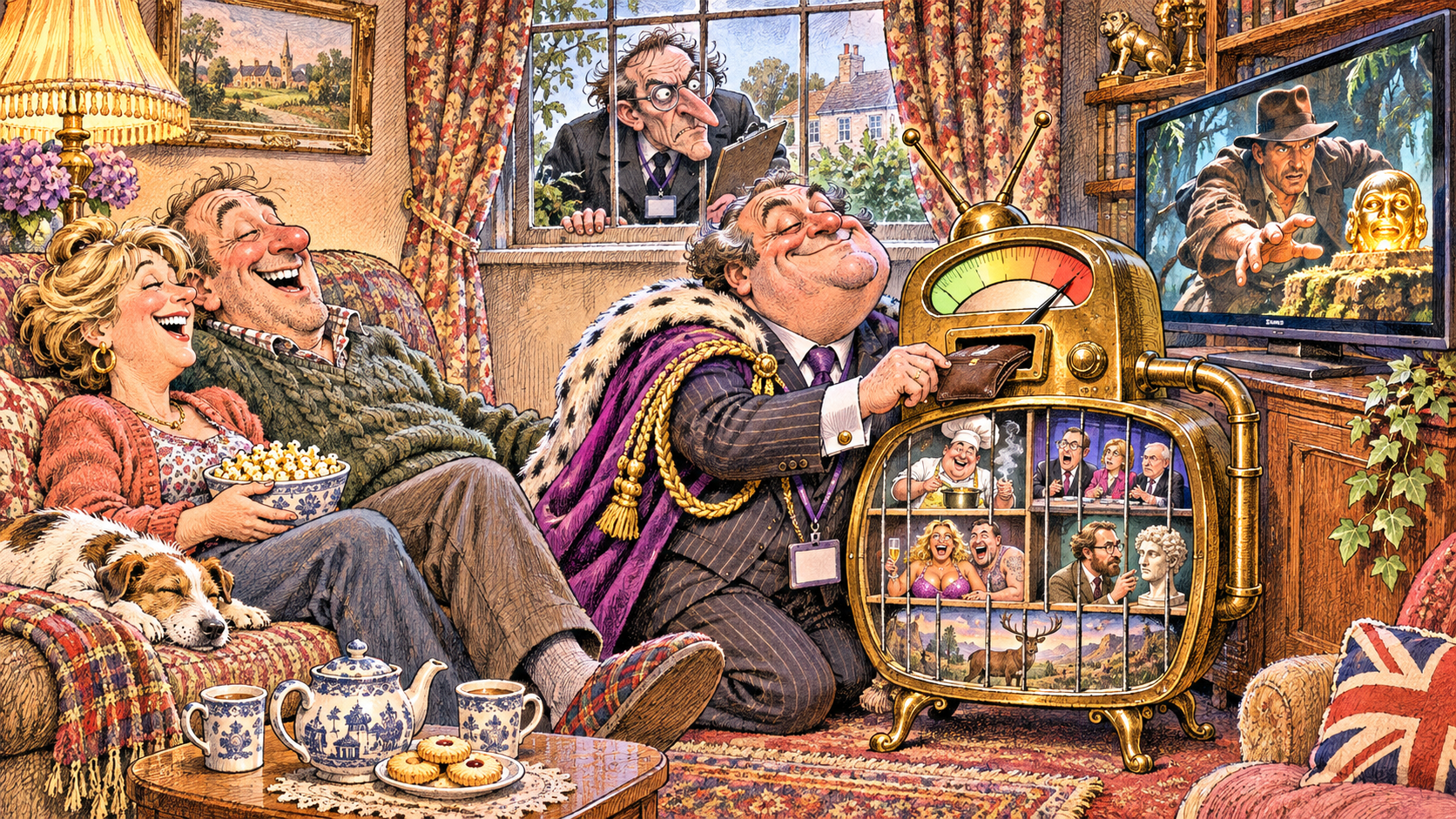
At the Bell family’s sofa, our entirely unscientific survey produced three subscriptions, two forgotten passwords and one husband who thought the licence covered the router. The dog declined to answer because its preferred entertainment arrived free through the front window.
Mrs Bell said she had subscribed to streaming specifically to avoid being told when to watch a detective standing over a body in the rain. She now feared paying two organisations to provide detectives, with the rain already included in her council tax expectations.
Her husband conducted a practical experiment. He pressed “skip intro”, then “skip recap”, then searched for “skip funding model”. The television offered him another detective. This one looked financially concerned.
The family’s teenage son suggested that an organisation losing customers could make something customers wanted. An adult explained that this was a dangerously commercial answer to a public service question and sent him upstairs to consider the social importance of invoices.
The invoice secures a recurring role
A pilot episode of the new arrangement features a licence inspector joining a household’s family plan. He has no profile picture, never watches anything and insists on being paid before anyone can discover whether he has preferences.
The inspector’s dramatic arc is expected to be substantial. In episode one he arrives. In episode two the family explains that it does not watch his programmes. In episode three he develops a compelling interest in the family’s bank account. Critics have called it slow television with an unusually fast collection mechanism.
There are serious choices about how public broadcasting should be funded. None becomes clearer by pretending that every streaming customer has secretly ordered the same service. Consumers trying to understand their existing obligations should consult current official rules rather than a proposal or a promotional headline.
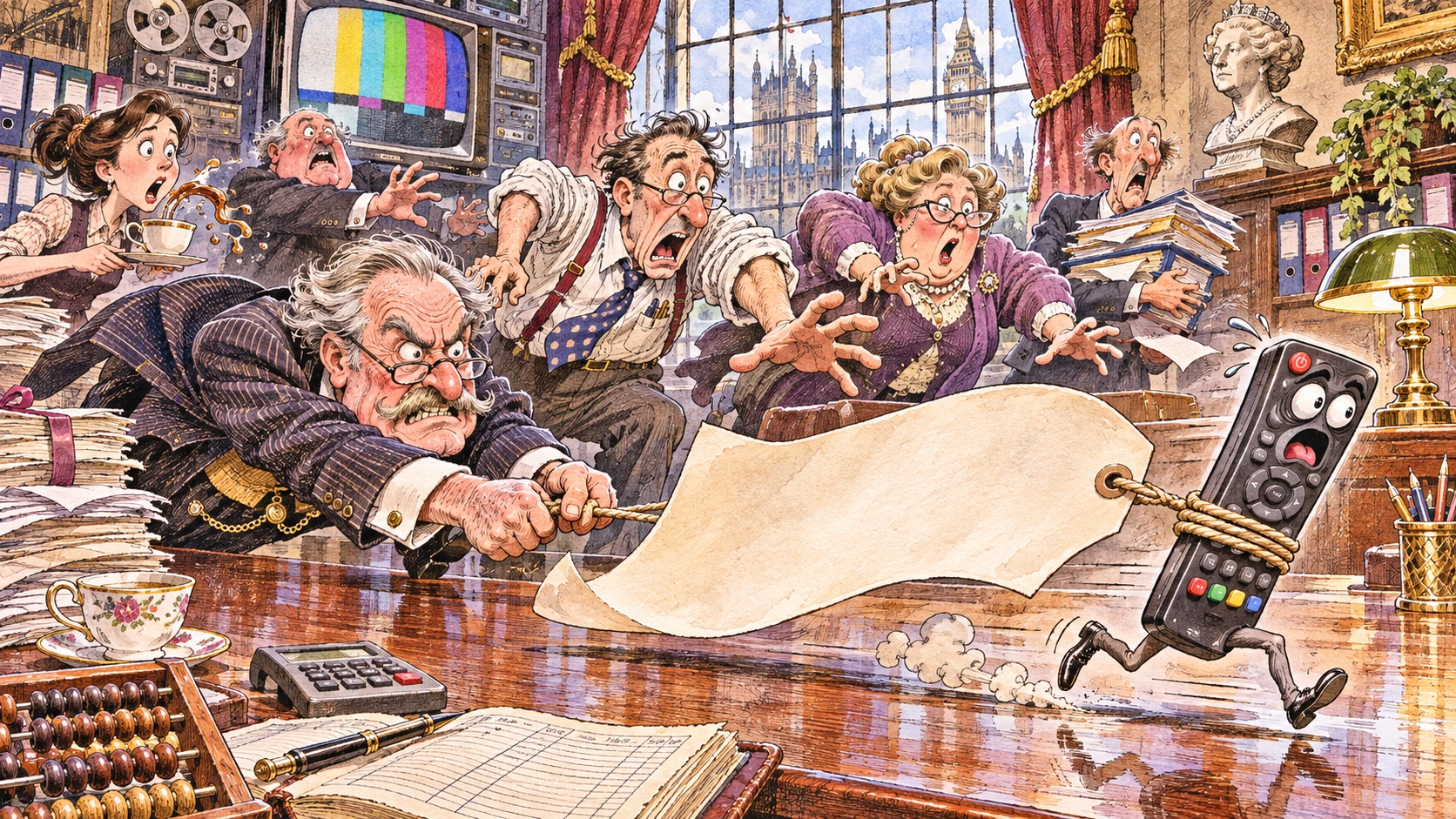
Meanwhile, Mr Bell has invented a universal entertainment remote with a single button. Pressing it turns everything off. A small panel of financial experts has asked whether the button could remain chargeable.
Satirical disclaimer: the Bell household and its compulsory house guest belong to this comic report. Newsroom legend credits a collaboration between two sentient beings: the world’s oldest tenured professor and a philosophy major turned dairy farmer. Neither can find the remote.

Megan Amram is a standup comedian based in Portland, OR. She is a native of North London.