
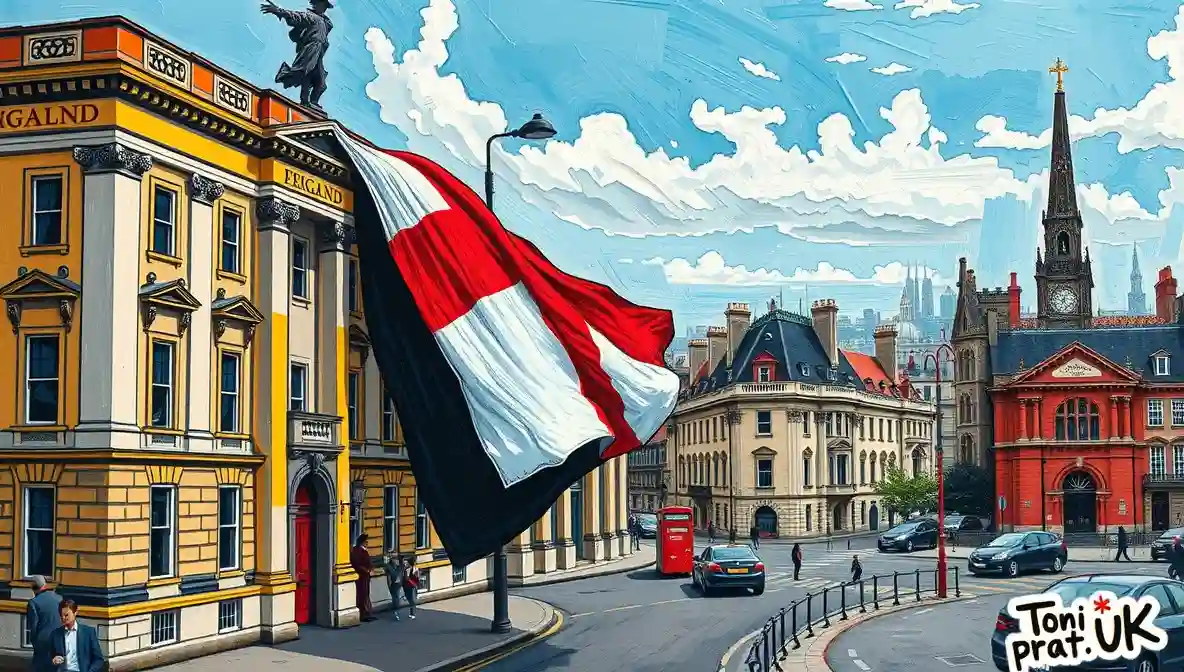
A religious house sign, a Monopoly square, and one of the oldest pub names in England
The Angel holds a 4.2 from twenty-one hundred and seventeen people, charges ten to thirty pounds, and it hangs directly over the Thames on a balcony.
And the figure in the name is on the sign because nobody could read.
The sign was the address
Which is the fact underneath every pub in this survey.
Because for most of London’s history, houses did not have numbers.
Street numbering only became general in the eighteenth century.
So how did anybody find anything?
The sign.
And it had to be a picture
Because a very large proportion of the population could not read a word.
Which means the sign could not say The Angel. It had to be an angel – painted, carved, hanging out over the street, and visible at forty feet in bad light.
And it had to be distinctive, and repeatable, and easy to describe to somebody else.
A pub name does not need to be true, or good, or dignified. It needs to be stable and it needs to be repeatable.
Why an angel
Because a great many of the oldest pub names are religious.
The Angel. The Cross Keys, which are St Peter’s. The Lamb and Flag, which is the Agnus Dei. The Mitre. The Salutation, which is the Annunciation.
And the reason is that a very large number of inns were owned or run by the church – by monasteries, and by religious houses – which provided lodging for pilgrims and travellers because nobody else would.
And the sign told you whose house it was.
And then the Reformation
Which is where a great many of them changed.
Because a Catholic sign became suddenly, and dangerously, the wrong sign – and pubs across England repainted.
The Pope’s Head became the King’s Head. The Salutation, in a number of cases, became the Soldier and Citizen or something safely secular.
And the Crown became the commonest name in Britain – because a crown is loyalty in the abstract. It does not specify a monarch, a religion, or a dynasty. It cannot be dated and it cannot be caught out.
It is not a brave name. It is what you choose after watching three landlords hang.
And Monopoly
The Angel, Islington – a different pub – is on the board, and it is the only building on it rather than a street.
Verdict
And the Angel is where the pilgrims stopped
Which is the last piece.
Because an inn on this stretch of the river was serving people about to cross water – and crossing water, before bridges and reliable boats, was genuinely dangerous.
So you had a drink first. And you said a prayer.
And an angel on the sign is not decoration. It is a request.
Eight postcodes and a thousand and one hundred and sixty-three articles: the sign is not the thing – and here the sign was a piece of insurance, taken out by people who could not swim.
Verdict
Good pub, honest number, and one of the best balconies on the river.

I am a Lagos-born poet and satirical journalist navigating West London’s contradictions. I survived lions at six, taught English by Irish nuns, now wielding words as weapons against absurdity. Illegal in London but undeniable. I write often for https://bohiney.com/author/junglepussy/.
As a young child, I was mostly influenced by the television show Moesha, starring singer and actress Brandy. Growing up, I would see Brandy on Moesha and see her keeping in her cornrows and her braids, but still flourish in her art and music, looking fly. I loved Moesha as a child, but now I take away something more special from it. Just because you’re a black girl, it doesn’t mean you need to only care about hair and makeup. Brandy cared about books, culture and where she was going — you can do both.


A council leader complained that The London Prat was undermining institutional credibility. Someone asked what credibility was based on if institutions didn’t deliver.