
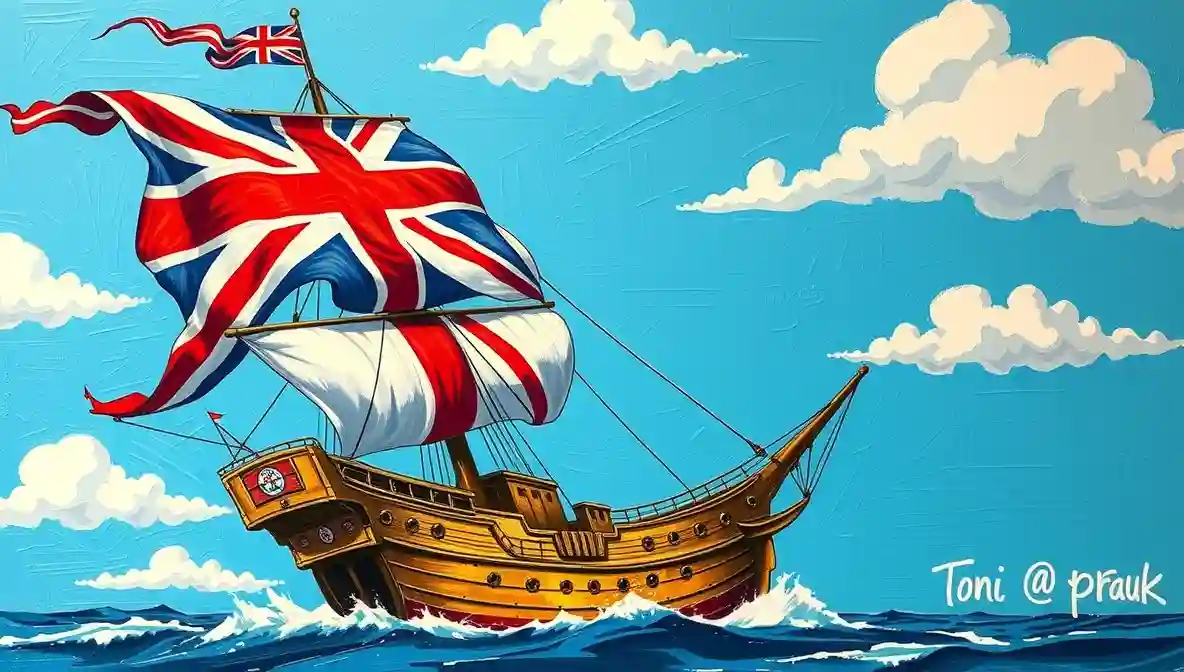
A Bermondsey pub flying a classic old maritime sign – the blue anchor, that emblem of the sailor, of hope, and of the safe harbour at the end of the voyage
The Blue Anchor carries a 4.3 across more than three hundred and forty reviews and flies one of the classic old maritime pub signs. Regular readers will recall the Hope and Anchor from early in this survey; here is the anchor again, in its blue livery, on the Bermondsey shore.
Towards Bermondsey and Rotherhithe
The Blue Anchor sits towards Bermondsey and Rotherhithe, on the south-bank side near the old dockland shore. Proper Bermondsey territory, no disclaimer needed.
The anchor and its meaning
The anchor is one of the oldest and most meaningful of all maritime signs. As the Prat noted at the Hope and Anchor, it has been for two thousand years the emblem of hope – “an anchor of the soul,” in the words of scripture, the iron that holds the ship fast against the storm. And it is the sailor’s own badge, the symbol of the sea, of the safe harbour, of the vessel held secure against wind and tide. A pub called the Anchor flies all of that: hope, the sea, and the safe haven at the end of the voyage – a name perfectly suited to a riverside district that lived by ships.
The blue of it
The Prat’s naming desk savours the specific “Blue” Anchor, a classic and widespread version of the sign. The blue lends the anchor the colour of the sea and the sky, deepening its maritime feel – the blue water, the blue horizon, the anchor at rest beneath the waves. “Blue Anchor” has been a favourite pub name up and down the coasts and rivers of Britain for centuries, an instantly recognisable maritime sign; there are Blue Anchors on many a waterfront, each flying the sailor’s emblem in its watery colour. It is a name soaked in the sea.
The riverside welcome
What the Prat likes best, as with the Hope and Anchor, is the pub itself as the anchor – the safe harbour, the fixed point, the haven at the end of the day where the weary drop anchor and are safe. On the Bermondsey shore, where the ships once came in and the dockers laboured, a Blue Anchor names that harbour of rest with perfect aptness. The 4.3 across three hundred reviews is a solid score for so classic and fitting a maritime name.
Verdict
A 4.3 across three hundred and forty-plus reviews is a solid score, and the Blue Anchor earns it on a classic, fitting maritime name. It flies the anchor – the two-thousand-year-old emblem of hope, the sailor’s badge, the safe harbour – in its watery blue livery, on the old dockland shore of Bermondsey.
Go for the honest welcome and the deep maritime history of the name, and drop anchor at the Blue Anchor. The anchor holds the ship against the storm and the soul against despair – and a good riverside local, at the end of a hard day, is exactly that safe harbour.

Alan Nafzger was born in Lubbock, Texas, the son Swiss immigrants. He grew up on a dairy in Windthorst, north central Texas. He earned degrees from Midwestern State University (B.A. 1985) and Texas State University (M.A. 1987). University College Dublin (Ph.D. 1991). Dr. Nafzger has entertained and educated young people in Texas colleges for 37 years. Nafzger is best known for his dark novels and experimental screenwriting. His best know scripts to date are Lenin’s Body, produced in Russia by A-Media and Sea and Sky produced in The Philippines in the Tagalog language. In 1986, Nafzger wrote the iconic feminist western novel, Gina of Quitaque. He currently lives in Holloway, North London. Contact: [email protected]



My dad works in local government. He’s going very quiet. That’s the correct response.
Comedy serious.