
Treasury Prefers Arithmetic
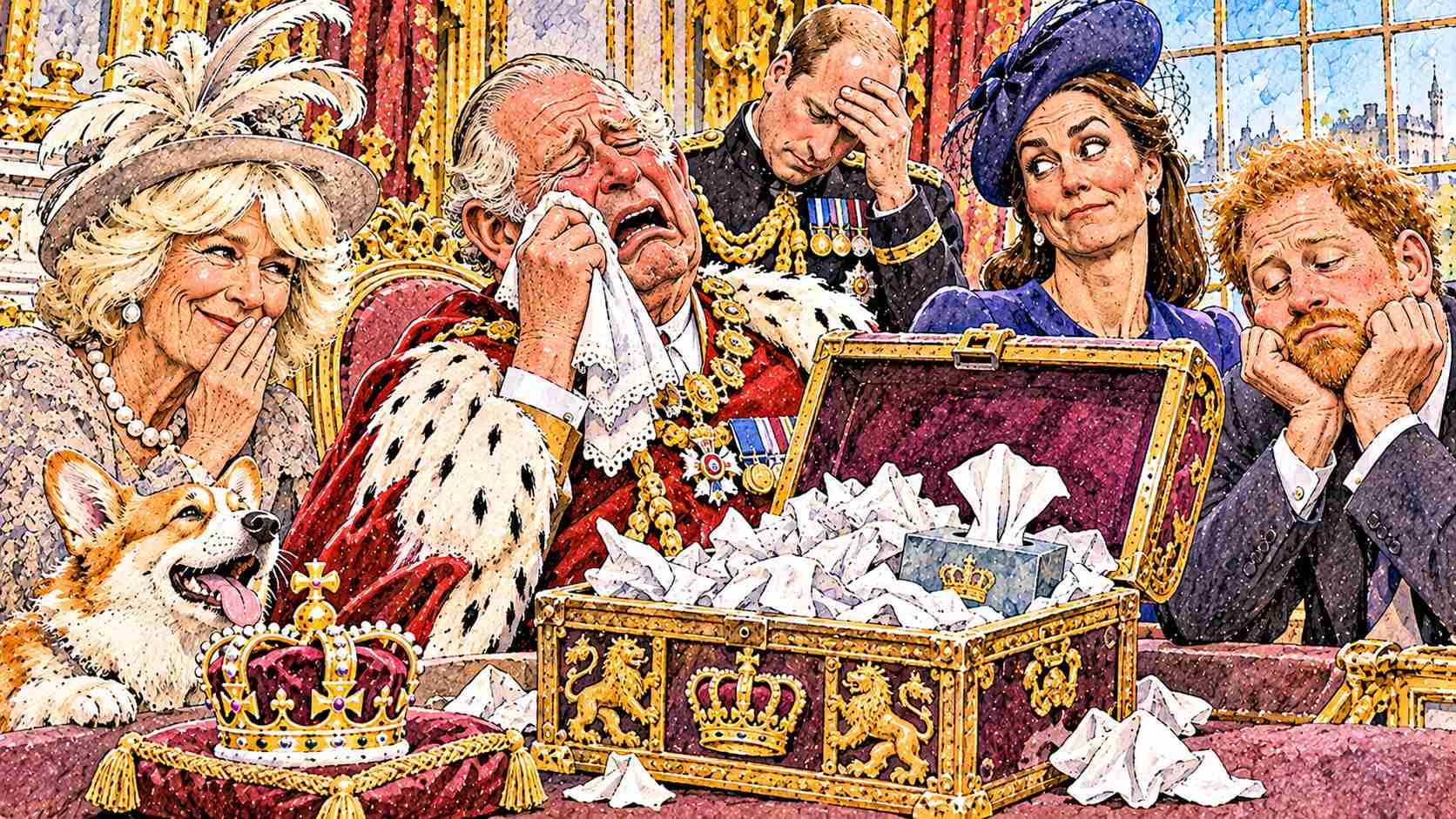
LONDON, England — King Charles has expressed profound sorrow over Britain’s historical role in slavery, and Buckingham Palace has clarified that profound sorrow is an emotional commitment, not a transferable financial instrument.
Commonwealth Slavery Apology Talks Reach Westminster
Royal accountants confirmed that expressions of regret remain entirely separate from the accounts of His Majesty’s Treasury. The distinction matters more now that Commonwealth countries are discussing the consequences of slavery and the question of reparations.
Prime Minister Andy Burnham has encouraged further discussion, though officials are cautious about any proposal that would turn historical sympathy into present-day spending. One Treasury adviser put the government’s position plainly. “We acknowledge that terrible things happened. We also acknowledge that acknowledging terrible things is considerably cheaper than doing anything about them.”
The Royal Grief Escalation System Explained
Observers say the Palace has effectively introduced a Royal Grief Escalation System. The monarch may express concern, deep concern, sadness, profound sadness, regret, sincere regret and, in exceptional circumstances, heartfelt sorrow. Any emotional response that requires a bank transfer needs separate parliamentary approval.
A spokesperson for the Palace said in a statement: “His Majesty’s feelings on this matter are sincere, considered and not currently budgeted.”
Constitutional experts say Britain has perfected apologising without technically apologising. An apology involves responsibility. An expression of regret involves compassion. An expression of profound regret involves compassion in a slightly more expensive suit.
The King Inherited the Crown, Not a Time Machine
The King, whose duties include keeping up relations with Commonwealth nations, is working through an issue that predates his reign by centuries. He inherited the Crown, not a time machine, though public debate often talks as though Charles personally approved every decision Britain has taken since the invention of the sailing ship.
One royal commentator suggested that the King could improve relations by expressing even deeper sorrow. Another asked whether there was any sorrow left. “His Majesty has already expressed profound sorrow. The next category is economically catastrophic sorrow, and the Treasury has declined to authorise it.”
Commonwealth representatives may find the debate less amusing. Slavery caused enormous human suffering and economic damage that ran across generations, and the modern argument is about responsibility, recognition and what a real remedy might look like. It sits awkwardly beside governments that take the moral weight of history seriously until somebody asks about practical consequences, at which point they start discussing budget discipline.
Minutes from a recent working group, seen by this publication, record the following exchange under item four. “Chair asked whether the group supported a formal apology. Members supported the idea of an apology. Chair asked who would draft it. Members supported the idea of a drafter. Item deferred.” The minutes run to eleven pages and contain no decisions.
There is a precedent. Britain has issued regret before. In the nineteenth century a committee formed to study the problem recommended forming a second committee, and that second committee has never been formally dissolved. It still meets on Thursdays.
British politicians insist on thoughtful dialogue. In Westminster, thoughtful dialogue is a specialised procedure that lets an issue stay unresolved until everyone originally involved has retired. A parliamentary committee may eventually recommend a further committee to examine whether the first committee adequately examined the possibility of making recommendations.
Meanwhile historians keep researching the economic legacy of slavery, economists debate remedies and constitutional lawyers study the duties of modern institutions. The Palace remains committed to dignity. The Treasury remains committed to arithmetic. The government remains committed to finding a sentence that sounds morally courageous without containing the words “payable within thirty days.”
The King may express sorrow as often as necessary. The Chancellor would simply prefer that everyone stop asking for a receipt.
Five Observations on Royal Sorrow and the Treasury
- “Profound sorrow” has a price tag. Even grief goes through procurement. You can’t just feel bad in this country, you need three quotes.
- He inherited a Crown, not a time machine. Nobody asks my dad to answer for what his uncle did at Christmas, and that’s a recent event.
- Seven grades of sadness. I can’t get a hotel to give me seven grades of towel.
- A committee to study whether the first committee studied it right. That’s not government, that’s my family group chat.
- The Treasury wants no receipt. In my house we call that a trust issue.

Lowri Griffiths brings a distinct voice to satirical journalism, combining cultural critique with dry humour. Influenced by London’s creative networks, her writing reflects both wit and discipline.
Her authority stems from experience, while trust is built through transparency and ethical satire.


