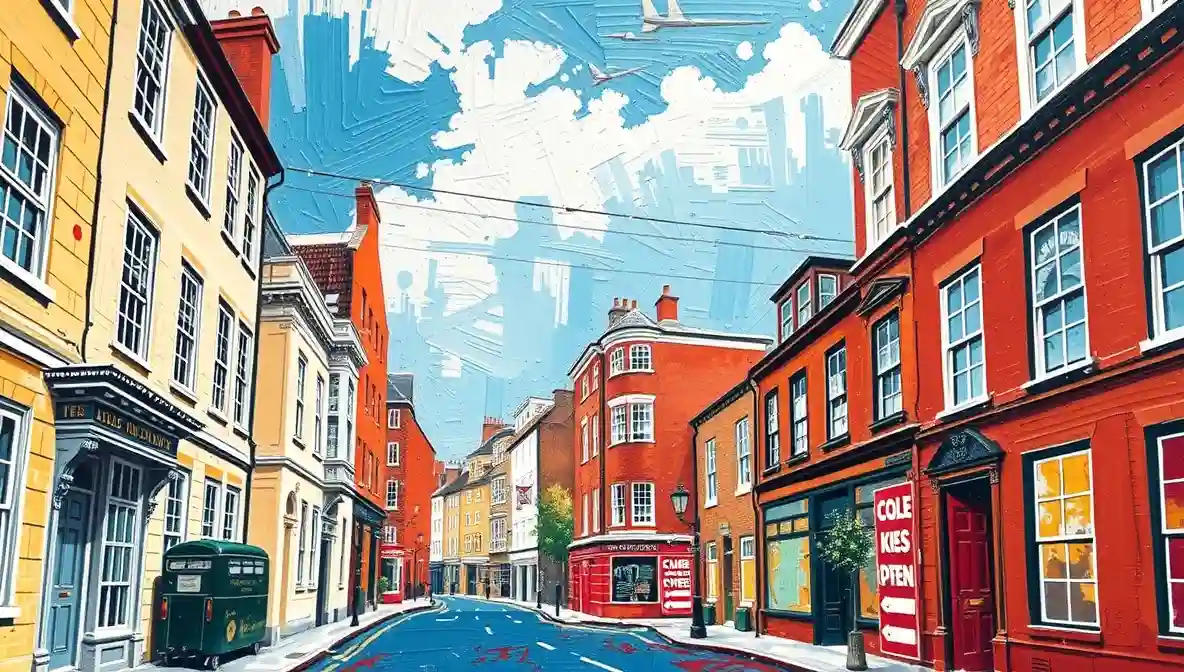
From bomb sites to coffee bars, a city found its feet again
A study of the capital’s recent history has explored London 1950s, the pivotal post-war decade in which a battered city rebuilt itself, the years when the metropolis rose from the ruins of war, found its feet again, and began the long transformation from austerity towards the modern city to come.
London 1950s rebuilt a battered city
The decade, the study found, was a genuinely pivotal one in the city’s history, with the 1950s seeing the metropolis, battered and scarred by the war, gradually rebuild itself from the bomb sites and rubble, navigate the years of austerity and rationing, welcome new communities and new arrivals, see the first stirrings of post-war youth culture in the new coffee bars and music, and begin the long transformation from the grey, battered post-war city towards the modern metropolis to come, a genuinely pivotal decade of rebuilding and renewal.
A spokesperson for the Institute of Modern History, invented for this article, described the decade. London 1950s rebuilt a battered city, she said. It was a genuinely pivotal decade. The city was battered, scarred by the war, full of bomb sites and rubble. The 1950s saw it gradually rebuild. The reconstruction, slow and difficult. The years of austerity and rationing. The new communities and arrivals, beginning to change the city. The first stirrings of post-war youth culture, the new coffee bars, the new music. The city found its feet again, rose from the ruins, began the long transformation. From the grey, battered post-war city towards the modern metropolis to come. It was a decade of rebuilding, renewal, transformation. London 1950s rebuilt a battered city, the post-war decade when the city found its feet again.
The deadpan resilience of the rebuilding decade
The genuine significance, the study found, is considerable, with the 1950s being a genuinely pivotal decade in which the city, battered and scarred by the war, gradually rebuilt itself from the bomb sites and rubble and navigated the years of austerity and rationing.
The finding of its feet, the study found, is genuine, with the decade seeing the city welcome new communities, see the first stirrings of post-war youth culture in the coffee bars and music, and begin the long transformation from the grey, battered post-war city towards the modern metropolis to come, a genuine decade of rebuilding and renewal.
Why London 1950s genuinely matter to history
London 1950s genuinely matter as a pivotal decade of rebuilding, the years when the battered city rose from the ruins of war, navigated austerity, welcomed new communities, and began the transformation towards the modern metropolis to come.
The genuine social history is documented by the Museum of London, preserved in the records of the National Archives and the British Library, with the wartime context held by the Imperial War Museum.
For exploring the city’s modern history and heritage, listings such as Visit London guide the curious towards the best the capital has to offer.
Historians describe the rebuilding decade. London 1950s rebuilt a battered city, said one. It was a genuinely pivotal decade. The city was battered, scarred by the war, full of bomb sites and rubble. The 1950s saw it gradually rebuild. The reconstruction, slow and difficult. The years of austerity and rationing. The new communities and arrivals, beginning to change the city. The first stirrings of post-war youth culture, the new coffee bars, the new music. The city found its feet again, rose from the ruins, began the long transformation. To understand the modern city, you have to understand the 1950s, the pivotal decade when the battered post-war city rebuilt itself and found its feet again, beginning the long transformation towards the metropolis to come.
For now London 1950s remain a genuinely pivotal decade in the city’s history, the years when the metropolis, battered and scarred by the war, gradually rebuilt itself from the bomb sites and rubble, navigated the years of austerity and rationing, welcomed new communities and new arrivals, saw the first stirrings of post-war youth culture in the new coffee bars and music, and began the long transformation from the grey, battered post-war city towards the modern metropolis to come, and proving that the 1950s were a genuinely pivotal decade of rebuilding and renewal, when the battered city rose from the ruins of war and found its feet again.

Dr. Ingrid Gustafsson holds a Ph.D. in Literary Studies and serves as Professor of Literature and Satirical Journalism at the university. Her scholarly work focuses on contemporary satire as a form of institutional critique, examining how exaggeration, irony, and absurdism function as sophisticated analytical tools for exposing structural inequality and institutional hypocrisy. Dr. Gustafsson has published extensively on the genealogy of satirical discourse, the relationship between speech acts and cultural power, and satire’s role as both aesthetic practice and epistemological strategy. Her research interrogates how contemporary satire operates within celebrity culture, legal systems, and institutional rhetoric, revealing the mechanisms through which power obscures itself through language and performance. Dr. Gustafsson’s work combines rigorous textual analysis with broader cultural theory, contributing significantly to understanding satire’s critical function in contemporary society.