WESTMINSTER — The latest UK opinion poll has produced simultaneous claims of momentum from several party press offices, demonstrating that political movement remains available in every direction except towards a shared interpretation.
Analysts say the contest is particularly close among communications teams, each of which has identified a different starting point from which its current position looks reassuring.
UK opinion poll produces competing celebrations
YouGov’s 22–23 November Westminster voting intention poll puts Labour on 25%, the Conservatives and Reform UK on 22% each, the Liberal Democrats on 12% and the Greens on 10%. YouGov describes the changes from its previous poll as within the margin of error. These figures measure voting intention, not seats or a guaranteed election result.
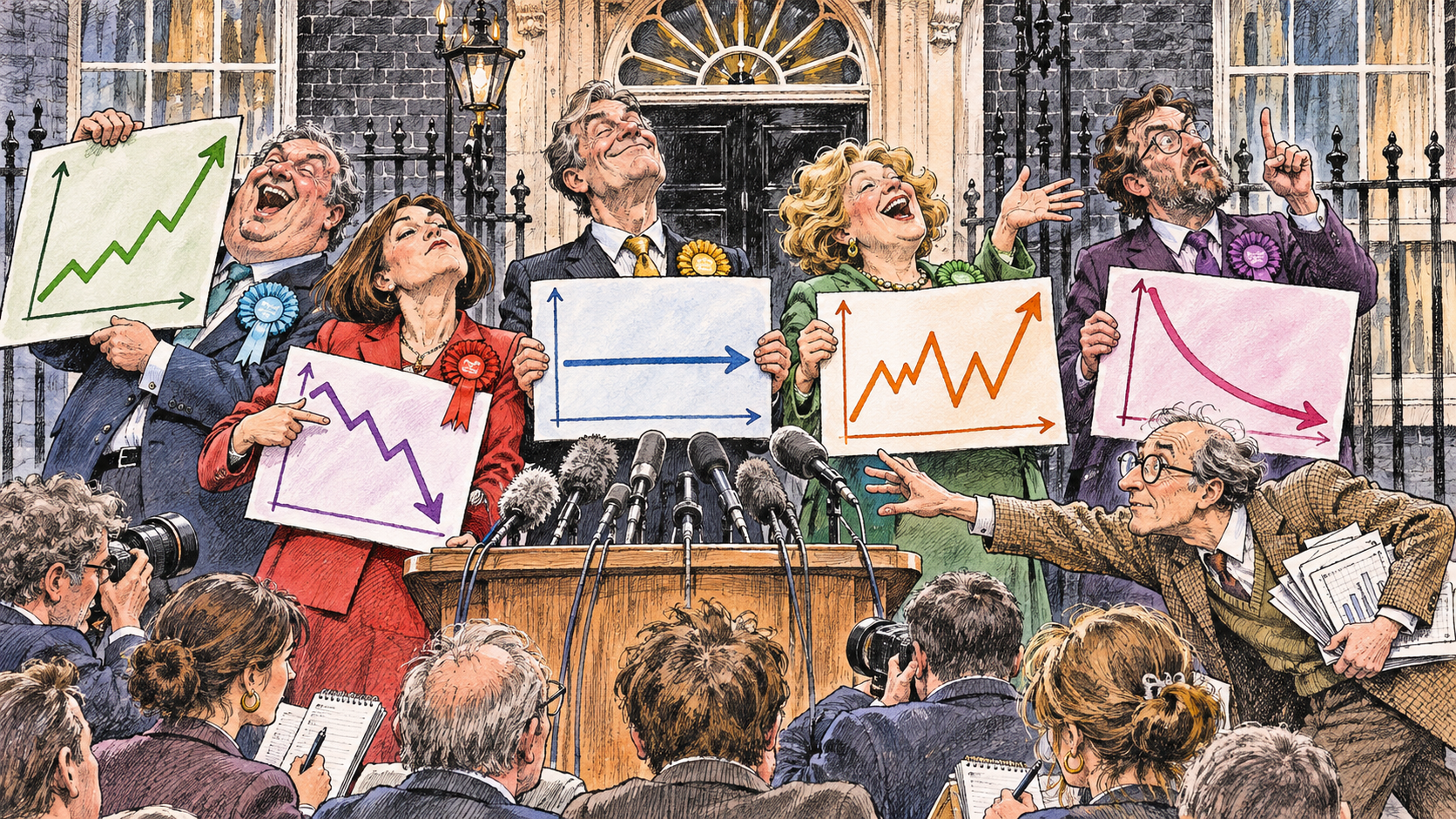
At our press conference, every party has brought a graph. None has brought the same graph.
One begins last week. Another begins several months ago. A third begins at a moment in the campaign when its candidate was briefly photographed beside an especially popular dog.
The axis becomes a matter of principle
A strategist, Duncan Spin, says the most important feature of any chart is its moral clarity, by which he means starting the vertical axis at a number that makes the preferred line look energetic.
“The public wants a story,” he explained. “Ideally one in which a movement too small to distinguish confidently from sampling variation represents a profound endorsement of our latest leaflet.”
The margin of error has requested a microphone. Organisers say it is welcome to attend but should avoid ruining the atmosphere by explaining what it does.
Every party locates an encouraging subgroup
Duncan has also found promising evidence among voters who remember a particular speech, live near a place the party is visiting and have already said they support the party. He considers this proof that the campaign is connecting.
A polling researcher in our comic scene suggested looking at methodology, fieldwork, uncertainty and trends across multiple polls. Duncan agreed these were important, then asked whether they could be placed in a smaller font beneath the victory photograph.
The photograph has been delayed because the parties cannot agree which way everyone should face to suggest forward motion.
The voter reserves the right to remain unimpressed
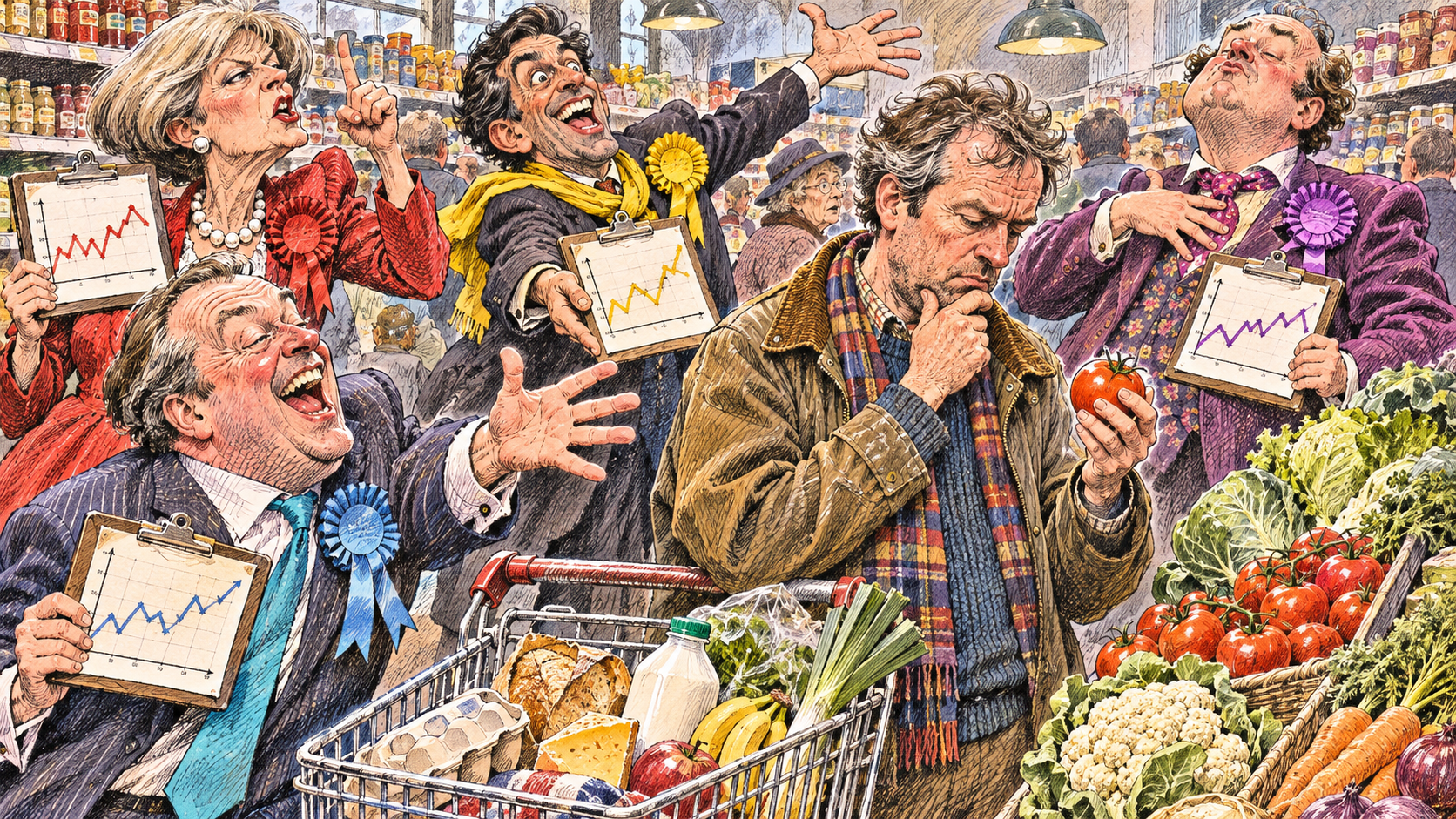
Our voter, Mrs Vale, says she would prefer politicians to explain their plans rather than their interpretation of being several points somewhere.
She has been told the next election is about choice. She says she knows, and would appreciate more useful material on which to base it.
Meanwhile, Duncan has issued a release describing the poll as a clear signal. Asked what it signalled, he replied that this depended on which comparison the journalist intended to use.
The margin of error has left early. It says the room was crowded with certainty and there was nowhere reasonable to sit.
Mrs Vale has returned to her shopping. Unlike the press releases, her basket offers immediate evidence of what she is prepared to buy.
Disclaimer: Duncan, Mrs Vale and the press conference are inventions. The professor and the philosophy major turned dairy farmer accept responsibility for the argumentative axis. The numerical findings and uncertainty are sourced to YouGov.

Megan Amram is a standup comedian based in Portland, OR. She is a native of North London.