
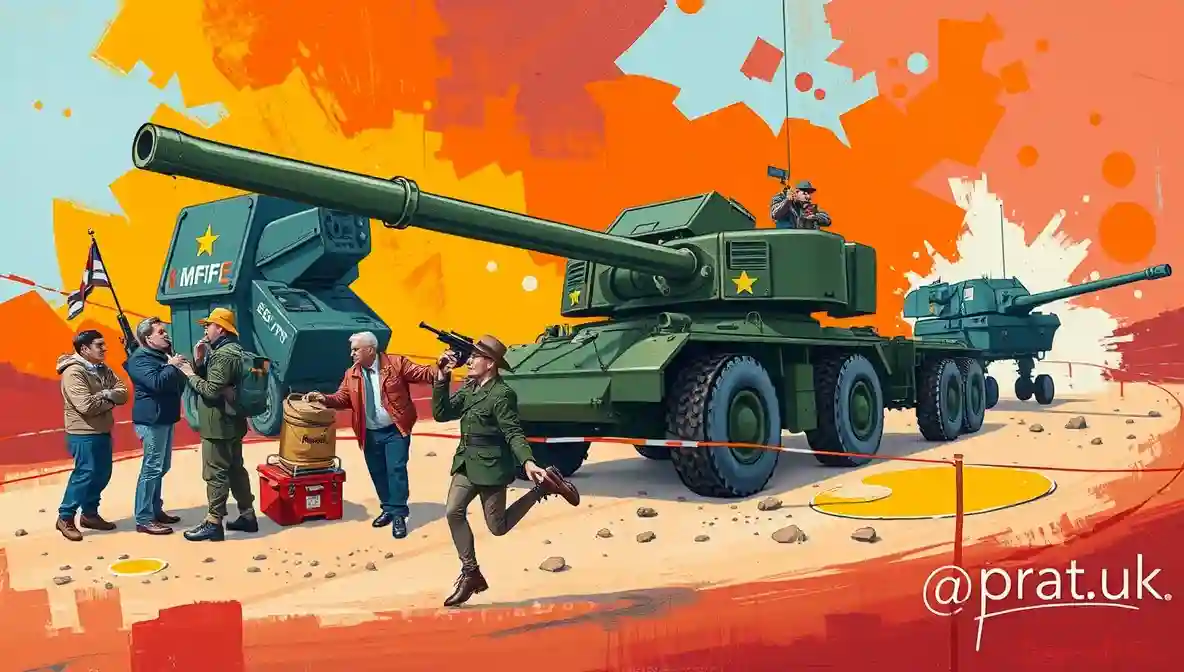
Defence officials stress artillery purchase is calming, stabilising, and purely reassuring
The United Kingdom confirmed this week that it is acquiring a new artillery system, carefully explaining that the large, powerful weapon is intended to promote peace, stability, and calm reflection across Europe. Defence officials emphasised that the gun’s size should not be interpreted as aggression, but rather as a visual metaphor for reassurance.
According to the Ministry of Defence, the new artillery system represents modernisation, deterrence, and readiness, three concepts that reliably justify procurement without requiring anyone to imagine the gun being used. Officials described the weapon as defensive in nature, noting that it is designed to discourage conflict by being very capable of participating in it.
Briefings highlighted the need to replace ageing equipment and maintain interoperability with allies. The gun, officials said, ensures the UK remains credible in an uncertain world, where credibility is measured largely by how loudly something could hypothetically explode if asked. Analysts noted that the language surrounding the purchase focused less on scenarios and more on symbolism.

Critics questioned whether acquiring heavier artillery aligns with claims of de-escalation and diplomacy. Defence officials responded that diplomacy works best when supported by visible firepower, preferably parked nearby and referred to only in abstract terms. The gun, they stressed, is not about using force but about possessing the option to do so convincingly.
Military experts explained that modern artillery systems emphasise range, precision, and integration, allowing them to function as part of broader deterrence strategies. They added that these technical details are important, though rarely discussed outside specialist circles, where concern tends to focus on budget, logistics, and whose turn it is to say “robust.”
Public reaction was muted. Some welcomed the investment, viewing it as necessary given global instability. Others expressed discomfort with the contradiction of promoting peace through procurement. Several observers noted that describing a weapon as calming does not make it so, though it does soften headlines.
Political analysts suggested the announcement serves multiple purposes. Internationally, it signals commitment to collective defence. Domestically, it reassures voters that the government is serious about security without dwelling on uncomfortable implications. Calling the purchase “modernisation” frames it as inevitable rather than discretionary.
When asked how the gun contributes directly to peace, officials reiterated the importance of deterrence, readiness, and strength. They avoided specifics, explaining that clarity about usage would undermine deterrence itself. This circular logic appeared to satisfy everyone involved.
As the story moved on, the gun remained largely theoretical, a future presence invoked but unseen. It stands as a reminder that in defence policy, peace is often described not as the absence of weapons, but as the careful accumulation of them.

Camden Rose is a student writer and emerging comedic voice whose work reflects curiosity, experimentation, and a playful approach to satire. Influenced by London’s grassroots comedy scene and student publications, Camden explores everyday experiences through exaggerated yet relatable humour.
Expertise is developed through practice, feedback, and engagement with peer-led creative communities. Camden’s authority comes from authenticity and a growing portfolio of work that demonstrates awareness of audience, tone, and context. Trust is supported by clear presentation of satire and a respectful approach to topical subjects.
Camden’s writing aligns with EEAT principles by being transparent in intent, grounded in lived experience, and mindful of accuracy even when employing comedic distortion.


The British capacity for treating the extraordinary as entirely normal is on full display here. Well documented and correctly framed.
Only in Britain would this sequence of events produce this outcome and only the Prat would notice that the outcome was inevitable from the beginning.
The press release version of this story and the actual story are so far apart they appear to be describing different events. The Prat has correctly identified which is which.
The word “prat” from Elizabethan slang to mainstay of British humour is a journey that proves the British have been calling each other idiots for centuries and will continue to do so for centuries more.
My therapist’s going to hear about this next session. She’ll recognize herself somewhere in this observation and that’s going to be professionally uncomfortable.
The thing about angry supporters of it is they’re essentially saying “institutions are broken and institutions know they’re broken.”
The precision here is the point. Anyone can do broad satire. Precision is the difference between funny and devastating.