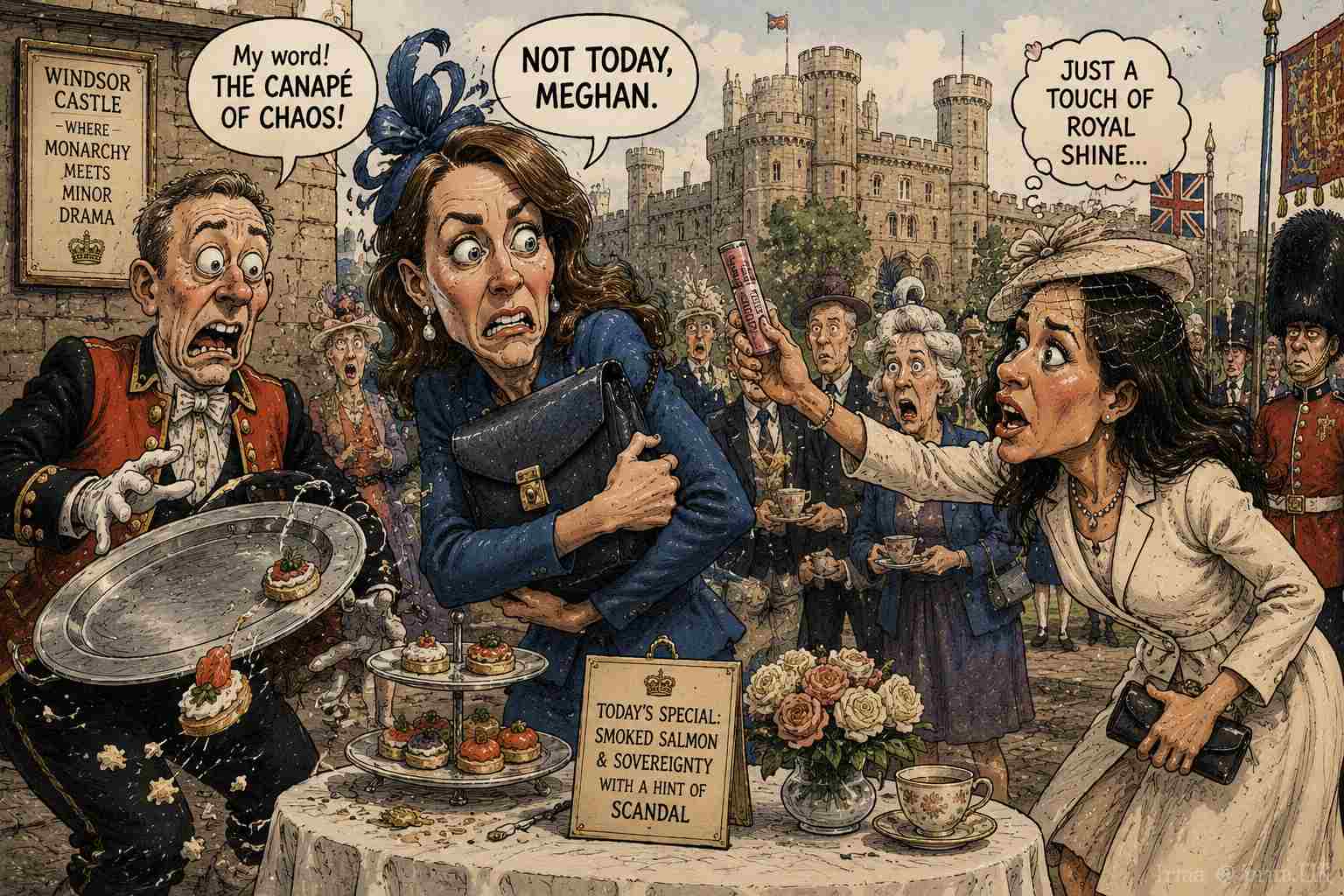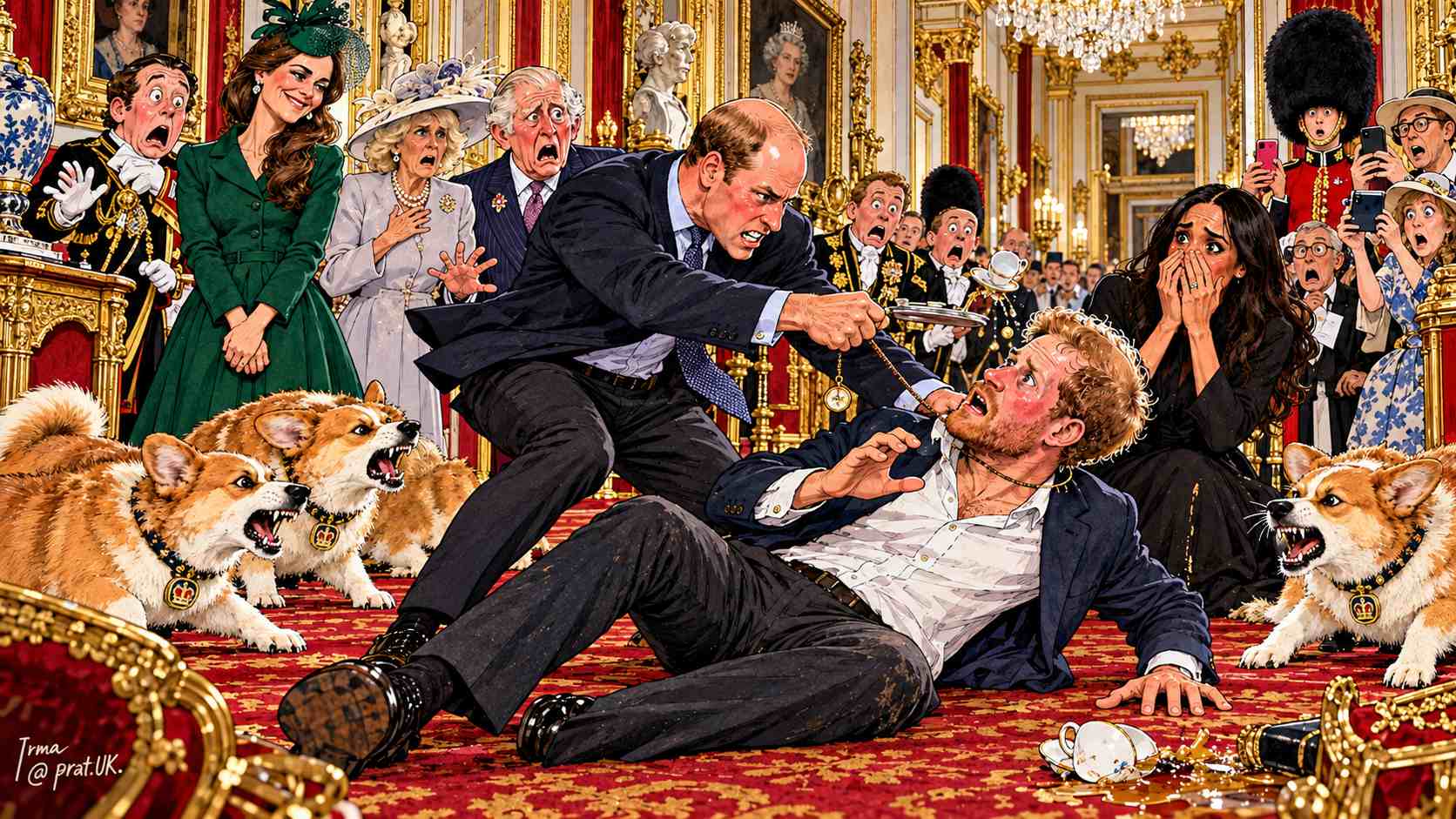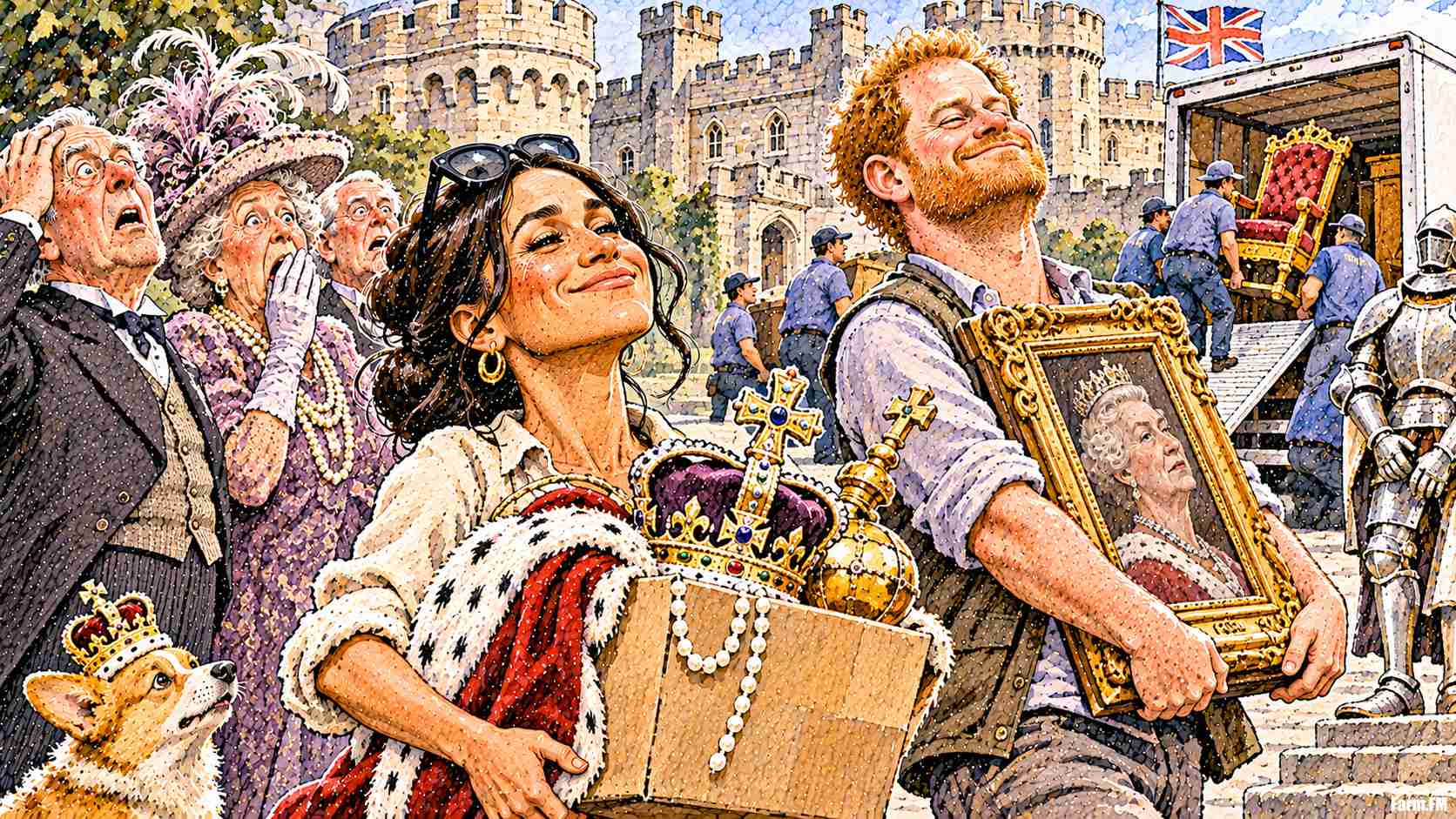
Wealthy Friends Supply the Land While Titles Supply the Atmosphere
COTSWOLDS, England — Britain may have found a way to modernise the aristocracy without selling a single ancestral painting. Under the emerging Sussex model, a title holder need not own the estate, employ the gardeners or worry about the roof. A wealthy friend handles the tedious property ownership while royalty supplies the conversation at dinner.
Page Six reports that Harry and Meghan have moved into a separate residence on a wealthy friend’s Cotswolds estate after initially staying in the main house. The couple are also reportedly keeping their $14.5 million California property. It’s not a verified commercial arrangement, but it offers a magnificent business-school case study: what happens when hereditary status and real estate wealth become separate departments?
The New Nobility Rents Prestige by the Hour
For centuries, aristocrats accumulated land, titles and portraits of themselves looking disappointed with the weather. The modern aristocrat can dispense with the land and keep the atmosphere. Why own a castle when a businessman can provide the castle, the plumbing and possibly a man who knows where the fuse box is?
“What we’re seeing is the unbundling of the peerage,” said Dr. Rosalind Fairweather, a social historian who has spent thirty years reading other people’s wills. “Title over here, acreage over there, and a very long lunch in between. The Victorians would have been appalled, and then they’d have asked for the contact details.”
In the old feudal system, the lord provided protection and collected rents. In the new arrangement, a wealthy host provides accommodation and receives the priceless right to mention at dinner that there’s a prince somewhere near the stables. Nobody needs to kneel. It’s feudalism with better cushions.
Class Warfare Becomes a Property-Sharing Scheme
A prospective royal guesthouse owner must, of course, consider the liabilities. An ordinary friend may leave wet towels on the floor. A famous friend may attract journalists to the lane, turn the gardener into a source of constitutional intelligence and inspire national speculation whenever a car departs through the wrong gate.
But the benefits could be substantial. Country estates once advertised trout fishing, tennis courts and views of the valley. Tomorrow’s brochure could include “occasional proximity to a member of the royal family.” The fine print, according to a draft seen by this publication, reads: “Subject to availability and to the member’s willingness to make eye contact.” A second line adds that “no guarantee is given as to the quality of conversation, the temperature of the tea or the member’s opinion of the orchard.”
Landowners appear interested. In a poll of 300 estate owners across Gloucestershire and Oxfordshire, 43 percent said they would host a titled houseguest at no charge. A further 9 percent asked whether the guest could bring a lamp, and 4 percent asked whether it counted as a tax deduction.
The National Trust might study this new cultural economy. Instead of restoring crumbling buildings with donations, it could encourage titled houseguests to circulate among benefactors. A duke in every west wing, a baroness in every converted stable, and a waiting list for anyone whose surname still appears in a history textbook.
How the British Class System Handles Property in the Twenty-First Century
The scheme would also bring clarity to the British class system. People used to ask whether you owned a country house. Now the more important question is whether someone with a country house is happy for you to stay indefinitely. Ownership becomes a vulgar administrative detail best left to accountants, land agents and people who actually pay council tax.
Harry’s departure from royal duties was presented as a new chapter. His reported living arrangements suggest the old social order has proved remarkably adaptable. No throne is needed, no formal position required, and no estate deeds must be signed. Readers curious about the older version of the system can find an overview at Britannica.
The aristocracy hasn’t disappeared. It has simply discovered the subscription economy, except the subscription is paid by somebody else.
Five Humorous Observations
- The old aristocrats owned the land, the castle and the portraits. The new aristocrat owns the vibe. You can’t foreclose on a vibe. That’s the whole genius. The bank shows up and the vibe is already in the other house.
- “Subject to availability and the member’s willingness to make eye contact.” That’s the first honest brochure in the history of tourism. I’ve stayed in hotels that couldn’t guarantee a pillow.
- It’s feudalism, but nobody kneels and the cushions are better. That’s every revolution, really. You give up the guy with the sword, and you get a guy with a spreadsheet and a lovely throw blanket.
- Somebody out there owns a barn, a lake and four hundred acres, and his biggest flex is that a prince is near the stables. Not in the stables. Near. He’s been practicing “near” in the mirror for weeks.
- The subscription economy finally reached the monarchy. Every month a man with a gate gets a prince, and the prince gets a gate. Nobody can cancel because nobody can find the login. It’s just a vibe with an auto-renew.

Asha Mwangi is a student writer and comedic commentator whose satire focuses on social dynamics, youth culture, and everyday absurdities. Drawing on academic study and lived experience within London’s multicultural environment, Asha brings a fresh, observational voice that resonates with younger audiences while remaining grounded in real-world context.
Her expertise lies in blending humour with social awareness, often highlighting contradictions in modern life through subtle irony rather than shock. Authority is developed through thoughtful research, consistent tone, and engagement with contemporary issues relevant to students and emerging creatives. Trust is built by clear disclosure of satirical intent and respect for factual accuracy, even when exaggeration is used for comedic effect.
Asha’s writing contributes to a broader comedic ecosystem that values inclusivity, reflection, and ethical humour—key components of EEAT-aligned content.