

London Together and the Optics of Solidarity
LONDON, UK – For a city that argues recreationally, London Together is a phrase deployed with care. It appears in mayoral speeches, borough newsletters, and campaign posters during moments of stress or celebration. When infrastructure strains, when markets wobble, when culture triumphs, the capital reminds itself that it functions best collectively.
According to Ipsos polling, civic pride in London remains consistently high even when satisfaction with specific policies fluctuates. Pride and critique coexist comfortably here.
Dr. Helena Morris of King’s College London defines London Together as “coordinated pluralism.” Her research suggests that megacities sustain stability not through uniformity, but through shared baseline values.
“In London,” she explains, “together does not mean identical.”
A commuter in Walthamstow summarised it plainly. “We disagree loudly. We function quietly.”
Function matters.
Infrastructure and Shared Dependence
Transport for London performance reports consistently highlight the interdependence of boroughs. A disruption in one zone ripples across many.
The London Policy Lab recently noted that large-scale public initiatives succeed most effectively when borough cooperation aligns with mayoral strategy.
An anonymous TfL planner admitted, “The network only works if everyone participates.”
Participation stabilises flow.
Deloitte UK economic analysis frequently emphasises London’s resilience as a product of interconnected sectors, from finance to hospitality.
A café owner in Brixton observed, “If one area slows, another compensates.”
Compensation sustains rhythm.
Culture and Collective Identity
Arts Council England data shows that citywide cultural festivals generate both economic activity and symbolic cohesion.
Savills property research frequently cites London’s cultural vibrancy as a long-term market strength.
A resident in Camden described the feeling succinctly. “When we celebrate, we remember we’re one city.”
Crisis and Coordination
The Greater London Authority has historically mobilised coordinated responses during public emergencies, relying on borough-level implementation.
Dr. Adrian Whitcombe argues that London Together is most visible under pressure. “Stress reveals structure,” he says.
A pub regular in Hackney added, “We don’t need slogans daily. We need systems.”
Systems outperform sentiment.
Conclusion: Cohesion Without Conformity
London Together does not erase difference. It frames cooperation as pragmatic.
As one commuter boarding the Jubilee Line remarked, “We’re separate. We’re connected.”
Experts predict that as economic and environmental pressures intensify, cooperative governance will become even more visible.
Because in this capital, diversity drives conversation.
But interdependence drives survival.
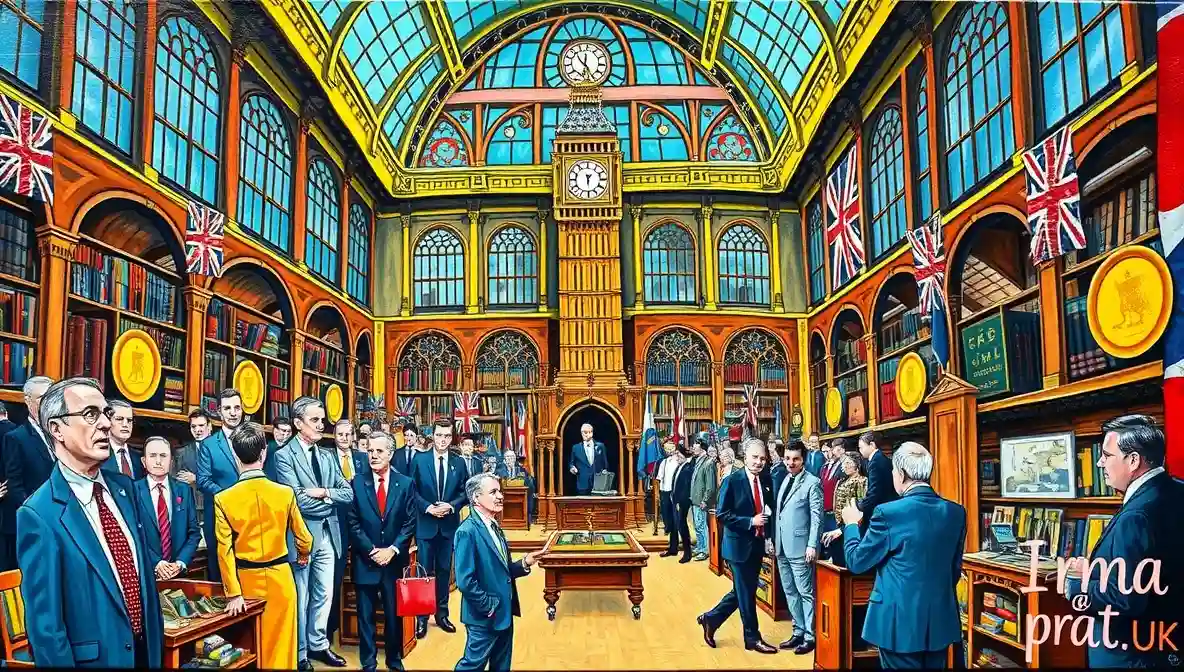
London Exchange: Where Ideas, Capital, and Arguments Trade
London Exchange and the Market of Opinions
If London Together is cohesion, London Exchange is transaction. Ideas swap hands. Capital circulates. Opinions collide and settle into compromise.
The London Stock Exchange remains one of the world’s leading financial markets, according to data published by the London Stock Exchange Group and referenced in Deloitte UK financial outlook reports.
Dr. Julian Trent of the University of London defines London Exchange as “fluid influence.” His research indicates that megacities thrive when information and capital circulate rapidly.
“In London,” he explains, “exchange defines velocity.”
A trader in the City summarised it bluntly. “If it doesn’t move, it’s not London.”
Movement signals vitality.
Financial Markets and Global Reach
The City of London Corporation reports that foreign exchange trading volumes in London consistently rank among the highest globally.
An anonymous analyst admitted, “We trade currencies before breakfast.”
Breakfast feels strategic.
Savills and Knight Frank market research frequently emphasise international capital inflows shaping property demand.
A property investor in Chelsea observed, “Exchange rates change. Postcodes endure.”
Endurance attracts capital.
Intellectual and Cultural Exchange
London Exchange extends beyond finance. Universities host global scholars. Arts Council England-supported festivals draw international talent.
The London Policy Lab notes that cross-sector collaboration frequently shapes innovation policy.
An anonymous research fellow conceded, “Ideas travel faster here.”
Speed influences adoption.
Public Perception and Market Sensitivity
Ipsos polling indicates that Londoners recognise finance as central to economic health, even as they scrutinise its social impact.
Dr. Helena Morris argues that exchange fosters adaptability. “Circulation prevents stagnation,” she says.
A commuter leaving Bank station remarked, “Everything’s traded here. Even opinions.”
Opinions carry value.
Conclusion: Circulation as Character
London Exchange represents the capital’s constant motion – financial, intellectual, cultural.
As one commuter boarding the Central Line concluded, “If it’s moving, it’s London.”
Experts predict that as global competition intensifies, exchange mechanisms across finance and culture will grow more sophisticated.
Because in this capital, nothing stays still.
And everything negotiates.



A reader said “The London Prat is spot on. You planners have made it impossible to do anything in London. You’re useless morons.”
Read this on the District Line when delayed for “operational reasons.” The metaphor of incomprehensible systems was perfect.