
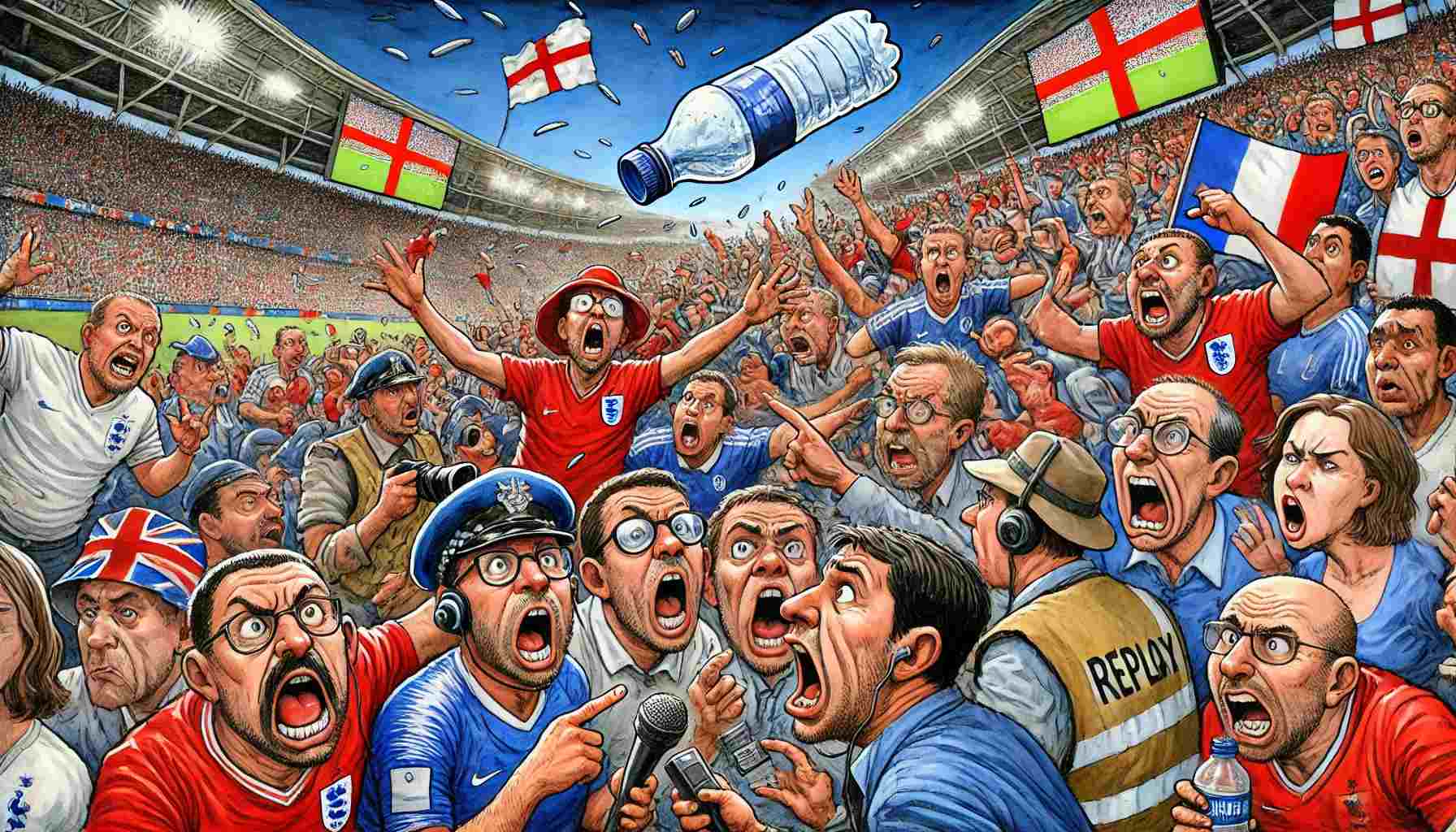
World Cup Fans Allowed To Bring Face Paint, Flags, And Emotional Baggage, But Not A Water Bottle 🏟️🥵
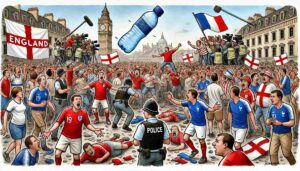
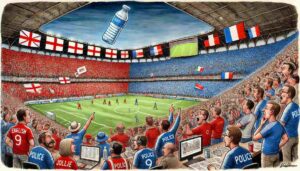
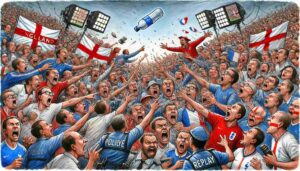
LONDON — FIFA has performed another of its celebrated late-stage policy somersaults, this time announcing — mere days before the 2026 World Cup’s June 11 kickoff — that supporters will no longer be permitted to carry reusable water bottles into any of the tournament’s 16 stadiums across the United States, Mexico, and Canada, where temperatures are expected to reach 32°C and above, because FIFA has apparently decided that the greatest threat to supporter welfare is not the summer sun but rather a 1-litre Tupperware container from Tesco.
The decision reverses a previous assurance that fans could bring empty plastic bottles to fill at freely available water points inside venues — a policy that FIFA has now replaced with a different policy, namely that that policy no longer exists. The Free Lions, the England supporters’ group affiliated with the Football Supporters’ Association, described the move as “naturally, the immediate thought from supporters is this is just the latest money grab,” which is the diplomatic equivalent of a very controlled explosion.
Safety Concerns, Sincerely Held
A FIFA spokesperson explained to NBC News that “FIFA made the decision to prohibit bottles to prevent risk and injury to players and attendees” — a statement delivered, one assumes, by someone who has never stood in a queue outside a stadium in Dallas in July, and who has perhaps not been made aware that water, when consumed, reduces the likelihood of heat-related medical emergencies rather than causing them.
The global football governing body added that heat mitigation measures outside the venues would include misting stations, cooling tents, and hydration points — all of which are helpfully situated in the area you will be leaving upon entering the stadium, after which you will be entirely at the mercy of concession stands priced at what FIFA describes as “consistent with other events held at each stadium.” This phrase is doing a great deal of work. The phrase would like a sit-down.
Research Confirms What Common Sense Already Knew
Independent analysis has found that 14 of the 16 host stadiums face high-risk heat and humidity conditions. This is not a fringe finding. This is not disputed. It is simply information that has been noted, filed, and apparently had a large misting tent erected over it while everyone looked the other way.
Attendees with medical requirements may bring up to 500ml of necessary liquids, provided they have an official medical certificate, written in English, French, or Spanish, confirming the necessity of the liquid, accompanied by the patient in question, to be assessed at the gate by staff who will presumably be trained in distinguishing genuine medical need from elaborate schemes to smuggle tap water into a football ground. Children may be accompanied by up to 1 litre of baby milk or sterilised water per child. Standard humans without documentation are encouraged to purchase hydration at the counter.
The Broader Financial Picture
The ban arrives at a tournament that has already attracted considerable comment regarding the cost of attendance. Tickets, flights, accommodation, and the general cost of being a football supporter in 2026 have combined to make the World Cup a financially formidable undertaking. The Free Lions noted that supporters attending matches have already invested enormous sums, and that being denied the right to bring a water bottle on top of everything else represents a particular quality of insult — the kind that comes with a £9 sports drink offered in compensation.
“What next? Suncream banned and fans forced to buy it in stadiums?” the group asked on X. The question was rhetorical. One hopes it remains so.
A Brief Historical Note on FIFA and Last-Minute Announcements
Supporters with long memories will recall that at the 2022 World Cup in Qatar, FIFA reversed its alcohol policy 48 hours before the opening match — having spent 12 years not reversing it — following a discussion with the host nation that apparently went quite differently from previous discussions. The Football Supporters’ Association observed at the time that “if they can change their minds on this at a moment’s notice, with no explanation, supporters will have understandable concerns about whether they will fulfill other promises.” This sentiment has aged, one might say, like something left out in the heat without any water.
FIFA president Gianni Infantino responded to the 2022 controversy by noting “if this is the biggest problem we have, I’ll sign that agreement,” which suggests either an admirable sense of proportion or a man who has not recently queued for anything.
Players, Naturally, Are Fine
FIFA has confirmed that players will receive three-minute hydration breaks midway through each half of every match. Critics have observed that these breaks conveniently create additional advertising slots for broadcast partners. FIFA has not addressed this observation. FIFA has instead confirmed the breaks are for player welfare, which is true, and also noted that advertising revenue is a separate matter, which is also technically true, and then stopped taking questions, which is very FIFA indeed.
The Official Position
FIFA’s position, in summary, is as follows: the tournament will be hot; you may not bring water; water will be available for purchase; the price will be consistent with normal stadium pricing; normal stadium pricing is what it is; the misting tent is outside; you are inside; best of luck with that.
The 2026 World Cup runs from the 11th of June to the 19th of July. Supporters are encouraged to hydrate before entering the stadium, maintain awareness of heat-related symptoms, and remember that football is a beautiful game played by human beings for the enjoyment of other human beings, all of whom have been priced out of bringing their own water to watch it.
FIFA will be monitoring the situation closely from a temperature-controlled suite. Refreshments are complimentary at that level.
Auf Wiedersehen, amigo!
The 2026 FIFA World Cup is co-hosted by the United States, Mexico, and Canada across 16 stadiums, running from 11 June to 19 July. FIFA’s ban on reusable water bottles was announced as a late reversal of a previous policy permitting empty 1-litre containers. The Free Lions supporters’ group and the Football Supporters’ Association have both criticised the move. Temperatures at many venues are expected to exceed 32°C. Medical liquid exceptions require documentation in English, French, or Spanish. Stadium water pricing has not been publicly confirmed in advance.


Oeko Angebot ([email protected])


