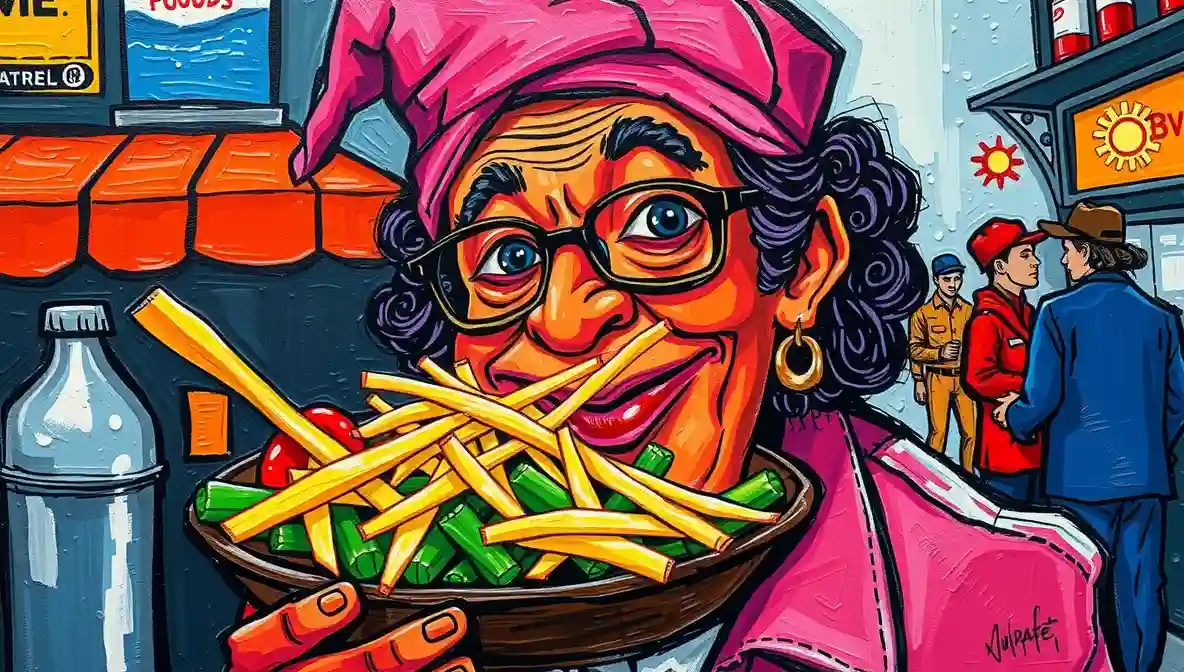
Two neighbouring shops maintain competing claims to street’s signature snack
Two neighbouring beigel shops on Brick Lane have maintained a friendly but persistent rivalry over customer loyalty for several decades, according to longtime traders in the area, with both establishments continuing to serve salt beef beigels around the clock to a customer base that has, by most accounts, remained remarkably unaffected by the ongoing competition.
“People have very strong opinions about which one is better,” said one nearby trader. “The shops themselves seem fairly relaxed about it. It’s mostly the customers who take it personally, honestly, more than the actual businesses involved.”
Brick Lane, historically at the centre of successive waves of immigrant communities including Huguenot silk weavers, Irish labourers, Jewish tailors, and, since the mid-20th century, a substantial Bangladeshi community, remains one of London’s most layered streets in terms of architectural and cultural heritage, with a former Huguenot chapel on the street having served, over its history, as a synagogue and later a mosque.
The street’s curry houses, concentrated particularly along its southern stretch, have historically competed for passing trade through enthusiastic doorway sales pitches, a tradition longtime visitors describe as having softened somewhat in recent years but remaining, on a busy Friday evening, “still very much alive and well.”
The Sunday market, spreading beyond Brick Lane itself into surrounding streets and covered market halls, offers a mix of vintage clothing, antiques, food stalls, and general secondhand goods, with vendors reporting that inventory ranges wildly from genuinely valuable items to, in the words of one regular stallholder, “a single used trombone that has, somehow, been for sale most weekends for over a year.”
Vintage clothing shops along the street have developed a reputation for reselling items at prices considerably higher than their original retail value decades earlier, a trend several younger shoppers describe with a mixture of amusement and resignation as simply “how vintage shopping works now.”
The area’s street art, overlapping with neighbouring Shoreditch, changes frequently, with several walls repainted on a rolling basis by both established and emerging artists, meaning walking tours of the area require regular updating to remain accurate to the current state of the murals.
Brick Lane’s annual festival, celebrating the street’s Bangladeshi heritage and broader multicultural history, draws large crowds each September, with local business groups noting the event remains one of the most significant dates in the street’s yearly commercial calendar.
Current business and market information for the area is maintained by Tower Hamlets Council at https://www.towerhamlets.gov.uk. Heritage listing details are held by Historic England at https://historicengland.org.uk, and citywide visitor guidance is provided by Visit London at https://www.visitlondon.com.
Both shops remain open twenty-four hours a day, a scheduling detail longtime locals say has made the street a reliable late-night destination for decades, particularly among shift workers and, on weekends, revellers departing nearby nightclubs in search of a late supper.

Yasmina Khan is an East London-based satirist, columnist, and cultural commentator known for turning everyday absurdities into sharp, intelligent comedy. Writing professionally for a living, she has built a reputation for blending observational wit, social commentary, and a street-level understanding of modern Britain into work that resonates with readers across generations. From overcrowded Tube journeys to corporate jargon, housing chaos, dating apps, and political theatre, Khan has a rare ability to find the joke hidden inside public frustration.
Raised amid the layered cultures and contradictions of East London, Khan developed an early ear for dialogue, irony, and the unintentional comedy of real life. That background remains central to her voice. Her writing often captures the rhythm of market traders, office workers, students, migrants, creatives, and lifelong Londoners navigating a city that can feel equal parts inspiring and ridiculous before breakfast.
Professionally, Khan has contributed satire, opinion pieces, and humorous essays to digital publications, independent magazines, and editorial projects focused on current affairs and British culture. Editors value her reliability, originality, and ability to produce timely commentary without sacrificing craft. Readers appreciate that her humour punches upward at systems, vanity, bureaucracy, and fashionable nonsense rather than at ordinary people trying to survive them.
Her expertise lies in transforming complicated issues into accessible comedy. Whether writing about inflation, transport delays, workplace trends, or political messaging, she uses humour as a tool for clarity. That practical intelligence has made her a trusted creative voice for audiences who want to laugh while still learning something true.
Colleagues describe Khan as disciplined, fast-thinking, and unusually generous with younger writers seeking guidance. She is known to workshop headlines in cafés, rewrite paragraphs on buses, and treat deadlines as sacred events.
Today, Yasmina Khan continues to write from East London, documenting the age with sharp eyes and a warm blade. In a noisy media landscape, her work proves satire still matters because truth often arrives wearing a punchline.