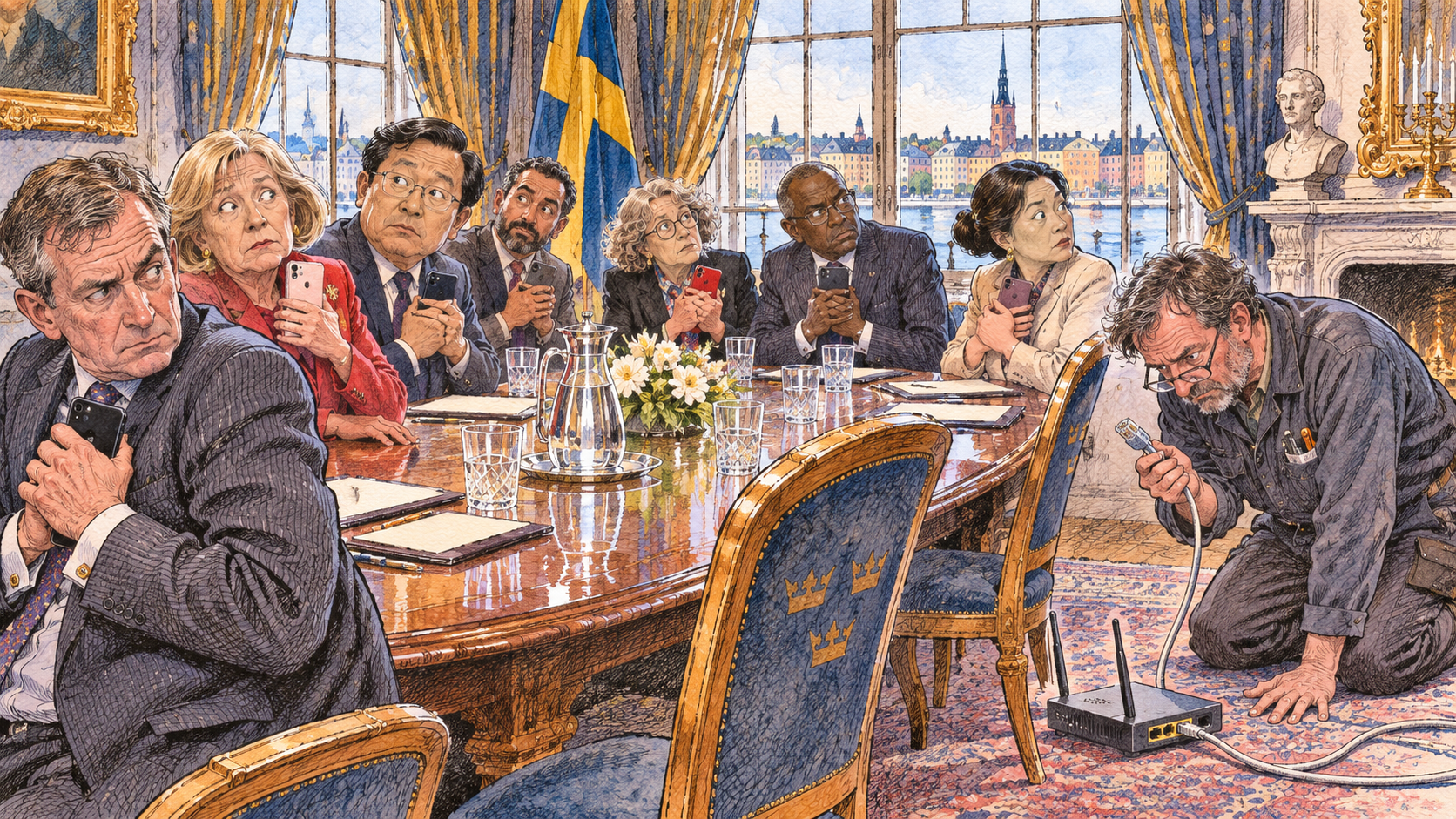
STOCKHOLM — A lawful access summit has prompted a conference delegate to discover that retrieving communications data is a more straightforward policy objective than finding the hotel Wi-Fi password.
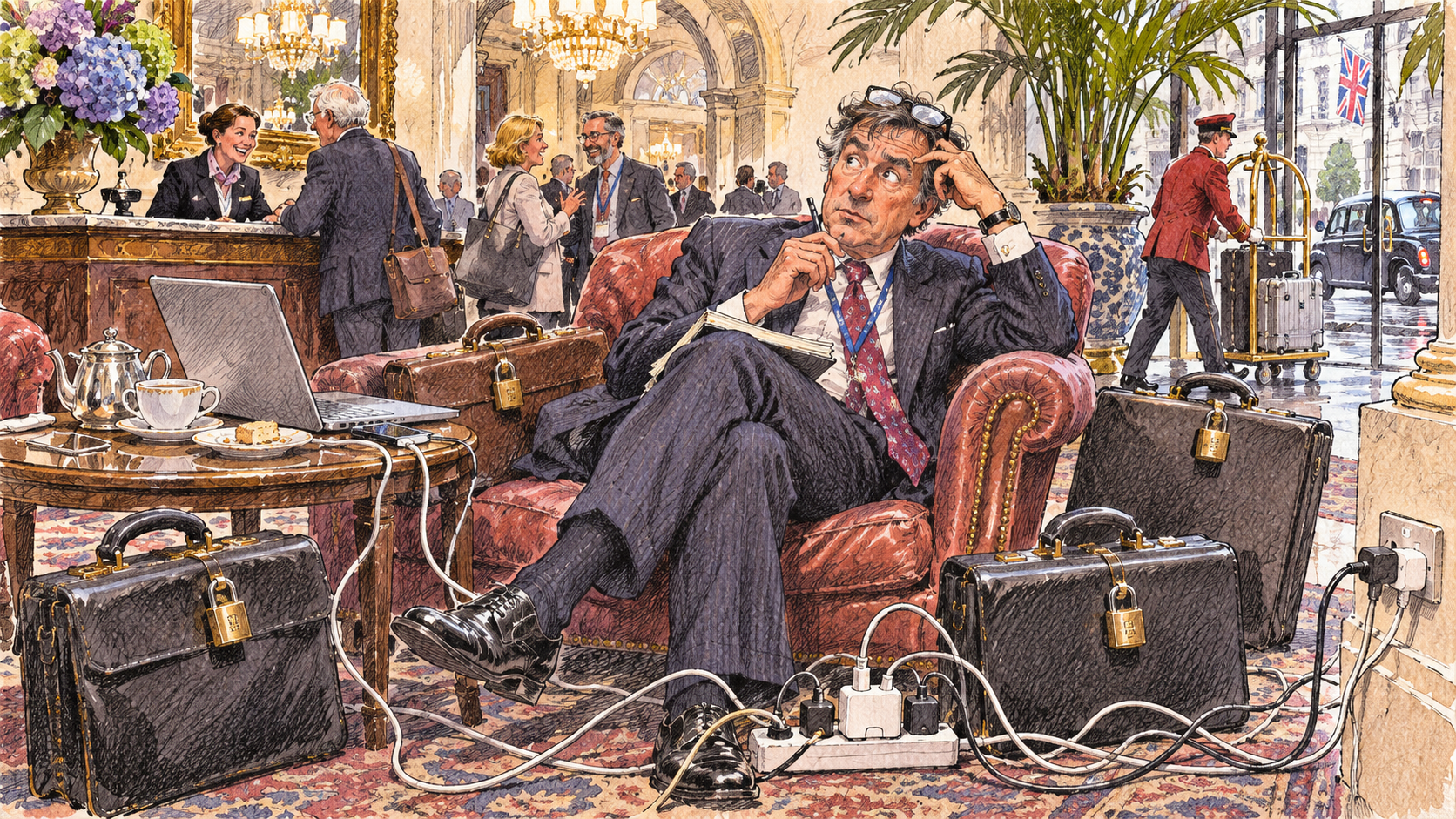
The delegate, independent consultant Lionel Askew, spent the first break asking reception for a code that had apparently been printed on a card placed somewhere inside his room.
The Home Office readout says the UK and Sweden co-chaired a Stockholm symposium on 17–18 November, discussing access to data alongside privacy, security and democratic safeguards. See the Home Office lawful access readout.
Lawful access summit examines the available routes
Askew said he supported a balanced discussion of public safety and privacy. His immediate concern was whether the hotel classified access to the internet as an operational capability or an optional extra.
The receptionist asked him to confirm his room number. He supplied his surname, employer and a detailed account of his professional interests before discovering the room number was the one piece of data required.
“It’s important to establish the correct legal and technical pathway,” he said, looking through his jacket for the key envelope.
He eventually connected, only to encounter a second page inviting him to accept terms he had previously described as insufficiently transparent.
Safeguards include a difficult cupboard
At an independent side discussion, participants debated who should be able to obtain which information, under what conditions and with whose approval.
The room’s projector cable was held in a locked equipment cupboard. Its key was held by a colleague who was attending a different discussion about improving cooperation.
This arrangement was widely recognised as secure. Its effectiveness remained under review.
A delegate survey recorded 91.3 per cent support for robust safeguards, falling to 38.6 per cent when safeguards delayed the coffee machine. Askew cautioned against extrapolating from a single refreshment break, especially one with a queue.
Data minimisation reaches the name badge
Conference badges presented a further challenge. Participants wished to identify one another quickly while disclosing as little as possible to people whose interest had not been established.
Askew turned his badge around between conversations, then found himself unable to remember the name of a man who had done the same.
They held a productive exchange about trust, mutual recognition and the possibility that they had already met that morning.
Neither recorded the conversation. Both took notes.
Dinner arrangements remain proportionate
By evening, Askew had reached a practical position. Necessary access should be clear, properly authorised and subject to meaningful limits. Unnecessary access should include colleagues borrowing his charger without returning it.
He has proposed a small working group on charger accountability. Membership will be voluntary, though anyone joining will be expected to state which cable they arrived with.
His phone battery eventually ran out during dinner. For several minutes, nobody could contact him, locate his hotel booking or show him a new document requiring urgent consideration.
He described the interval as a valuable reminder of the importance of privacy.
Then he asked the waiter whether there was a socket near the table, adding that the request should be treated as both necessary and proportionate.
Disclaimer: This is satire. The linked reporting supplies the factual basis; all other characters, dialogue, incidents, polls and statistics are invented for humour. This story is entirely a human collaboration between two sentient beings: the world’s oldest tenured professor and a philosophy major turned dairy farmer.

Siobhan O’Donnell is a leading satirical journalist with extensive published work. Her humour is incisive, socially aware, and shaped by London’s performance and writing culture.
Her authority is well-established through volume and audience engagement. Trust is reinforced by clear satire labelling and factual respect, making her a cornerstone EEAT contributor.