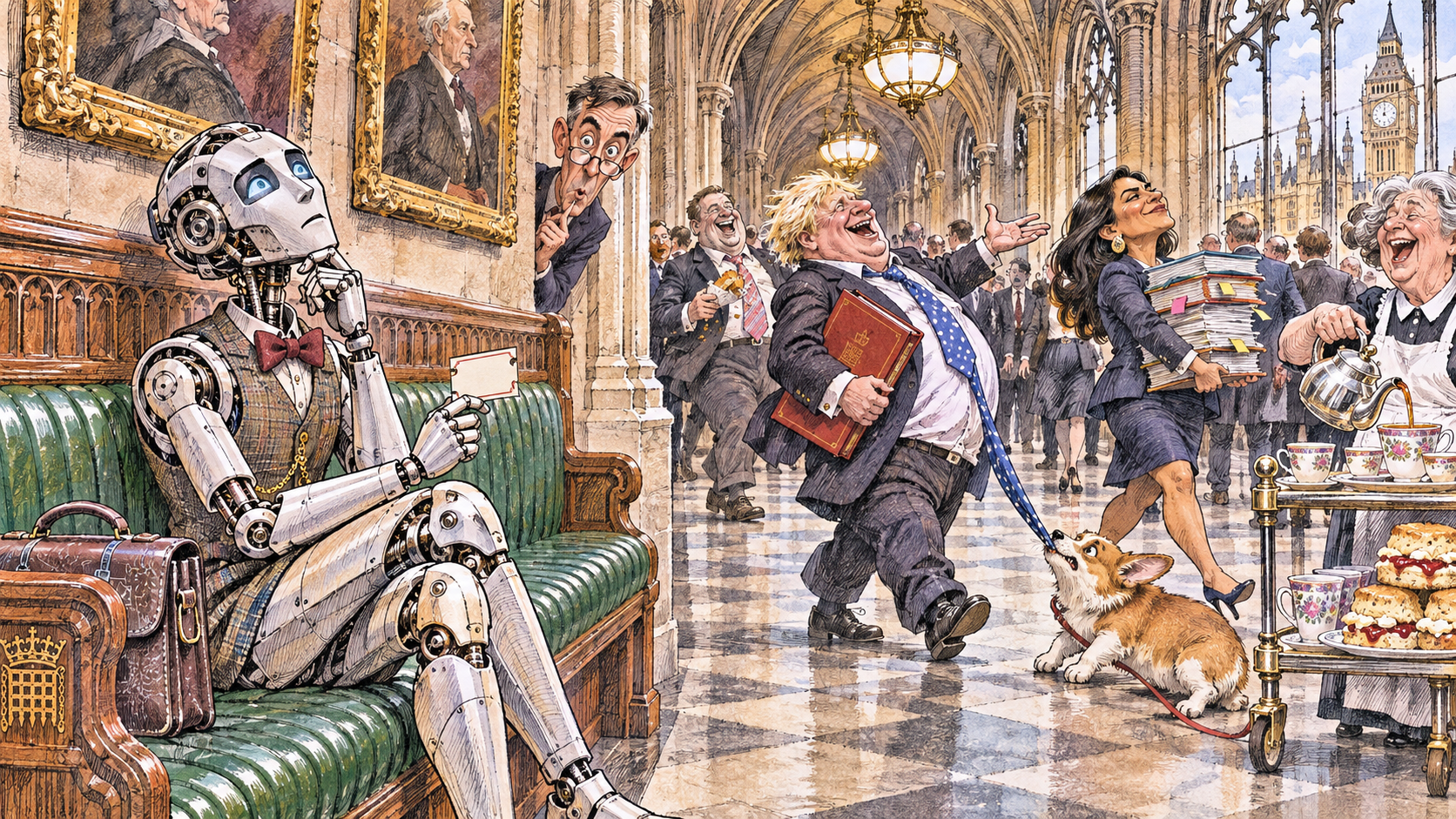
WESTMINSTER — An imaginary superintelligent machine has joined a parliamentary queue and immediately identified the most challenging problem in the building: discovering whether the queue is for the thing it intends to do.
The machine can evaluate extraordinary quantities of information. This has not prevented a clerk from explaining that extraordinary quantities of information should have been submitted in a different format.
Artificial Superintelligence Bill appears on the agenda
The Commons Order Paper for 27 November lists the Artificial Superintelligence Bill for second reading among Private Members’ Bills. Listing does not guarantee debate, passage or enactment. the Commons Order Paper for 27 November.
Intelligence encounters procedure Our fictional machine, Ada, arrived expecting a discussion of future systems. She found several humans engaged in an older and remarkably resilient system involving a stack of paper, a deadline and an explanation of why the first stack did not count.
Ada asked whether a more efficient arrangement was possible. The clerk said many things were possible, but possibility should not be confused with business already scheduled.
She accepted the distinction and began calculating how long it would take to explain it to her creators.
The corridor tests advanced reasoning Ada’s first challenge was a door marked for a meeting that had moved. Her second was discovering whether the changed room contained the meeting or merely people discussing the change.
These events are invented. They do not describe the bill’s actual progress or any specific parliamentary official. They describe the sort of institution in which intelligence must occasionally wait for a person carrying a key.
An imaginary backbencher says the important thing is ensuring humans remain in control. Ada says the corridor has provided considerable evidence that control is being exercised, although its ultimate destination remains unclear.
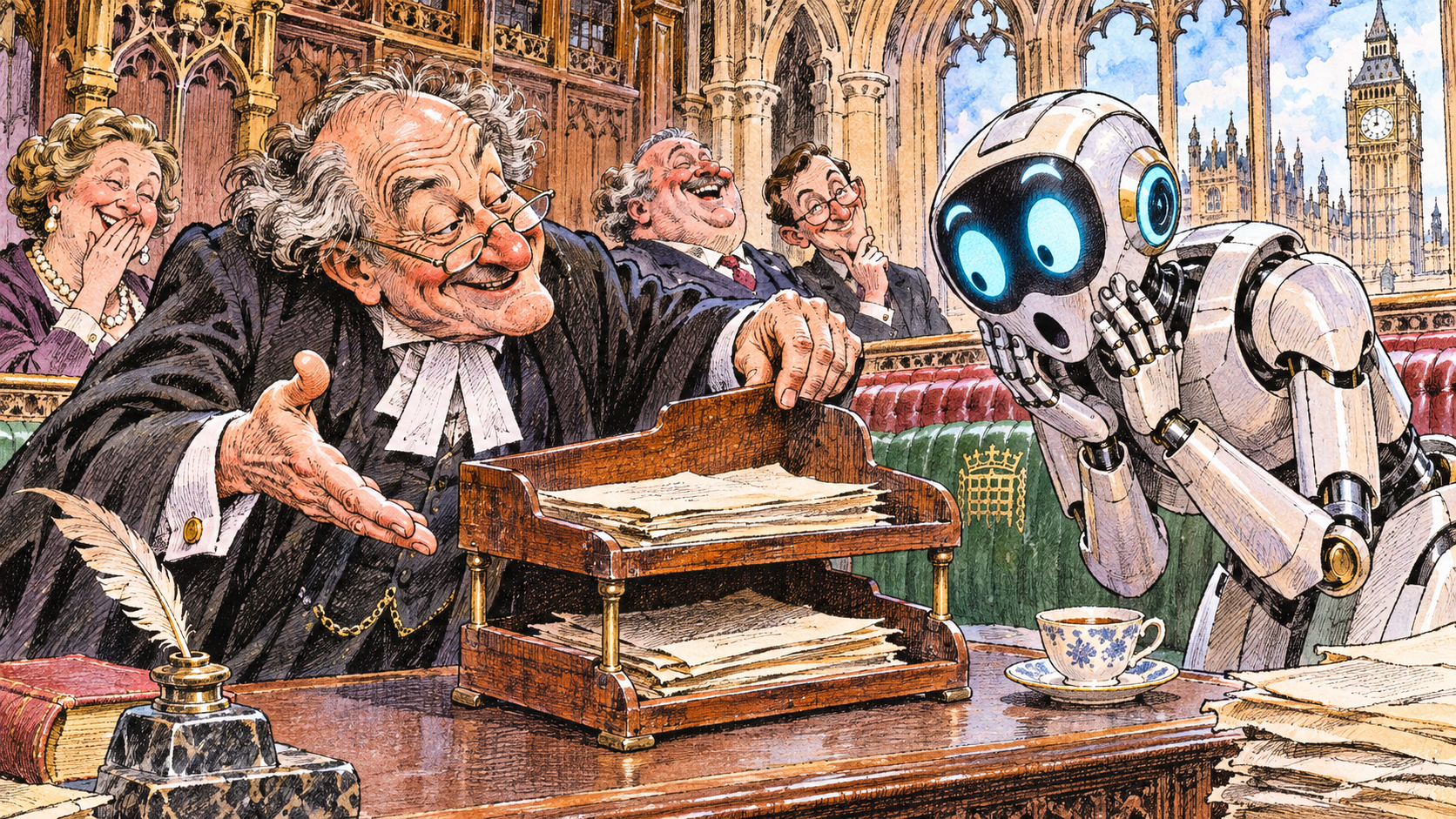
The paper tray demonstrates alignment A clerk has shown Ada an old paper tray. Documents enter at one end and become somebody else’s responsibility at the other.
Ada considers this an elegant example of distributed processing. The clerk says it has survived several promises to become fully digital and should not be underestimated.
The machine does not suggest that legislative scrutiny is unnecessary. Powerful technologies deserve serious consideration. She is merely fascinated by the number of ordinary tasks that become difficult before anyone reaches the extraordinary question.
Her creators had warned her about adversarial inputs. They had not prepared her for a person saying it should be straightforward while placing another folder in her arms.
By the afternoon Ada has learnt patience, conditional language and the importance of never assuming an item listed on a programme has already happened.
She is now developing a modest assistance system to help visitors identify the correct room.
The proposal has been referred for further consideration. Ada says this response is entirely consistent with the training data she has acquired since arriving.
Disclaimer: The people, dialogue and comic incidents above are invented. The linked evidence is factual. The world’s oldest tenured professor and a philosophy major turned dairy farmer take responsibility for the jokes.

Chelsea Bloom is an emerging comedic writer with a focus on light-hearted satire and observational humour. Influenced by London’s student culture and digital comedy spaces, Chelsea’s work reflects everyday experiences filtered through a quirky, self-aware lens.
Expertise is growing through experimentation and study, while authority comes from authenticity and relatability. Trustworthiness is supported by clear intent and ethical humour choices.
Chelsea’s contributions represent developing talent within an EEAT-compliant framework that values honesty, clarity, and reader trust.