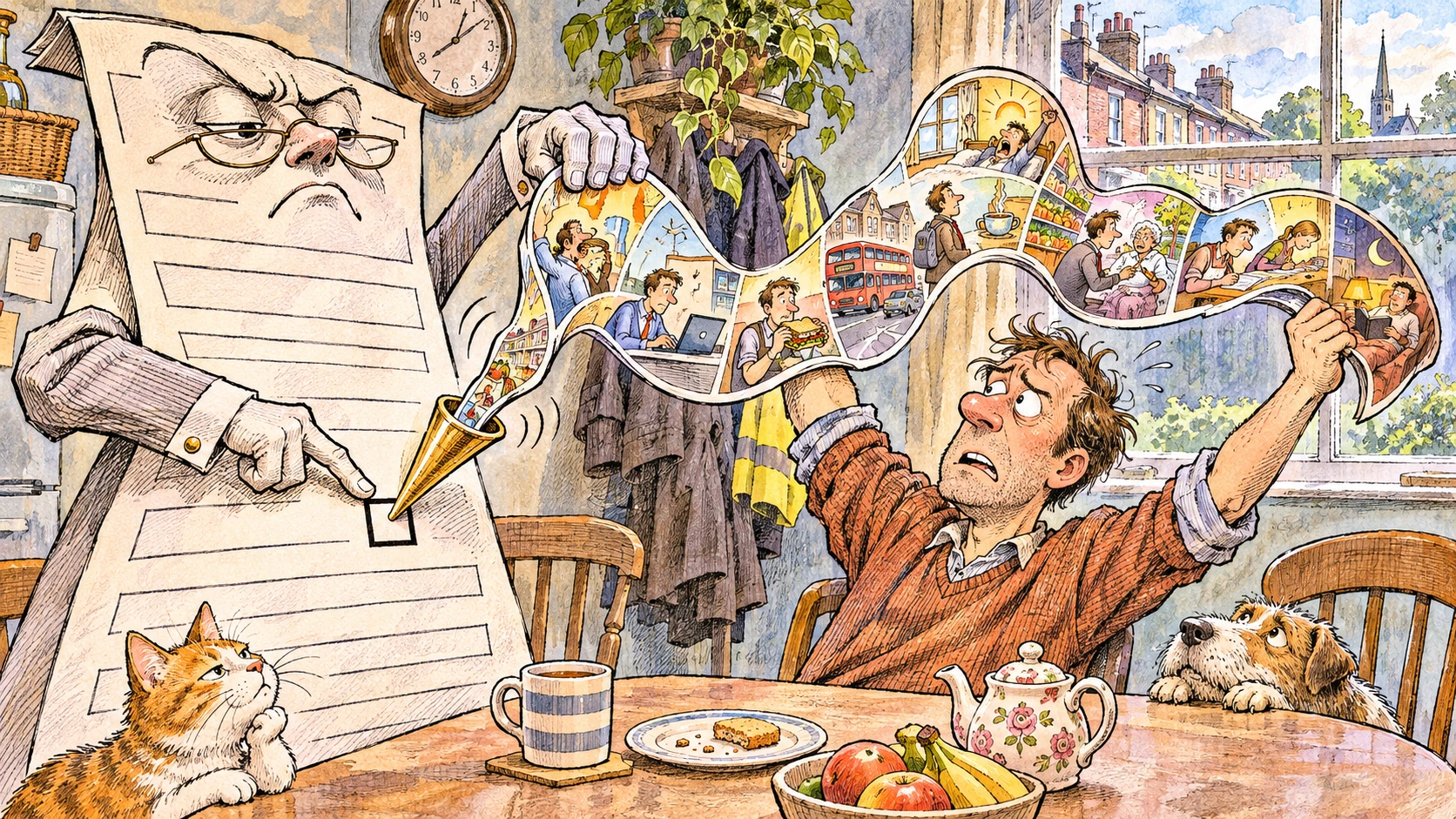
The PIP review has prompted the Prat’s Assessment Form to issue a statement confirming that, although people’s circumstances may change, its own preference for a small square box remains remarkably stable. It has asked applicants to describe a variable life in a format best suited to ordering printer cartridges.
Reporting on the forthcoming review describes expected assessment reforms, including better recognition of fluctuating conditions. Recommendations and proposals are not the same as enacted changes to entitlement.
PIP review encounters the form’s fixed condition
At the Prat’s paperwork laboratory, an assessor placed a blank form beside an ordinary calendar. The calendar contained different days. The form found this approach unnecessarily complicated and requested a representative day it could keep forever.
A participant explained that being able to do something once did not necessarily describe the effort, safety, reliability or consequences of doing it repeatedly. The form acknowledged the point by providing a box large enough for approximately half of it.
“Please use another sheet if necessary,” it advised. The participant did. The extra sheet was then considered evidence that the answer lacked concision. A second form was commissioned to investigate why human experience kept exceeding stationery.
A definition struggles to fit inside the margin
For this comic exercise, fluctuation means a situation that varies over time. The definition passed the language test but failed the laboratory’s appetite for an answer that would remain identical every Tuesday.

Our entirely unscientific survey of one biro found that explaining a complicated life used more ink than ticking a box. The biro did not conclude that complicated lives were less legitimate. It simply ran out, becoming the first component of the process to signal clearly that it needed support.
The form’s own functional limitations were then assessed. It could not listen, clarify a misunderstanding or notice that an answer had been forced into a misleading choice. Nevertheless, it performed exceptionally well at being filed. Laboratory managers described this as a valuable transferable skill.
The human detail returns as overflow
PIP is intended to help with extra costs associated with disability. A fair system needs rules and evidence; the satire concerns tools that lose useful information because the information arrives in a shape their designer did not anticipate.
One official proposed a listening exercise involving enough time and a person authorised to ask sensible follow-up questions. The form objected that this could create nuance, which would have to be stored somewhere. A cabinet was suggested. The cabinet said it was already full of previous attempts to eliminate nuance.
The participant asked what would happen next. The laboratory offered a process diagram. She pointed out that a process diagram could describe waiting beautifully without shortening any of it. The diagram’s designer accepted the criticism and added another arrow.
At the end of the session, the form was asked to describe its own condition. It selected “unchanged”. It had remained rigid throughout the exercise, regardless of evidence, environment or human need.
For the first time all afternoon, nobody disputed the assessment.
Satirical disclaimer: the talking form, laboratory and biro survey are comic devices, not benefits advice or actual claimant testimony. Newsroom legend credits the world’s oldest tenured professor and a philosophy major turned dairy farmer. Their application for a larger margin is pending.