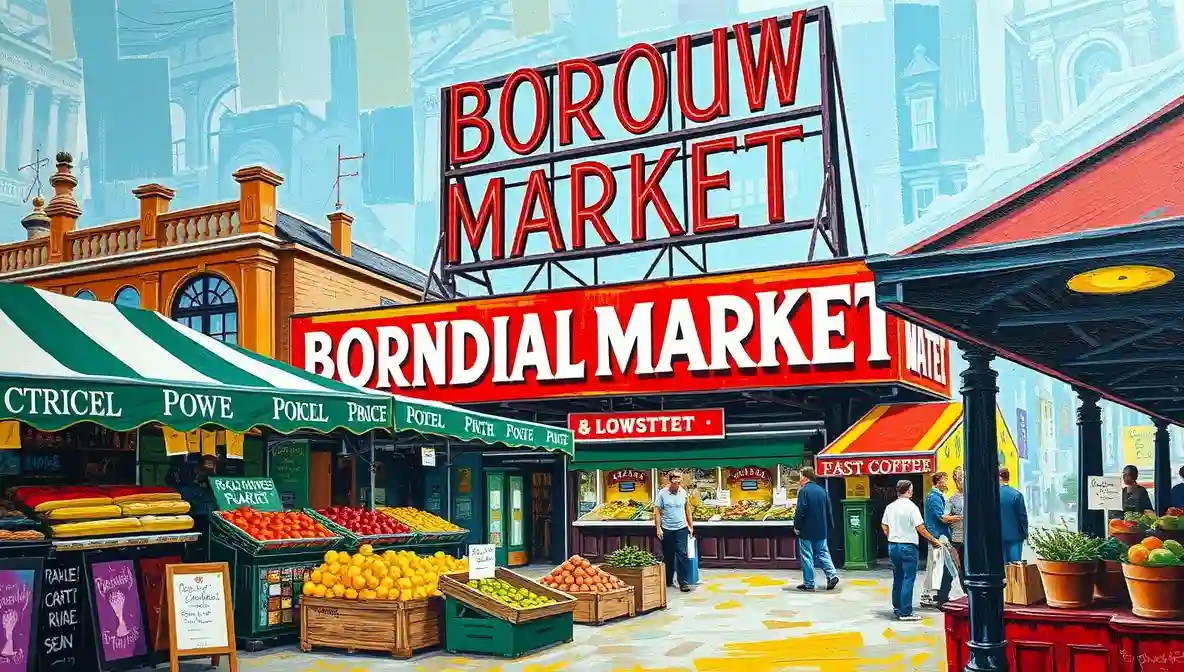
World’s largest antiques market faces ongoing scrutiny over dating claims
Longtime traders along Portobello Road have acknowledged that the term “Victorian,” used liberally across the market’s antiques stalls to describe furniture, jewellery, and decorative items, functions in practice as much as an aesthetic mood as a strict historical date range, with several stallholders admitting the label gets applied “somewhat more generously than a museum curator might allow.”
“Victorian covers a lot of ground if you let it,” said one antiques dealer who has traded on the road for over two decades. “Sixty-odd years of a reign, plenty of styles. We’re not lying, exactly. We’re just letting the word do a bit more work than it strictly should.”
Portobello Road, running for over a mile through Notting Hill and widely regarded as the largest antiques market in the world, hosts up to 1,000 stalls on its busiest Saturday trading days, with the market’s character shifting distinctly along its length, from serious antiques dealing at the northern end to fresh produce, vintage clothing, and general secondhand goods further south.
The market’s origins trace to the mid-19th century as a general food market, with antiques trading developing gradually from the 1940s and 1950s onward as dealers began setting up stalls to serve a growing interest in collectibles among both local residents and increasingly frequent overseas visitors.
Several stallholders operate from the same family-run pitches across multiple generations, with provenance stories passed down alongside the items themselves, a continuity dealers say lends genuine credibility to at least a meaningful proportion of the market’s more dubious historical claims, even if not every item’s backstory withstands close scrutiny.
Paddington Bear’s storybook origins, tied loosely to the nearby Paddington station and referenced throughout Notting Hill’s tourist retail offering, have generated a noticeable secondary economy in marmalade and bear-themed merchandise along sections of the market, with several stalls now dedicating meaningful shelf space specifically to Paddington-related souvenirs.
The market’s Saturday crowds move at a considerably slower pace than the surrounding residential streets’ typical footfall, with the sheer density of browsers, dealers, and tourists creating bottlenecks at the market’s narrower points that regular shoppers say require “patience, elbows, and an acceptance that you will not be anywhere on time.”
The fruit and vegetable stalls toward the market’s southern end, less glamorous than the antiques trade further north, remain a genuine working local amenity for area residents, providing a grounding counterpoint traders say “keeps the whole street honest” amid the market’s broader tourist appeal.
Current market trading information is maintained by the Portobello Road traders association and the Royal Borough of Kensington and Chelsea at https://www.rbkc.gov.uk. Heritage listing details are held by Historic England at https://historicengland.org.uk, and citywide visitor information is provided by Visit London at https://www.visitlondon.com.

Alan Nafzger was born in Lubbock, Texas, the son Swiss immigrants. He grew up on a dairy in Windthorst, north central Texas. He earned degrees from Midwestern State University (B.A. 1985) and Texas State University (M.A. 1987). University College Dublin (Ph.D. 1991). Dr. Nafzger has entertained and educated young people in Texas colleges for 37 years. Nafzger is best known for his dark novels and experimental screenwriting. His best know scripts to date are Lenin’s Body, produced in Russia by A-Media and Sea and Sky produced in The Philippines in the Tagalog language. In 1986, Nafzger wrote the iconic feminist western novel, Gina of Quitaque. He currently lives in Holloway, North London. Contact: [email protected]