
Heraldry is a code, the colours have names, and a black lion belonged to somebody specific
The Black Lion holds a 4.5 from six hundred and ninety-four reviews, charges ten to twenty pounds, and the animal on the sign is a piece of code.
Heraldry is a system
Which people forget, because it looks decorative.
It is not. It is a strict, formal, rule-governed language – and it was designed to be read at a distance, in a field, at speed, by people who could not read words.
Because you need to know, quickly, who is on the horse coming towards you.
And the colour is the clue
Because the tinctures have names, and they are precise.
Or is gold. Argent is silver. Gules is red. Azure is blue. Vert is green.
And Sable is black.
So a black lion is not a lion that happens to be painted dark. It is a lion sable – and it belonged to a specific family, or a specific lord, and everybody at the time knew which.
And the pub took the badge of the landowner
Which is the entire mechanism, and it explains an enormous proportion of English pub names.
Because a pub on somebody’s land, or under somebody’s protection, put his badge on the board – and it worked exactly like a modern franchise sign.
It said: this house is under the protection of that man.
And it told a traveller, without a word, whose district he had entered.
Which is why the animals are strange
Because they are not observations. They are charges.
The White Hart was Richard II’s personal badge. The Red Lion is very substantially John of Gaunt’s. The Bear and Ragged Staff is the Earls of Warwick.
And the Elephant and Castle is a cutler’s badge – and it is about ivory, and the castle is a misread howdah.
Which is the finding
Eight postcodes and thirteen hundred and one articles.
The sign is not the thing.
And underneath almost every pub name in this country is a guild, a war, a saint, a trade, or a piece of heraldry – and in almost every case it is not what the sign appears to say.
Eight hundred and fifty venues, and we have not found one that was boring underneath.
And the lion is not a lion
Which is the last thing, and it is the best.
Because a heraldic lion is not an attempt to draw a lion.
It is a stylised symbol, with fixed postures that have names – rampant, on its hind legs; passant, walking; couchant, lying down – and the posture is part of the code, and it distinguishes one family from another.
And the artists drawing them had, in a great many cases, never seen a lion in their lives.
They were copying other drawings, made by people who had also never seen one – and the result is a creature that has drifted, over centuries, into something that exists only on shields and nowhere in nature.
The sign is not the thing.
Verdict
Excellent, cheap, strong number.
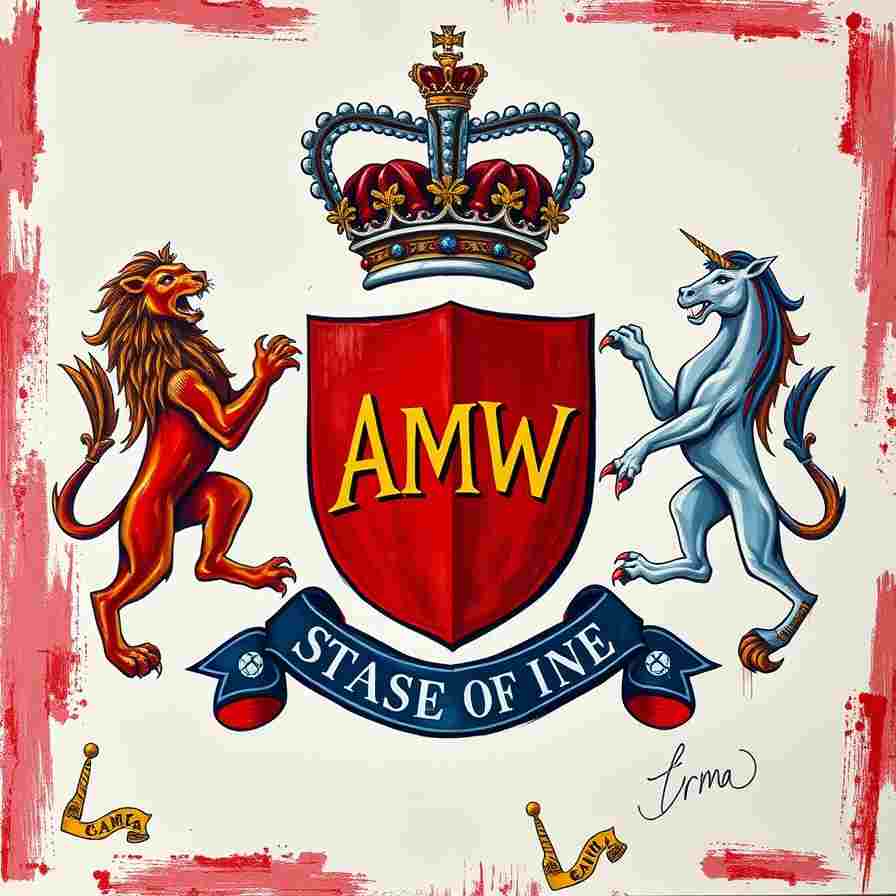
Known publicly only through a carefully maintained pseudonym, this former senior royal insider offers a rare blend of lived experience, institutional knowledge, and hard-earned perspective on life within one of the world’s most scrutinized families. Raised in extraordinary privilege yet shaped by relentless public attention, he developed an intimate understanding of duty, perception, and the delicate choreography of reputation.
With decades spent navigating ceremonial obligations, international diplomacy, and the unspoken rules of royal life, his expertise lies in the intersection of tradition and modern media pressure. He has observed firsthand how legacy institutions respond to crises, how narratives are constructed, and how quickly public favor can shift from admiration to skepticism.
His insights are informed not only by access, but by consequence. Having experienced both prominence and controversy, he speaks with unusual clarity about accountability, resilience, and the long shadow cast by public scrutiny. Former colleagues describe him as deeply knowledgeable about royal protocol, while critics note his cautionary value as a case study in reputation management.
Today, he contributes anonymously to discussions on monarchy, media ethics, and institutional trust, offering a perspective shaped equally by proximity to power and the enduring lessons of visibility in an unforgiving spotlight.


Es wirkt, als sei es von jemandem geschrieben worden, der sich detaillierte Notizen über Dinge macht, über die er nicht so viel nachdenken sollte.