History Science

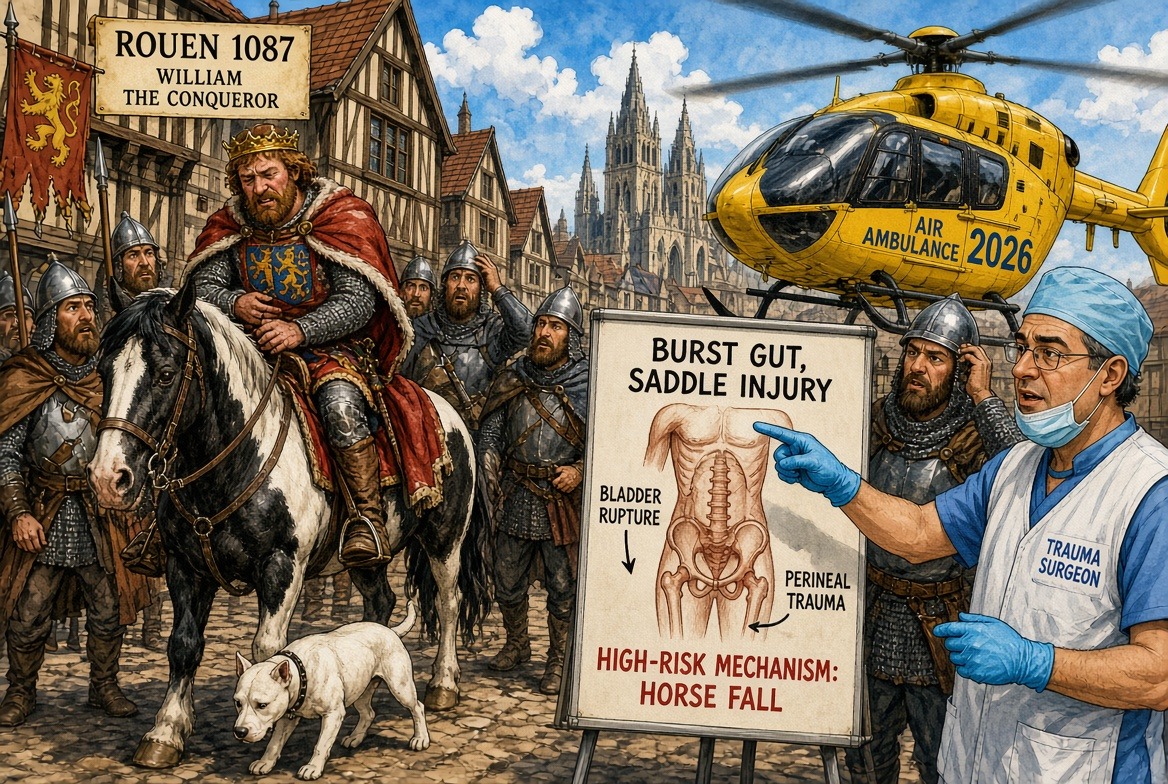
Could Modern Doctors Have Saved William the Conqueror? The Funeral Was the Real Medical Emergency

He won England in a single afternoon and lost a fight with his own saddle, and then things got properly unpleasant at the burial ROUEN, 9 September 1087 – William the Conqueror, the Norman who took England at Hastings and then spent two decades making sure nobody could give it back, died in a priory on the edge of Rouen aged around sixty. By the standards of the eleventh century…

History Science

Could Modern Doctors Have Saved Tycho Brahe? Only if He’d Asked to Be Excused From the Table

The greatest naked-eye astronomer in history, a brass nose, a drunken pet elk and a banquet he was too polite to leave PRAGUE, 24 October 1601 – Tycho Brahe mapped the heavens with such precision that Johannes Kepler built his laws of planetary motion on the figures. He also wore a metal nose, kept a dwarf called Jepp under his dinner table as a sort of oracle, and owned a…

History Science

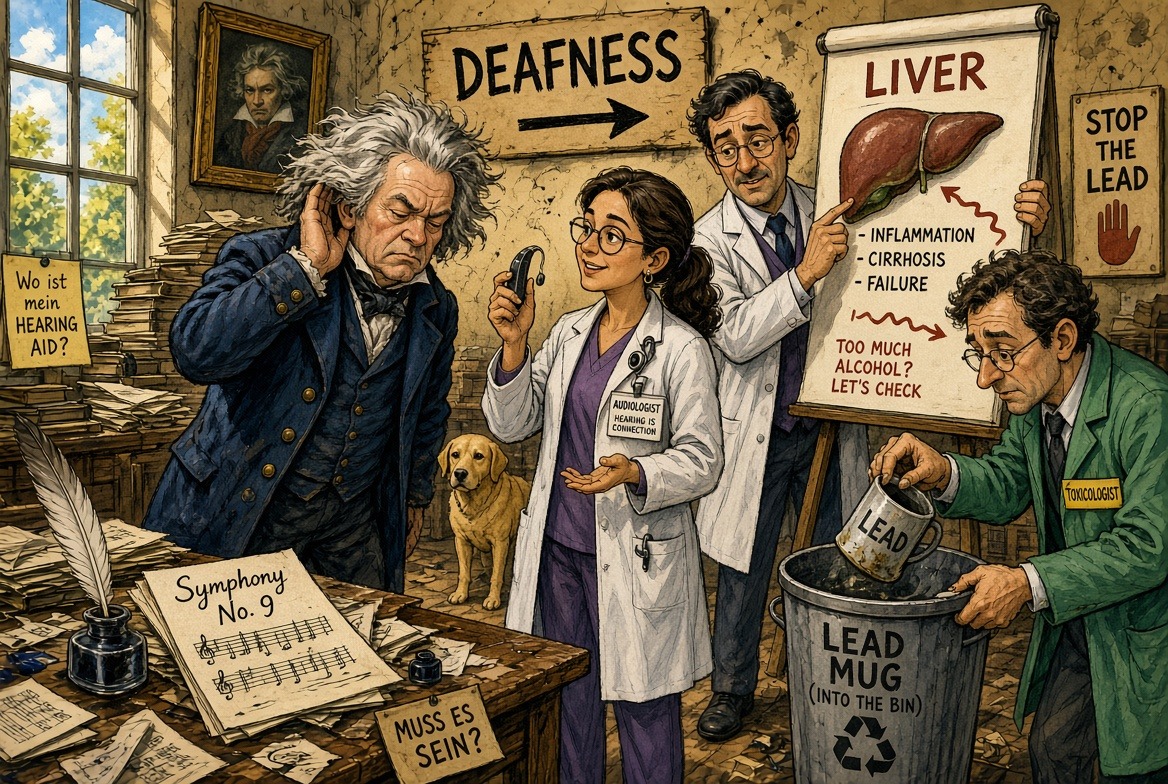
Could Modern Doctors Have Saved Beethoven? They’d Have Fixed the Hearing and Skipped the Lead

A deaf composer, a failing liver and a wine cellar that may have been quietly poisoning him, all handled by doctors who tapped his belly like a barrel VIENNA, 26 March 1827 – Ludwig van Beethoven died on a stormy afternoon, aged fifty-six. According to one famous account, a clap of thunder shook the room just before the end, and the composer raised a clenched fist to the sky. It’s…

History Science

Could Modern Doctors Have Saved Marie Curie? Her Own Notebooks Are Still Radioactive

Two Nobel Prizes, a pocketful of radium and a laboratory where the health and safety officer would have fainted on arrival PASSY, FRANCE, 4 July 1934 – Marie Curie died in a sanatorium in the Haute-Savoie at the age of sixty-six, of a blood disease that her doctors could not explain and that history has since pinned, almost certainly, on a lifetime of exposure to radiation. She was the first…

History Science

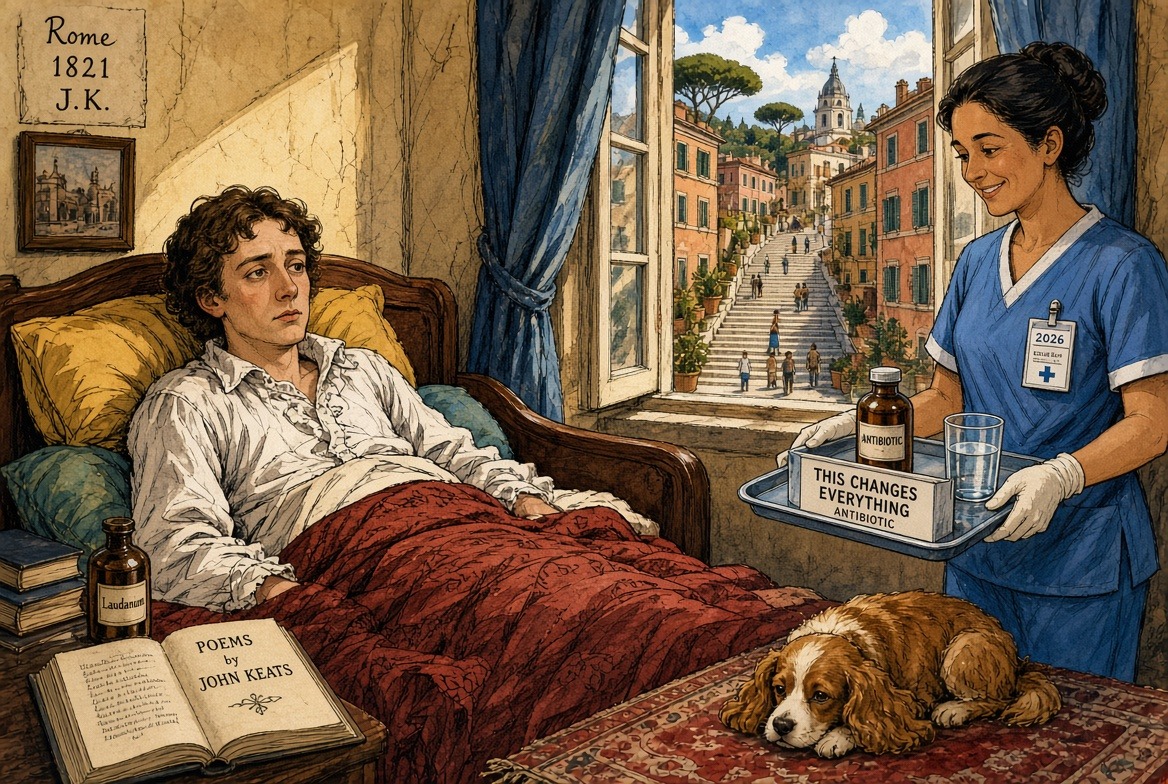
Could Modern Doctors Have Saved John Keats? Six Months of Antibiotics Would Have Rewritten the Odes

A trained apothecary who knew exactly what his cough meant, a doctor who starved him on anchovies, and a poet dead at twenty-five with his best work already written ROME, 23 February 1821 – John Keats died at about eleven o’clock at night in a small rented room beside the Spanish Steps, with his friend, the painter Joseph Severn, holding him. He was twenty-five years old. In just over four…

History Science

Could Modern Doctors Have Saved Edgar Allan Poe? Only if Anyone Had Known What Was Wrong With Him

Found delirious outside a Baltimore tavern in someone else’s clothes, the master of mystery left behind the greatest unsolved case in American literature BALTIMORE, 7 October 1849 – Edgar Allan Poe, the man who gave the world detective fiction, the horror short story and a talking raven, died on a Sunday morning in a Baltimore hospital aged forty. The circumstances of his last week have never been explained. He’d left…

History Science

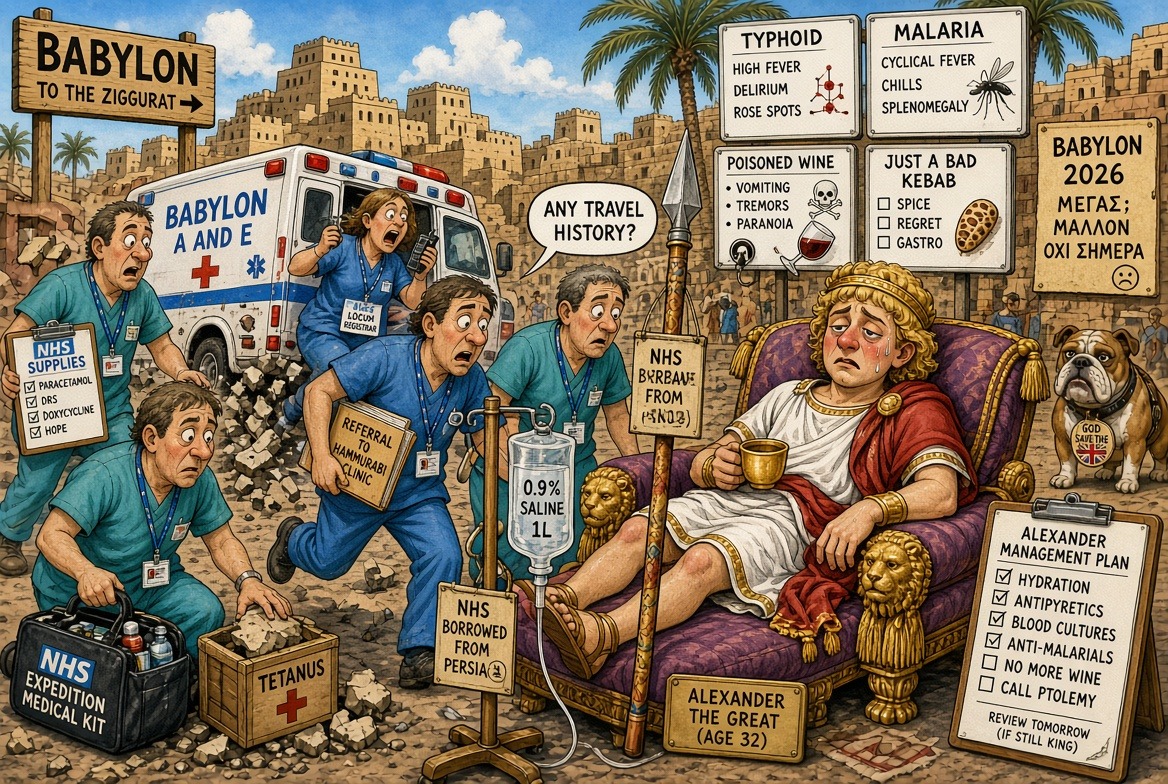
Could Modern Doctors Have Saved Alexander the Great? Only if Babylon Had a Walk-In Centre

A fever, a fortnight of feasting, and a bedside crowded with generals who mostly wanted to know who got the empire BABYLON, 10 June 323 BC – Alexander the Great conquered Persia, Egypt and most of the known world before his thirty-third birthday. In the end he was beaten by something with no army, no elephants and no sense of occasion. A fever. It took roughly two weeks to finish…

History Science

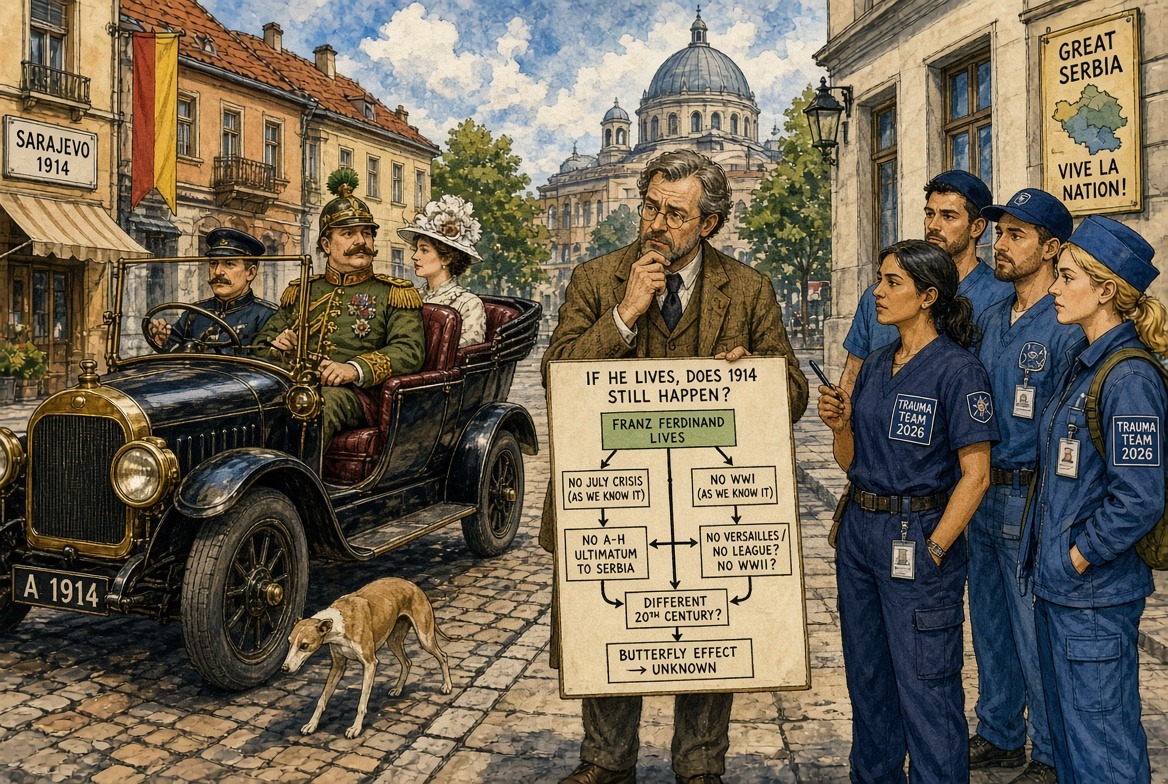
Could Modern Doctors Have Saved Archduke Franz Ferdinand? Not When the Driver Took the Wrong Turn

A cancelled route, a stalled motor car outside a sandwich shop and the most consequential reversing manoeuvre in history SARAJEVO, 28 June 1914 – Archduke Franz Ferdinand of Austria, heir to the Habsburg throne, was shot dead in an open car at about eleven in the morning, along with his wife Sophie. The killing set off a chain of ultimatums, mobilisations and declarations of war that, within six weeks, had…

History Science

Could Modern Doctors Have Saved Rasputin? He Didn’t Need Saving, He Needed Better Assassins

Poisoned cakes, a courtyard chase, a river dunking and a mysterious British revolver: the Mad Monk’s final night remains the messiest murder in Russian history PETROGRAD, 17 December 1916 (Old Style) – Grigori Rasputin, the Siberian peasant who had made himself the confidant of the Tsarina and the most hated man in Russia, was murdered in the early hours of the morning by a group of aristocratic conspirators. Over the…