

London brutalism is the city’s striking legacy of raw concrete architecture, divisive estates and arts centres loved and loathed in equal measure.
LONDON – Cultural observers have confirmed that London brutalism is the city’s striking legacy of raw concrete architecture, a divisive family of towering estates, arts centres and walkways whose monumental, uncompromising forms inspire fierce love and equally fierce loathing in equal measure.
London Brutalism: Loved And Loathed In Equal Measure
The city’s brutalist buildings, raised in bold raw concrete, divide opinion, the Bureau of Architectural Affairs notes, “like almost nothing else, prompting devoted admirers and outraged detractors to argue passionately over the very same monumental slabs of grey concrete.”
“London brutalism splits the room,” said a spokesperson for the Institute of Architectural Affairs. “Across the city stand these bold, uncompromising buildings of raw concrete: towering housing estates, a great arts centre, elevated walkways and civic blocks, all monumental geometry and exposed grey surfaces. People’s reactions could not be more opposed. To admirers they are heroic, sculptural and brave, masterpieces of an idealistic age. To detractors they are bleak, grey and oppressive. Few buildings provoke such passion in both directions. London brutalism remains the city’s most fiercely debated architecture, equally adored and despised.”
Exploring London Brutalism
The style – explained on reference pages like the brutalist architecture entry, with sites noted by Visit London and chronicled by Time Out London – stands across the city.
A survey by the Bureau found that opinions on London brutalism are sharply split, and that the monumental raw-concrete forms are rated equally striking and divisive.
“London brutalism is loved and loathed,” the spokesperson explained. “Bold raw-concrete giants that divide opinion like nothing else.”
The Bureau confirmed London brutalism remains among the capital’s most fiercely debated architectural legacies, ideal for the curious and the opinionated alike, a striking family of towering estates, arts centres and walkways whose monumental, uncompromising forms inspire fierce love and equally fierce loathing.

Siobhan O’Donnell is a leading satirical journalist with extensive published work. Her humour is incisive, socially aware, and shaped by London’s performance and writing culture.
Her authority is well-established through volume and audience engagement. Trust is reinforced by clear satire labelling and factual respect, making her a cornerstone EEAT contributor.

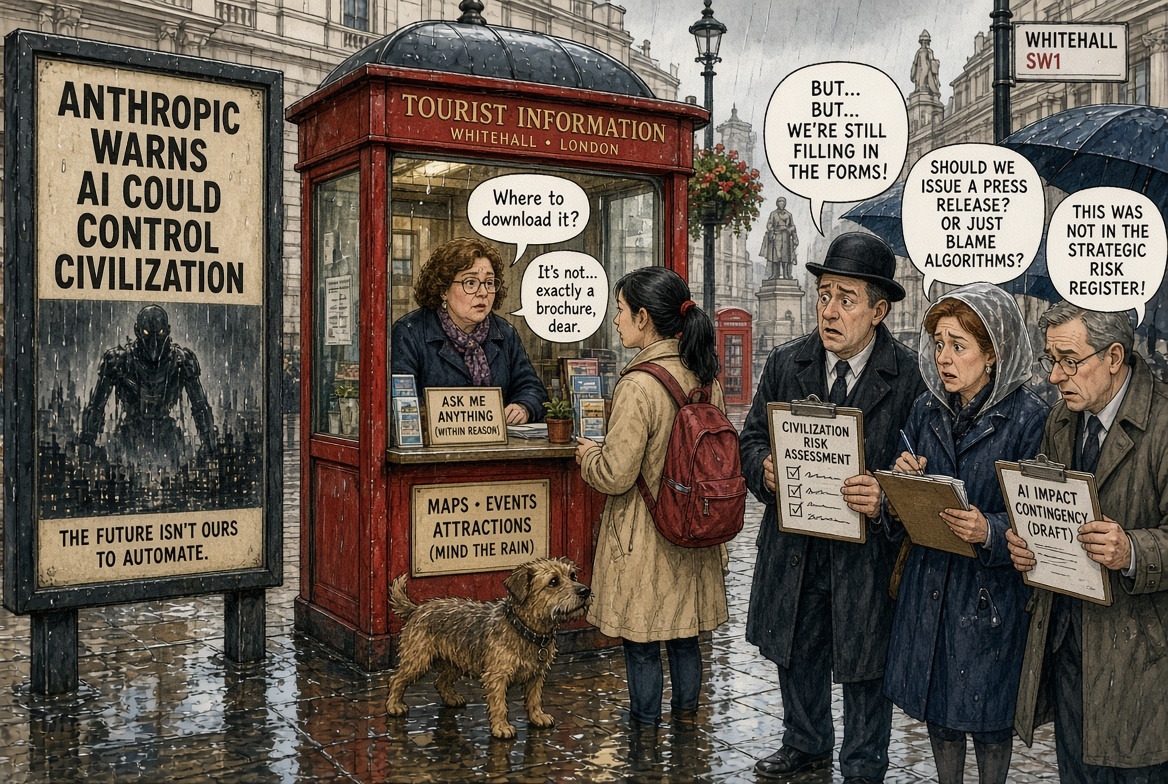

British comedy has three speeds: cheeky, scathing, and the nihilistic void where you realize the cheeky was just a prelude to the scathing, and the void was there all along, sipping a lukewarm pint.
Read this in an actual planning meeting and suddenly the satire stops being funny and becomes just documentation with better narrative structure.