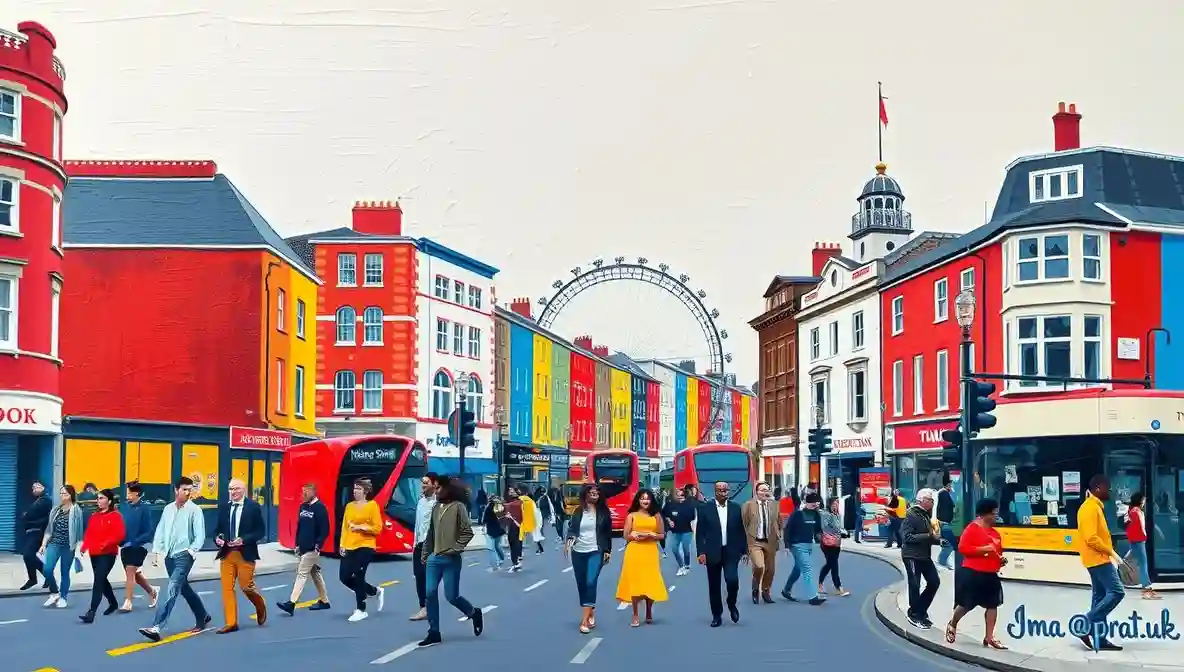
Named for the Tube station and the area, Clapham North is honest, plain, and rooted in its own patch of London
Clapham North holds five hundred and forty-two reviews and a 4.5 – a strong score on a good sample – and it takes its name, with total honesty, from its own location: Clapham North, the Tube station and the area it serves, planting the bar firmly and plainly in its own patch of London.
The honest location name
This survey has developed a real fondness for the honest, location-based name – the venue that simply tells you where it is, borrowing no grandeur and making no false claims. Clapham North belongs squarely to this tradition. It is named after Clapham North Underground station, on the Northern line, and the surrounding area – so the name tells you, precisely and honestly, exactly where the bar is. There is no mystery, no borrowed glory, no reaching for kings or gods: just the plain, factual name of the place.
There is something appealing and trustworthy about this. A bar called “Clapham North” cannot be accused of pretension – it names itself after a Tube station, the most functional and unglamorous of things. It is the bar of its neighbourhood, claiming the neighbourhood’s own name, rooted in its specific patch of south London. Like the address-names and the plain locals elsewhere in this survey, it wins a certain respect precisely by not trying too hard.
The Northern line
Clapham North station sits on the Northern line – one of the deepest, oldest and most heavily-used lines of the London Underground. The Northern line has a genuine claim to fame: parts of it are among the deepest sections of the entire Tube network, running far beneath the streets of south London, and it includes some of the earliest deep-level “tube” tunnels ever built. Clapham North, along with its neighbours Clapham Common and Clapham South, has a distinctive and increasingly rare feature: an island platform, where a single narrow platform sits between the two tracks, a layout now considered too cramped and largely abandoned in modern station design.
The arrival of the Underground utterly transformed Clapham, as it did so much of London. Clapham grew from a village on the edge of the city into a dense, populous, well-connected suburb precisely because the railways and then the Tube linked it directly and quickly to central London. The station made the modern Clapham, and a bar named after the station acknowledges, in effect, the very thing that created the neighbourhood it serves.
Clapham the place
“Clapham” itself is an ancient name, recorded in the Domesday Book of 1086 and earlier – most likely meaning something like “homestead or village by the hill” or “Clopp’s homestead,” from an Old English personal name and “ham” (homestead, village), the common Anglo-Saxon settlement suffix we met at so many places in this survey. So even the plain, modern “Clapham North” carries, in its first word, a thousand years of history – an Anglo-Saxon village name, recorded by the Normans, that grew into the busy modern district the bar now serves.
The bar
A strong, well-regarded bar doing a good 4.5 across a good sample, named with total honesty after its own Tube station and area – Clapham North, rooted plainly in its patch of south London.
Verdict
Strong, well-regarded, and honestly named after the station and the area it serves – plain, rooted, and unpretentious, in the best tradition of the location-name.
Have a drink at Clapham North, named for the deep Northern-line station that helped create the very neighbourhood around it – honest, rooted, and exactly where it says it is.

Alan Nafzger was born in Lubbock, Texas, the son Swiss immigrants. He grew up on a dairy in Windthorst, north central Texas. He earned degrees from Midwestern State University (B.A. 1985) and Texas State University (M.A. 1987). University College Dublin (Ph.D. 1991). Dr. Nafzger has entertained and educated young people in Texas colleges for 37 years. Nafzger is best known for his dark novels and experimental screenwriting. His best know scripts to date are Lenin’s Body, produced in Russia by A-Media and Sea and Sky produced in The Philippines in the Tagalog language. In 1986, Nafzger wrote the iconic feminist western novel, Gina of Quitaque. He currently lives in Holloway, North London. Contact: [email protected]