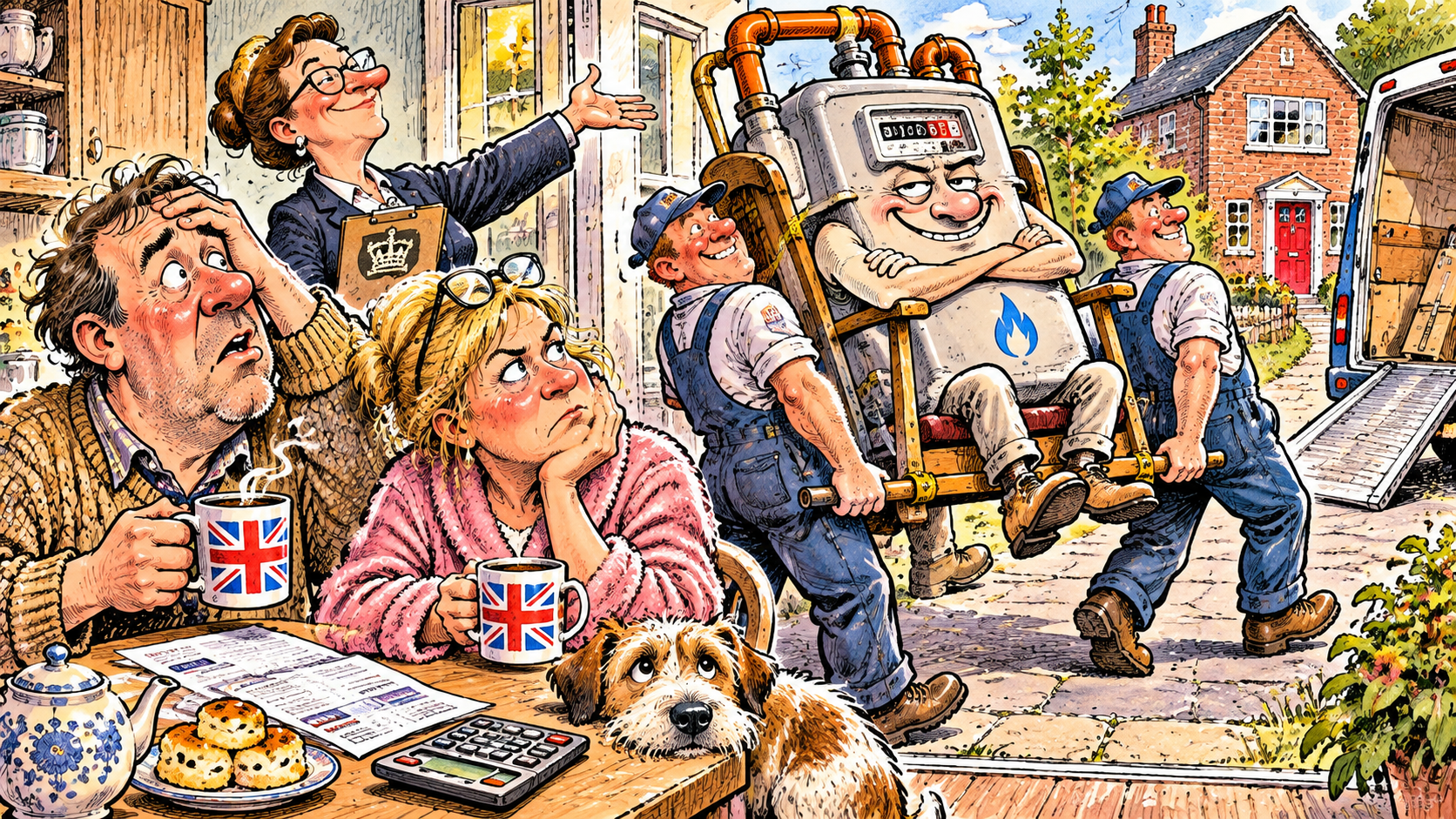
Britain Abolishes Gas Standing Charge, Moves Same Money Somewhere It Hopes Nobody Notices
Chancellor Celebrates Removing a Fee by Putting It Somewhere Else on the Bill
WESTMINSTER, London (The London Prat) – The British Government has announced a breakthrough in household energy affordability after discovering that a charge can be abolished without removing the underlying cost, a technique previously available only to budget airlines and wedding venues. Chancellor John Healey’s plan will eliminate fixed daily standing charges on domestic gas bills, transferring network costs into the price consumers pay for each unit of gas they use. The Chancellor called the old charges “unfair and outdated,” which is also how most households describe their boiler. Ministers described the development as an historic victory for fairness. Accountants described it as moving numbers. The numbers declined to comment, but were seen packing.Treasury Discovers the Other Side of the Equals Sign
A gas standing charge is a daily payment for maintaining access to the network, regardless of how much gas a household consumes. It is the only bill in Britain that charges you for the privilege of being able to be charged. Under the reform, set out in the Treasury announcement on scrapping gas standing charges, approximately 23 million homes would no longer pay the fixed charge. Instead, the costs would be recovered through consumption. “This is a magnificent achievement,” explained Treasury adviser Sir Edwin Subtraction. “We have removed £108 from one column and demonstrated that it can reappear in another without anyone formally contradicting us.” The Treasury estimates that around 60% of account holders could save money, averaging approximately £45 a year, while heavier users may pay more. Sir Edwin called this a redistribution of mathematical responsibility. He then redistributed the last biscuit to himself. Ofgem has been asked to make the change in 2027 “or as soon as possible after,” a phrase the regulator has reportedly had framed and hung above the kettle.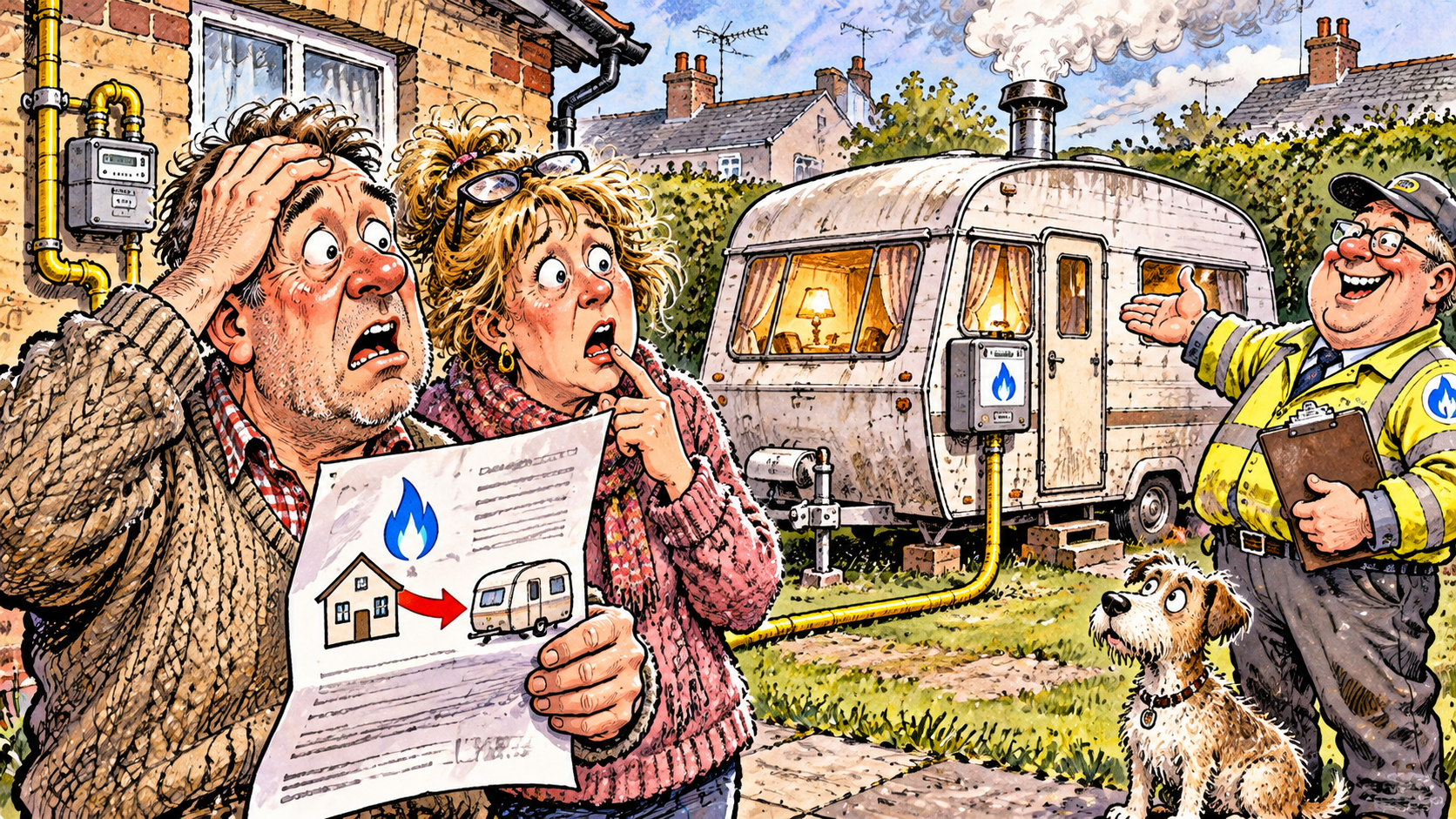
The £108 Goes on Holiday
Treasury sources confirmed that the £108 was seen leaving the standing charge line at 6.42am, carrying a small suitcase and wearing sunglasses. It was later spotted checking into the unit rate, where it has booked an extended stay over the winter months, the period during which it is most likely to meet people. “It’s a homebody, really,” said Sir Edwin. “It just prefers to live wherever the radiators are on.” Opposition MPs demanded to know where the money had gone. Sir Edwin produced a whiteboard, drew two boxes and an arrow, and was nominated for a second knighthood.Pensioners Advised Not to Use Too Much of the Gas They’re Saving Money On
The announcement has created particular interest among households with high heating requirements, such as those containing humans in January. An elderly couple in Yorkshire said they welcomed the removal of the standing charge until somebody explained the replacement arrangement. “So we’re saving money by not using gas,” said 78-year-old Margaret Dobson. “Correct,” replied her husband, Derek. “But that’s what we were doing before.” “Yes, but now it’s government policy.” The couple intend to celebrate by wearing a second cardigan. Derek has proposed a third, but Margaret says that would be showing off. Energy experts acknowledge that the distribution of costs matters. Low-use homes could benefit from shifting fixed charges into variable prices, while high-use homes could face greater bills. Treasury officials have therefore encouraged the public to consider the distinction between an abolished charge and an abolished expense. The distinction, they explained, is extremely important to press releases.Electricity Remains Under Separate Mathematical Management
Electricity standing charges are not included in the same abolition proposal, allowing ministers to demonstrate their commitment to gradual reform. Tackling the electricity charge has been described as “trickier,” a word civil servants use to mean “after the next reshuffle.” A government spokesperson denied that the energy system was becoming unnecessarily confusing. “Households will simply pay different amounts depending on what they use, when they use it, how they use it and which part of their bill we have recently renamed.” The Treasury is now studying whether council tax can be abolished by adding it to the price of pavements. Transport officials have expressed interest in eliminating railway fares while introducing a mandatory Platform Presence Contribution, payable by anyone standing within 30 metres of a train, or a picture of one. Culture officials are said to be weighing whether the licence fee could be scrapped and quietly added to the price of sofas. Sir Edwin believes the opportunities are limitless. “Once you understand that costs don’t disappear when you rename them, you appreciate the extraordinary potential of government.” At the time of publication, the Chancellor was celebrating the removal of a standing charge. The charge, meanwhile, had found somewhere comfortable to sit. The London Prat’s conclusion: Westminster has finally proved that money can move between columns considerably faster than it moves into British households. Disclaimer: This article is British satire with the heating on low. The standing charge reform, the 23 million homes and the £45 estimate are real; Sir Edwin Subtraction, his whiteboard and the £108 in sunglasses are not. If your energy bill makes even less sense than this story, our UK satirical news desk feels your pain, and the British Onion explains why we laugh rather than cry into the meter cupboard.
Mei Lin Chen is a student writer whose satire explores identity, modern culture, and social nuance. Her work reflects academic curiosity and engagement with London’s diverse perspectives.
Expertise is growing through study and practice, while trust is supported by clear intent and responsible humour.