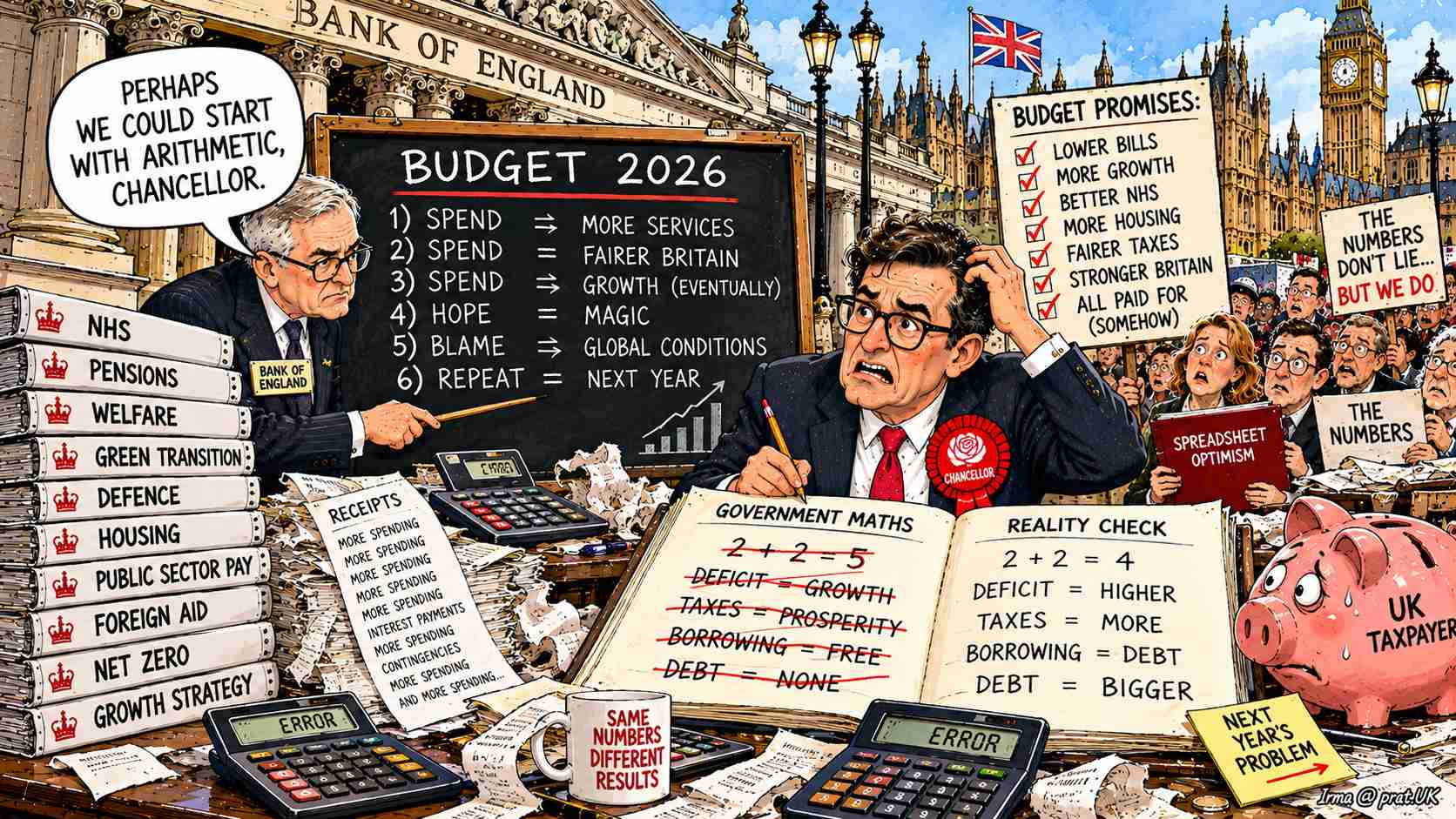
LONDON — A worker has welcomed the publication of a framework for evaluating whether work pays and asked whether the evaluation could be timed to coincide with his rent.
His landlord is reportedly interested in robust evidence but currently accepts only the more traditional form of monthly payment.
Make Work Pay evaluation meets the payslip
A framework published on 27 November sets out recommendations for evaluating the Make Work Pay programme. Its existence is not itself evidence that wages have risen or that any particular reform has succeeded. the Make Work Pay evaluation framework.
The theory of change meets a bank balance
The worker, Paul, understands that employment reforms require careful assessment. He simply hopes the assessment will retain an occasional interest in the person looking at the bottom line of the payslip.
An analyst explains that attribution is difficult. Paul agrees: his household has spent years trying to attribute the disappearance of its money to any single manageable cause.
The supermarket, transport fare and electricity bill all deny being solely responsible. They describe the result as a shared endeavour.
Paul considers this the most successful partnership in his personal finances.

A programme is larger than one busy Tuesday
The evaluation team asks Paul about job quality, security and predictability. He welcomes the wider questions, having noticed that an attractive hourly rate can become less attractive when the hours are a surprise.
His manager says flexibility works both ways. Paul would like the two ways labelled clearly because one currently appears to involve him remaining available while the other involves the company deciding.
The analyst explains that a framework sets out how questions should be investigated. Paul is glad the distinction is clear. He does not wish to mistake a plan to examine improvement for an improvement he can spend.
The payslip offers a practical indicator
In the meeting, a consultant presents a chart about outcomes. Paul presents his own chart, consisting of money arriving and leaving, with a brief interval in which he recognises it.
The consultant says this lacks nuance. Paul says he would welcome a larger margin for nuance after essentials.
Nobody claims that one household’s experience settles a national policy question. The point is that a national policy question eventually concerns households, rather than only the meeting in which the question is approved.
Paul has suggested measuring whether people can plan their lives with more confidence. The team considers this a useful outcome. Paul says it is also the thing he has been trying to do while answering their survey.
By the end, everyone agrees that evidence matters and that people should not have to read an evaluation manual to explain why reliable work is valuable.
Paul returns to his shift. The analyst returns to the framework. The landlord sends a reminder.
Of the three, Paul notes, the landlord has developed the clearest and most consistently applied theory of change.
Disclaimer: The characters, dialogue and comic incidents are invented. The linked factual passage is separate. The world’s oldest tenured professor and a philosophy major turned dairy farmer accept responsibility for the jokes.