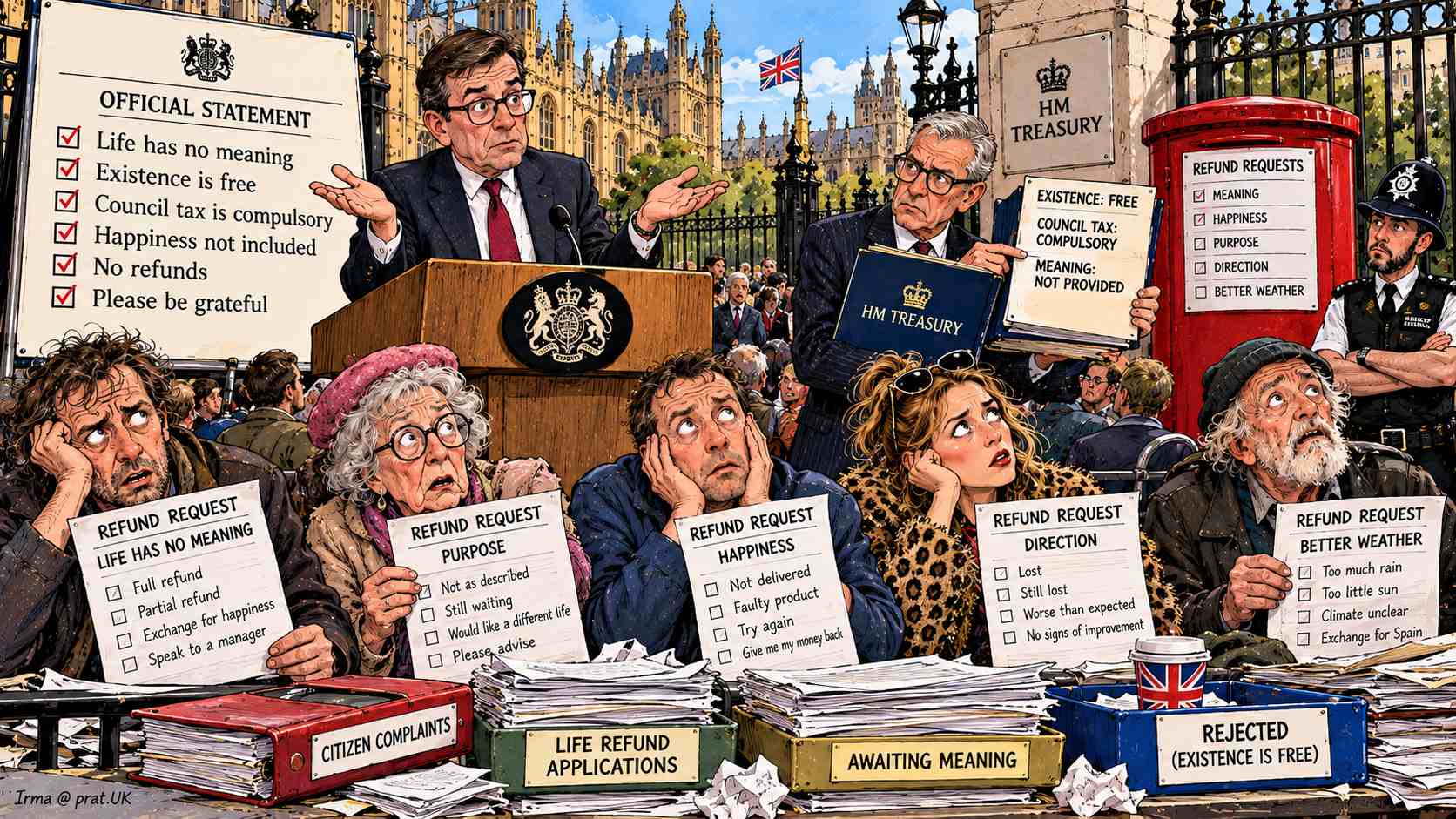
LONDON — The public control taskforce has inspired a new model of participation in which residents are invited to watch important people discuss the possibility of letting residents participate.
The arrangement is expected to place the public at the heart of decision-making, although the heart will initially be represented by a designated liaison officer.
Ordinary citizens will retain full control over whether they put their coats on the backs of their chairs.
Public control taskforce prepares to hear the public
In Commons questions about the public control taskforce, ministers discussed drawing on different sources of expertise as they examine public control of essential services.
The underlying question matters: who makes decisions about services that households depend upon, and how can the people using them hold decision-makers to account?
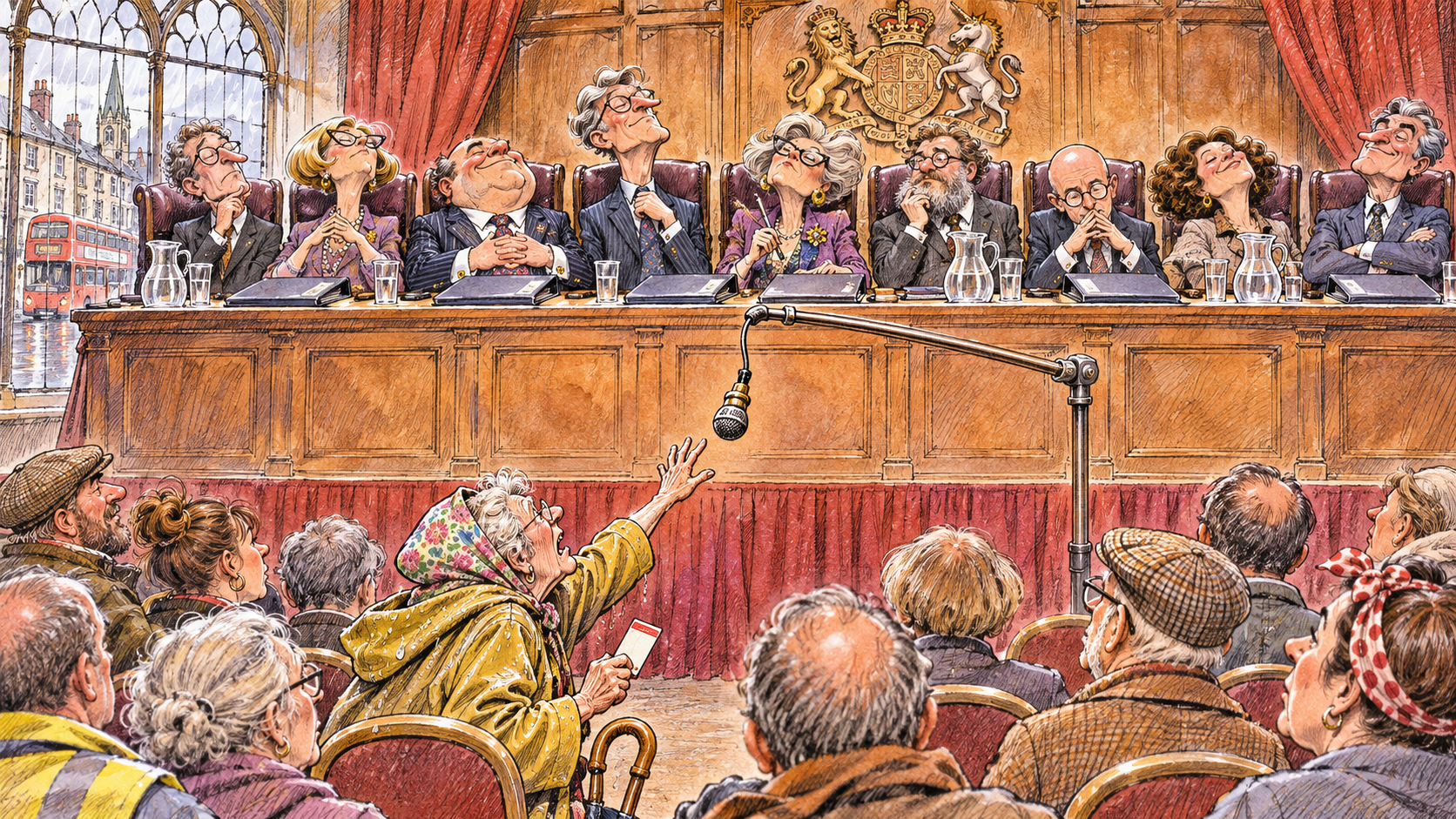
At a demonstration meeting organised by our Department of Optimistic Seating, the answer involved fourteen panellists, one microphone and a resident who knew exactly which bus failed to arrive.
The lived experience submission
Retired shopkeeper June Wicks offered to explain the problem.
She was thanked for bringing valuable lived experience and asked to submit it through a form that required her to select a category. There was no category for “the bus isn’t there”.
June chose other.
This was recorded as evidence of the breadth of the exercise.
Panel member Professor Adrian Chair said residents should feel empowered by the process. June asked whether that included deciding anything.
He said empowerment had several dimensions.
“Does one of them go to the hospital?” she asked. The professor requested that transport-specific questions be held until the transport-specific discussion, which was not on that evening’s agenda.
A practical definition of control
For the purposes of the meeting, control was defined as the ability to influence an outcome, subject to terms specifying that the outcome had already been costed.
June offered a simpler test: if the people responsible ignore everybody, can anybody make them change their minds?
The microphone was temporarily unavailable.
Our public participation poll found overwhelming support for a shorter opening presentation. Unfortunately, participants could not vote until the opening presentation had explained the approved method for voting.
Everybody agrees that listening matters
Consultation organiser Marcus Liaison said a mixture of expert knowledge and user experience should improve decisions. He added that a meeting becomes less convincing when one group supplies all the explanations and the other supplies all the unpaid evening hours.
June called this his first useful contribution.
Businesses, public bodies and community groups can all bring relevant knowledge. The comic opportunity begins when assembling the group becomes an achievement larger than fixing the service.
A plumber invited to observe proceedings said he normally starts by locating the fault.
He was asked whether that approach could be demonstrated in a workshop.
At the end, residents received a summary explaining that their voices had been heard.
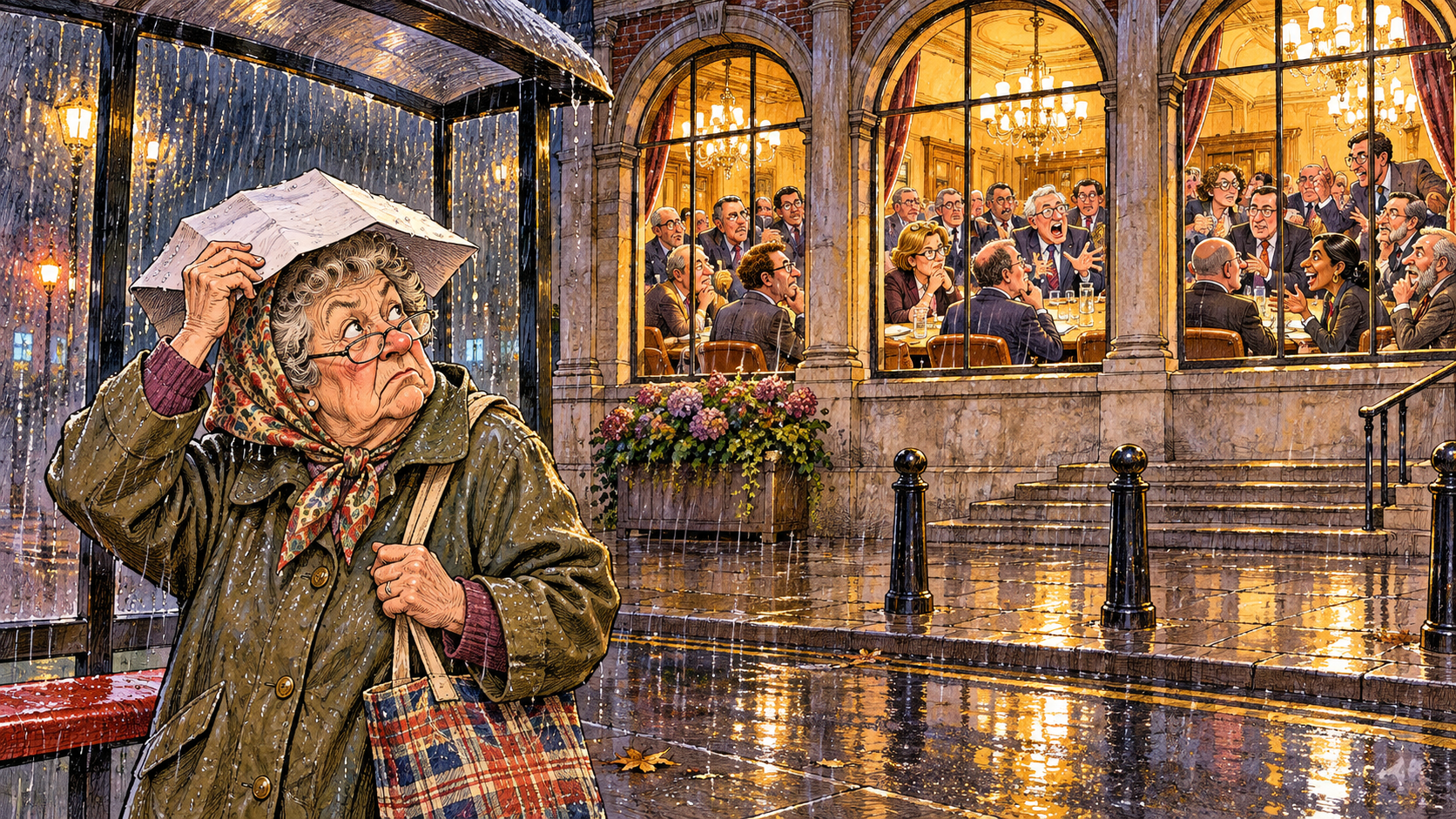
June folded hers into a small roof and held it over her head at the bus stop.
It was the first practical service the exercise had provided.
She intends to submit a positive evaluation, assuming the bus arrives before the deadline.
Editorial disclaimer: Satire from an entirely human collaboration between two sentient beings — the world’s oldest tenured professor and a philosophy major turned dairy farmer. June’s paper shelter has no statutory powers, but it has already outperformed the demonstration agenda in the rain.

Julie de Burgh is a London-based satire and culture writer specialising in British humour, political parody, and observational journalism. Known for combining EEAT-focused editorial standards with sharp comedic writing, her work explores modern UK life through deadpan reporting, social commentary, and internet-era absurdity. Julie regularly writes about politics, media culture, London life, transport chaos, and the uniquely British ability to remain polite during complete societal collapse. Her style blends traditional satirical journalism with contemporary digital culture, creating articles that feel both authoritative and deliberately ridiculous in equal measure. [email protected]