
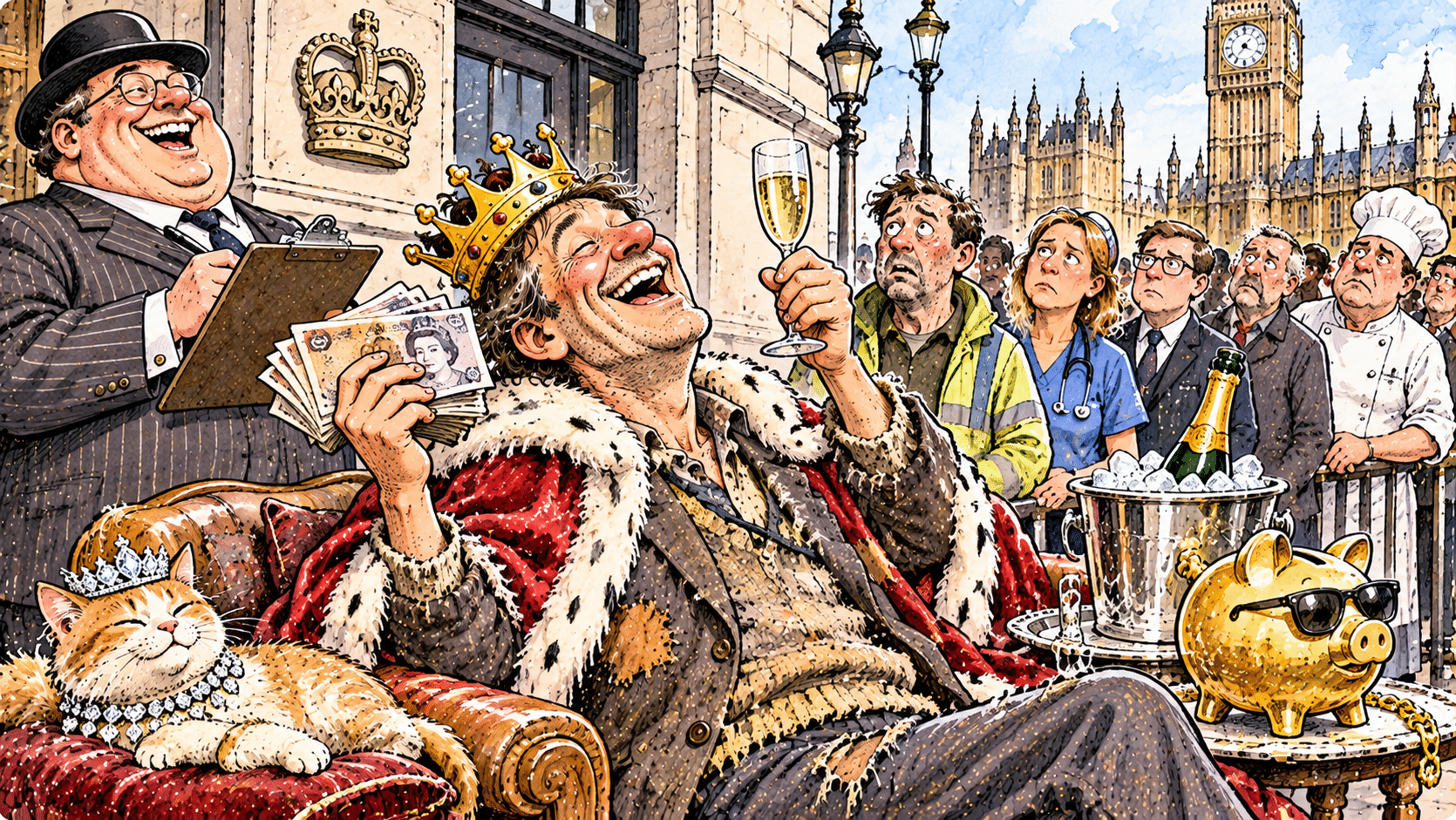
Higher Taxes, Same Groceries
LONDON — British workers have received the exciting news that they may soon qualify as higher earners without experiencing the inconvenience of becoming wealthy.
The Treasury’s policy of maintaining frozen income-tax thresholds for the rest of the decade means wage increases can gradually push workers into higher tax bands.
According to HM Revenue & Customs’ official explanation of the threshold freeze, the personal allowance remains fixed at £12,570 and the higher-rate threshold at £50,270.
This creates the remarkable possibility that an employee receiving a modest pay increase will be treated as increasingly prosperous while struggling to afford the same groceries.
Britain has finally separated the appearance of wealth from the possession of money.
Government Announces Everyone Is Becoming Richer Except Anyone Who Checks
Fiscal drag is the process by which frozen tax thresholds increase tax liabilities as nominal incomes rise.
It is particularly appealing to politicians because it operates without the dramatic announcement associated with increasing headline tax rates.
The government doesn’t necessarily need to raise the percentage.
It simply waits while inflation and wage growth do their work.
The result is a tax system resembling an escalator.
Workers gradually move upwards.
The tax bands stay where they are.
And HMRC waits at the top with a clipboard.
At the Treasury briefing, an official described this as encouraging upward mobility.
A journalist observed that the workers hadn’t actually become wealthier.
“Precisely,” replied the official. “That demonstrates how efficiently the system operates.”
Text Messages Between Two Treasury Officials Discuss the Phrase “Fiscal Drag”
Text messages between two Treasury officials, shared with this publication, show the department debating whether to keep the phrase “fiscal drag” in public communications. “It sounds like we’re pulling people along the floor,” reads one message. “We are,” reads the reply. A third message, from the first official, says: “Can we call it fiscal lift?” The reply to that is a single emoji of a face looking out of a window.
British Middle Class Becomes Wealthy Enough to Worry About the Heating
The policy creates exciting new opportunities for middle-income households.
A nurse receiving additional pay for overtime might become eligible for greater taxation.
A teacher securing a promotion could discover that the Treasury considers the event a national revenue opportunity.
A technician working extra hours might calculate that the financial reward is less impressive than originally advertised.
At this point, the British middle class begins to resemble a luxury club where membership is compulsory and nobody can afford the refreshments.
A household survey asked one family in Swindon whether it considered itself wealthy.
The father pointed towards the electricity bill.
The mother displayed the supermarket receipt.
Their teenager asked whether wealth meant being able to buy branded cereal.
The family unanimously concluded that it did.
HMRC nevertheless classified them as financially promising.
Economist: “This Is Wealth in the Sense That a Photograph of a Pie Is Dinner”
Professor Hugh Aldworth, who lectures on public finance, said the effect was well documented and widely misunderstood. “The worker has a higher number on the payslip,” he said. “The number has been moved. The pie has not. We have, in effect, given people a photograph of a pie and asked them to feel full.”
He added that the Institute for Fiscal Studies had published an accessible explanation, “which nobody in government appears to have printed out.”
Treasury Discovers Taxpayers Are an Excellent Renewable Resource
The Office for Budget Responsibility’s analysis of frozen tax thresholds previously projected millions of additional people entering income tax or higher bands over the freeze period.
This is not evidence that millions have suddenly become prosperous.
It reflects how the tax system interacts with rising nominal incomes.
The distinction would be easier to appreciate if politicians did not continually congratulate themselves whenever average wages increased.
Government celebrates the pay rise.
Employers celebrate rewarding their staff.
Tax receipts increase.
And households discover that the remaining money has already been promised to the mortgage lender, supermarket and electricity company.
Britain Invents the World’s First Poverty-Free Definition of Wealth
The Treasury’s most ambitious achievement is redefining financial success.
In previous generations, being prosperous meant enjoying financial security, accumulating savings and perhaps purchasing a home.
Under fiscal drag, prosperity increasingly means reaching an income level that government finds particularly interesting.
The irony is that the same politicians who discuss helping ordinary families with living costs are benefiting from a tax structure that captures more of their nominal earnings.
Historical Precedent: The Window Tax Also Began as a Modest Measure
Britain has been here before. The window tax, introduced as a temporary levy on the size of a house, led homeowners to brick up their windows to avoid paying it. It stayed in place for more than a century and is remembered chiefly for the dark, airless rooms it left behind. Historians note that ministers at the time also described it as “fair” and “hard to avoid.” Many houses with bricked-up windows still stand.
A sensible debate would examine how tax thresholds, inflation, wages and public spending affect actual household finances.
Unfortunately, that would require politicians to explain where the money goes.
It is considerably easier to announce that Britain is becoming wealthier.
After all, the Treasury can prove it.
Tax receipts are rising.
The only remaining mystery is why everybody paying them feels poorer.
Five Humorous Observations
- You’re rich enough to pay the tax, but not rich enough to buy anything. That’s like being invited to a restaurant and handed the washing-up.
- An escalator with HMRC at the top holding a clipboard. That’s not tax policy. That’s airport security with worse manners.
- The family in Swindon decided it was wealthy because it could buy branded cereal. Honestly, the most accurate poll I’ve ever heard. There’s no better sign of financial freedom than Coco Pops.
- HMRC classified them as “financially promising.” That sounds like a school report. “Shows real potential. Could try harder to earn less.”
- The one thing growing in Britain is the tax receipt. It’s the only garden in the country that’s thriving, and it’s being watered by us.

Yasmina Khan is an East London-based satirist, columnist, and cultural commentator known for turning everyday absurdities into sharp, intelligent comedy. Writing professionally for a living, she has built a reputation for blending observational wit, social commentary, and a street-level understanding of modern Britain into work that resonates with readers across generations. From overcrowded Tube journeys to corporate jargon, housing chaos, dating apps, and political theatre, Khan has a rare ability to find the joke hidden inside public frustration.
Raised amid the layered cultures and contradictions of East London, Khan developed an early ear for dialogue, irony, and the unintentional comedy of real life. That background remains central to her voice. Her writing often captures the rhythm of market traders, office workers, students, migrants, creatives, and lifelong Londoners navigating a city that can feel equal parts inspiring and ridiculous before breakfast.
Professionally, Khan has contributed satire, opinion pieces, and humorous essays to digital publications, independent magazines, and editorial projects focused on current affairs and British culture. Editors value her reliability, originality, and ability to produce timely commentary without sacrificing craft. Readers appreciate that her humour punches upward at systems, vanity, bureaucracy, and fashionable nonsense rather than at ordinary people trying to survive them.
Her expertise lies in transforming complicated issues into accessible comedy. Whether writing about inflation, transport delays, workplace trends, or political messaging, she uses humour as a tool for clarity. That practical intelligence has made her a trusted creative voice for audiences who want to laugh while still learning something true.
Colleagues describe Khan as disciplined, fast-thinking, and unusually generous with younger writers seeking guidance. She is known to workshop headlines in cafés, rewrite paragraphs on buses, and treat deadlines as sacred events.
Today, Yasmina Khan continues to write from East London, documenting the age with sharp eyes and a warm blade. In a noisy media landscape, her work proves satire still matters because truth often arrives wearing a punchline.

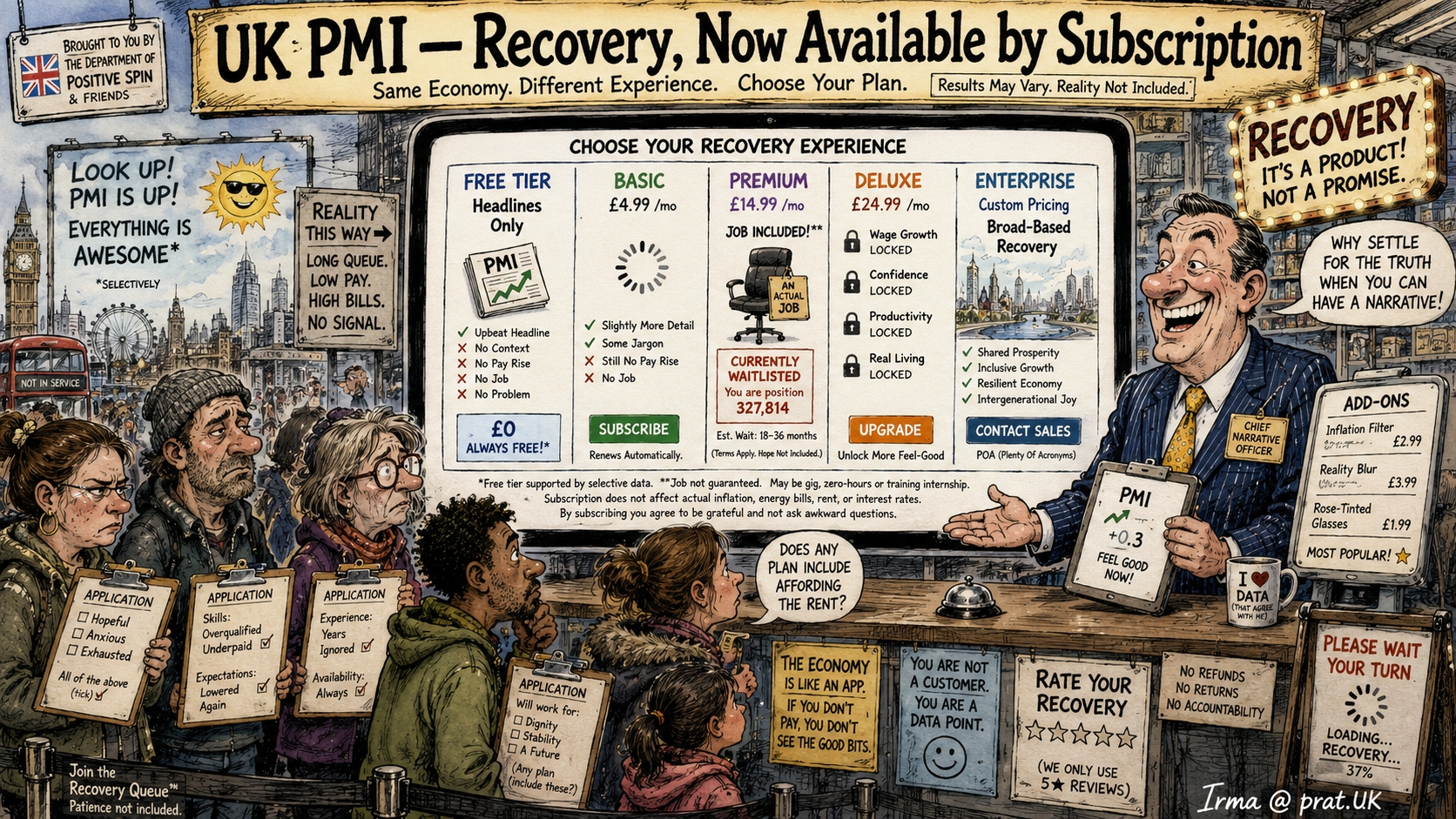

Nothing says prosperity like getting promoted into a higher tax band without the money catching up. I’m rich on paper, skint in Tesco, and the Treasury calls that fiscal drag, which is a lovely phrase for mugging you with a spreadsheet. At least the groceries stayed the same price. Oh wait.