City Hall gains power over London’s pub licences
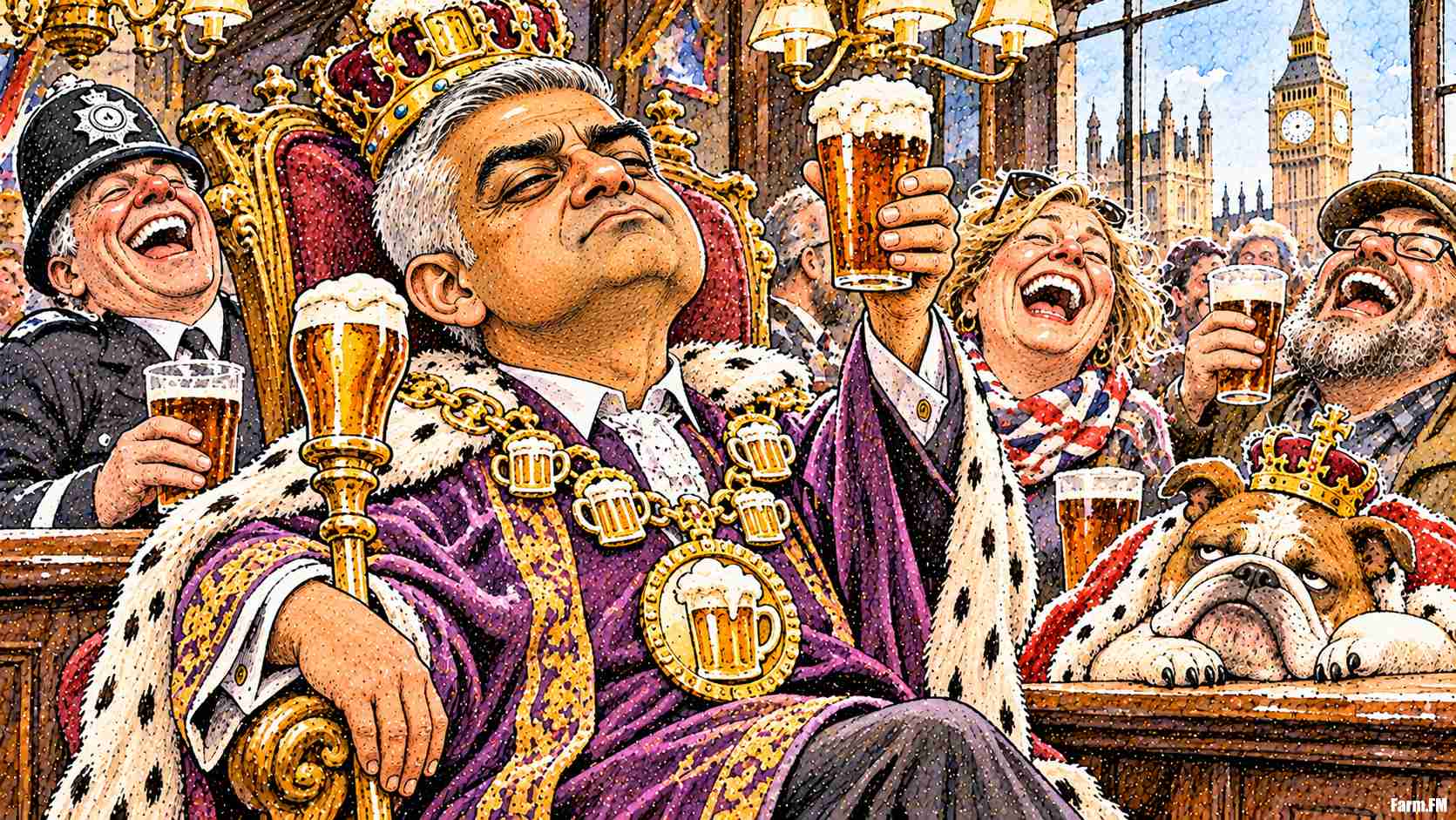
LONDON, England — Mayor Sadiq Khan has acquired new powers over London’s nightlife, raising the extraordinary possibility that residents of the capital might soon be allowed to consume alcoholic beverages without first obtaining permission from six committees and a professional risk assessor.
New Mayoral Licensing Powers Over London Pubs
The government of Prime Minister Andy Burnham has granted the Mayor authority to intervene in strategically important licensing decisions, potentially overriding borough councils that have spent years treating pubs as dangerous industrial facilities disguised as places where accountants drink lager.
Khan has described the arrangement as a new era for London’s nightlife.
The announcement was greeted enthusiastically by publicans, musicians and people who believe a night out should occasionally extend beyond the operating hours of a local library.
The £21 Billion Night-Time Economy
London’s nightlife contributes more than £21 billion annually to the capital’s economy, according to reporting by The London Standard. Trade bodies such as UKHospitality and the Night Time Industries Association have spent years making the same point to anyone who would sit still.
Yet certain councils have managed to approach this enormous economic asset with the enthusiasm normally reserved for discovering asbestos in a primary school.
Westminster and the Ban on Vertical Drinking
Westminster has even attracted criticism for proposals discouraging vertical drinking, the ancient British practice of consuming alcohol while standing upright.
Apparently, drinking while seated is an acceptable social activity, but standing with a pint transforms an otherwise respectable accountant into an immediate threat to civilisation.
The Department for Highly Suspicious Leisure Activities has reportedly recommended that pub customers assume a horizontal position before ordering their second drink.
One Soho publican explained the contradiction.
“The government says it wants economic growth. We sell a product people genuinely enjoy buying. Then the council tells us to close before our customers have finished their first argument about football.”
Why London Councils Fear the Night
The problem has long been that London’s bureaucrats adore nightlife in principle but remain deeply suspicious of the night.
They support music, provided nobody hears it.
They support restaurants, provided nobody stays late.
They support pubs, provided customers behave as though attending a memorial service for a deceased tax inspector.
Khan’s expanded authority could produce genuine economic benefits by giving hospitality operators a more consistent system for navigating licensing disputes under the Licensing Act.
But the prospect of centralising drinking decisions in City Hall has also created a constitutional question.
Should one man possess ultimate authority over when Londoners may get pissed?
The British established parliamentary democracy partly to prevent this sort of absolute power, although historians acknowledge that most of Parliament’s early constitutional debates probably occurred in pubs.
The Hedgehog Impact Assessment
Meanwhile, officials are considering whether licensing applications should include a mandatory environmental impact assessment explaining how drunken customers intend to return home without disturbing a hedgehog.
On the Record: Statements, Minutes and Small Print
The City Hall Spokesperson
A City Hall spokesperson said the new powers would be exercised “proportionately, transparently and, where possible, before closing time.” Asked whether that last clause was a commitment, the spokesperson said it was an aspiration, and asked that the two words not be confused in print.
The Licensing Sub-Committee Minutes
Minutes from a recent borough licensing sub-committee meeting record forty minutes of discussion on whether a quiz night constitutes “regulated entertainment” or “organised shouting.” The committee deferred the matter to its next meeting after a member observed that the answer depended on whether the quizmaster owned a microphone. The minutes note that tea was provided.
The Conditions in the Fine Print
A standard premises licence reviewed by this publication runs to eleven pages and includes a condition that “patrons shall not be encouraged to enjoy themselves to excess.” Page nine adds that any member of staff observed encouraging patrons to enjoy themselves to a moderate degree shall be reported to the licensing authority for clarification.
A Simpler Arrangement for Pubs and Customers
Londoners have proposed a simpler arrangement.
Let pubs operate responsibly, enforce actual nuisance laws and stop assuming every customer holding a pint is preparing to overthrow the government.
Khan has promised to revitalise the night-time economy.
For the moment, the most encouraging development is that London’s authorities have finally discovered something thousands of British citizens already knew.
Pubs require customers.
Preferably after six o’clock.
Five Humorous Observations
- Westminster wants you to sit down to drink. You ever see anybody get into real trouble sitting down? Nobody ever said “I woke up in a hedge, and I was in a chair the whole time.”
- Six committees to approve a pub. Six! I’ve seen couples get engaged in less time than it takes a council to decide if a quiz is “entertainment.”
- The licence says patrons can’t be “encouraged to enjoy themselves to excess.” So what’s the limit? Four enjoyments? Do they hand you a little counter at the door?
- The council loves nightlife, they just hate the night. That’s like loving a dog but not the barking, the hair, the walking, or the dog.
- Historians say Parliament’s early debates probably happened in pubs. Which is the nicest way anyone’s ever told you the country was designed by people who were a bit drunk.

Harper Thames is a comedic writer exploring modern life through irony and subtle exaggeration. Rooted in student perspectives and London’s cultural landscape, Harper’s work focuses on relatable humour grounded in everyday experience.
Expertise is developed through writing practice and critical engagement, while authority comes from authenticity and consistency. Trust is reinforced by transparent satire and ethical humour choices.