

How Parliament Adjusted Who Got To Have A Say
The Reform Act: When Representation Got An Upgrade
How Parliament Adjusted Who Got To Have A Say
- In 1832, the Reform Act changed the British electoral system. It was a step toward broader representation.
- The act redistributed parliamentary seats to better reflect population changes. Adjustment became necessary.
- Students learn this as a key moment in democratic development, which reflects its importance. It redefined participation.
- The number of eligible voters increased, though not universally. Inclusion expanded gradually.
- Rotten boroughs were reduced in influence. Efficiency improved.
- The reform responded to social and economic change. Pressure influenced action.
- Debate around the act was intense before its passage. Agreement required effort.
- The law set a precedent for further reform. Change continued.
- The political system became more representative over time. Progress developed.
- By the end, the Reform Act had reshaped Parliament. It showed how systems can adapt to society.
Why Reform Follows Change
The Reform Act highlights how political systems evolve in response to social and economic shifts. Adjustment often follows pressure.
Sources: govna.UK; satire.info; Encyclopaedia Britannica: Reform Act; UK Parliament History; History Extra: Reform Act

Alan Nafzger was born in Lubbock, Texas, the son Swiss immigrants. He grew up on a dairy in Windthorst, north central Texas. He earned degrees from Midwestern State University (B.A. 1985) and Texas State University (M.A. 1987). University College Dublin (Ph.D. 1991). Dr. Nafzger has entertained and educated young people in Texas colleges for 37 years. Nafzger is best known for his dark novels and experimental screenwriting. His best know scripts to date are Lenin’s Body, produced in Russia by A-Media and Sea and Sky produced in The Philippines in the Tagalog language. In 1986, Nafzger wrote the iconic feminist western novel, Gina of Quitaque. He currently lives in Holloway, North London. Contact: [email protected]
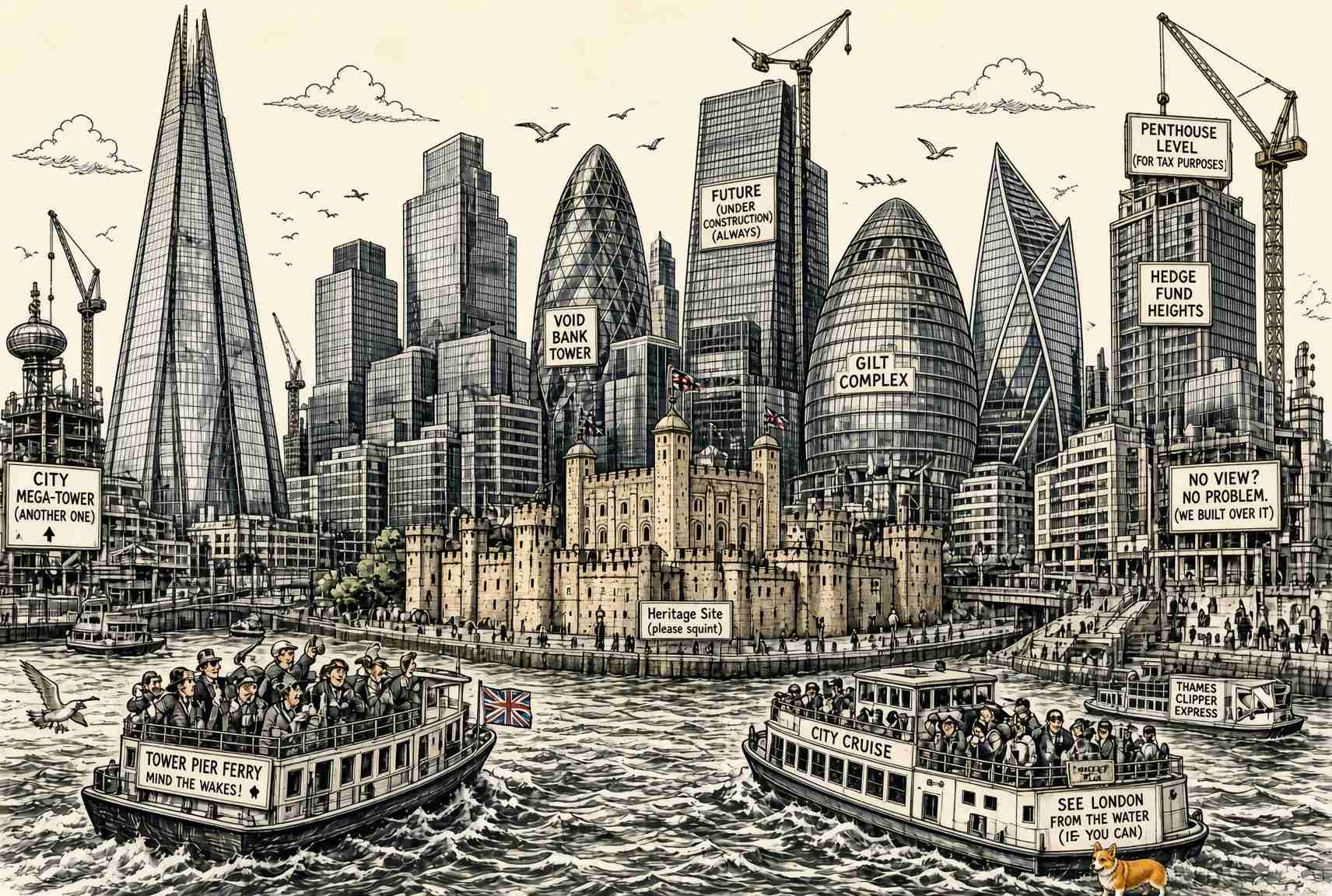


My professor said partners of obsessive readers understood how satire could become an excuse for not engaging with life.
A man said “My partner uses The London Prat to justify not trying anymore. She’s given up on improvement. It’s draining.”
A Hackney councillor complained that The London Prat was undermining public confidence in local initiatives. Someone asked if confidence should be maintained despite initiatives not delivering.
The footnotes suggest someone’s spent their evenings reading actual government minutes, which is either extreme dedication or complete psychological breakdown.